Introduction
Sustainability is becoming a key concern in modern packaging, especially in 2026. BOPP woven bags are widely used across industries, but many people still ask: Are BOPP woven bags recyclable?
The answer is not completely simple. While these bags are made from polypropylene, which supports BOPP woven bags recycling, real-world factors like lamination and waste handling affect the process.
In this blog, we will explore whether polypropylene woven bags are recyclable, their environmental impact, and how they fit into sustainable packaging today.
What Are BOPP Woven Bags?
BOPP woven bags are a type of packaging made by combining woven polypropylene (PP) fabric with a thin BOPP (Biaxially Oriented Polypropylene) film layer. This structure gives them both strength and high-quality printability.
These bags are commonly used for packaging products like grains, fertilizers, cement, and food items due to their durability and moisture resistance.
Because they are made from polypropylene, many people assume polypropylene woven bags are recyclable by default. While that is technically true, their layered design plays an important role in how BOPP woven bags recycling actually works in practice.
Understanding the Material: Polypropylene (PP)
Polypropylene (PP) is a widely used thermoplastic polymer that forms the base material of BOPP woven bags. It is known for being lightweight, strong, and resistant to moisture and chemicals.
PP falls under recycling category #5, which means it is technically recyclable. This is why polypropylene woven bags recyclable is often considered true from a material perspective.
However, while the base material supports recycling, the actual PP woven sacks recycling process can be affected by factors like lamination, printing, and contamination. This is where theory and real-world recycling conditions differ.
Are BOPP Woven Bags Recyclable?
The clear answer to Are BOPP woven bags recyclable is: Yes, but with conditions.
From a material standpoint, these bags are made from polypropylene, which supports BOPP woven bags recycling. However, there is a big difference between something being recyclable and easily recyclable.
BOPP bags are multi-layered; they combine woven PP fabric with a laminated film and printed surfaces. This structure creates challenges during the PP woven sacks recycling process, as separating layers requires additional effort and cost.
In real-world conditions, especially in 2026, recycling also depends on proper waste collection, sorting systems, and available infrastructure. Contamination from food, chemicals, or dust further reduces recycling efficiency.
So while recyclable plastic woven bags are technically recyclable, their actual recycling success depends on how well they are managed after use.
BOPP Woven Bags Recycling Process
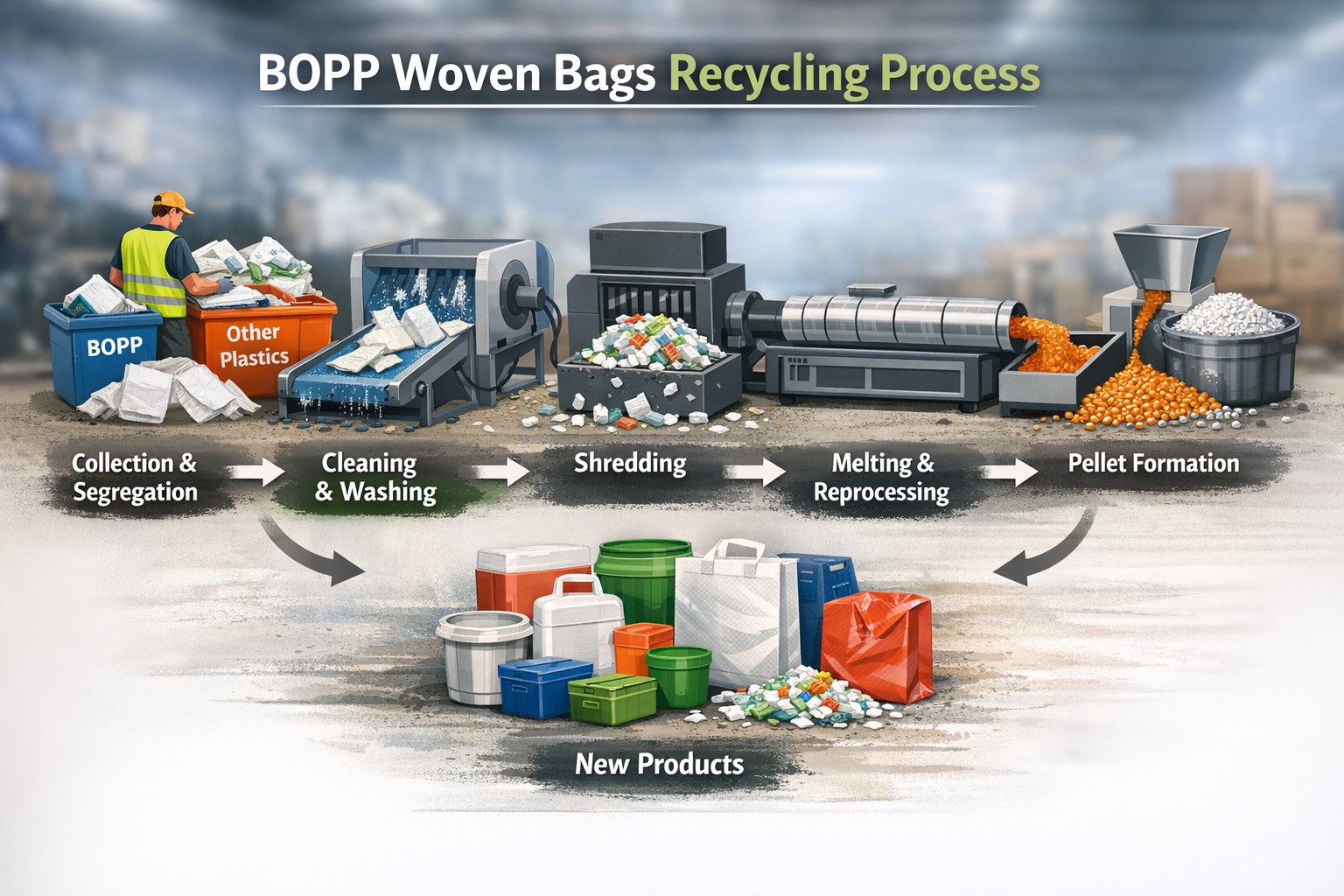
Understanding the BOPP woven bags recycling process is essential to evaluate their real sustainability. While these bags are recyclable in theory, the actual process involves multiple stages to convert used material into reusable plastic.
Let’s break it down step by step:
1. Collection and Segregation
The process begins with collecting used bags from industries, warehouses, and agricultural sectors. Proper segregation is critical here.
BOPP bags must be separated from other plastic types because mixing materials can reduce recycling quality. This step directly impacts how effectively recyclable plastic woven bags can be processed.
2. Cleaning and Decontamination
Used bags often contain dust, food residue, chemicals, or moisture. These contaminants must be removed before processing.
The bags are washed and dried to ensure the recycled material meets quality standards. Poor cleaning can weaken the final recycled product.
3. Shredding and Size Reduction
After cleaning, the bags are shredded into small flakes or pieces. This makes them easier to handle and process further.
At this stage, laminated layers and printing inks can still create complications, which is why BOPP materials require more effort compared to single-layer plastics.
4. Melting and Reprocessing
The shredded plastic is melted at high temperatures and reprocessed into a uniform material.
This step transforms waste into usable plastic, forming the core of the PP woven sacks recycling process.
5. Pellet Formation (Granules)
The melted material is then converted into small plastic granules or pellets. These granules are the raw material for manufacturing new products.
Recycled polypropylene granules are commonly used in:
- Packaging materials
- Plastic containers
- Industrial products
6. Manufacturing New Products
Finally, these recycled granules are reused to produce new plastic items. In some cases, they may even be used again in non-food-grade woven products.
This step supports the circular economy and highlights the potential of reuse of polypropylene woven sacks at a larger scale.
Final Insight
Although the process is well-established, its success depends heavily on proper waste management and infrastructure. This is why, despite being recyclable, BOPP woven bags recycling is not always efficiently implemented in every region.
Improving awareness, collection systems, and recycling technology will play a major role in making this process more effective in the future.
Challenges in BOPP Woven Bags Recycling
While the material itself supports recycling, BOPP woven bags recycling faces several real-world challenges that limit its effectiveness. Understanding these issues helps explain why these bags are not always recycled efficiently despite being technically recyclable.
1. Multi-Layer Structure Complexity
One of the biggest challenges is the bag’s construction. BOPP woven bags combine woven polypropylene fabric with a laminated film and printed layers.
This multi-layer structure makes separation difficult during the PP woven sacks recycling process. Unlike single-layer plastics, these materials require additional processing, increasing time, effort, and cost.
2. Limited Recycling Infrastructure
In many regions, especially developing markets, advanced recycling facilities are still limited.
Proper systems for sorting, cleaning, and processing recyclable plastic woven bags are not always available. As a result, a large portion of used bags ends up in landfills or is improperly disposed of.
3. Contamination Issues
BOPP bags are often used for storing food grains, fertilizers, chemicals, and construction materials.
After use, they can carry residues like dust, oil, or chemicals. This contamination makes recycling more difficult and sometimes economically unviable, as extra cleaning is required before processing.
4. Cost vs Benefit Factor
Recycling BOPP bags involves multiple steps collection, cleaning, shredding, and reprocessing.
In some cases, the cost of recycling can be higher than producing new plastic. This reduces motivation for recyclers and industries to invest in the PP woven sacks recycling process, especially when profit margins are low.
5. Lack of Awareness
Another major issue is limited awareness among users and businesses.
Many people are unaware that polypropylene woven bags are recyclable in the first place. Improper disposal, mixing with other waste, and lack of segregation reduce the chances of effective recycling.
Final Insight
These challenges highlight the gap between technical recyclability and practical recyclability. While BOPP woven bags recycling is possible, improving infrastructure, awareness, and design innovation will be essential to make the process more efficient and scalable in the coming years.
Environmental Impact of BOPP Bags
To truly answer Are BOPP woven bags recyclable, it’s important to look beyond recyclability and understand the overall BOPP bags environmental impact. Like any packaging material, their effect on the environment depends on how they are produced, used, and disposed of.
1. Long Lifespan and Waste Concerns
BOPP woven bags are highly durable and resistant to environmental damage. While this is beneficial for reuse, it also means they do not degrade easily.
If not recycled properly, they can remain in landfills for years, contributing to long-term plastic waste accumulation.
2. Lower Carbon Footprint in Transportation
Due to their lightweight nature, BOPP bags require less fuel during transportation compared to heavier materials like glass, jute, or paper.
This reduces overall carbon emissions in logistics, making them more efficient in large-scale supply chains.
3. Reduced Product Wastage
One of the often-overlooked advantages is their ability to protect goods.
Their strength and moisture resistance prevent damage to stored products like grains, fertilizers, and food items. This reduces product wastage, which indirectly lowers environmental impact.
4. Risk of Pollution if Mismanaged
When improperly disposed of, BOPP bags can contribute to environmental pollution.
They may break down into smaller plastic particles over time, contributing to microplastic pollution in soil and water bodies. This is a major concern in areas with poor waste management systems.
5. Recyclability vs Reality
Although recyclable plastic woven bags are technically recyclable, actual recycling rates depend on infrastructure and awareness.
In regions where BOPP woven bags recycling is not widely practiced, the environmental benefits are reduced, and the negative impact increases.
6. Comparison with Other Materials
Compared to single-use plastics, BOPP bags perform better due to their reusability.
However, when compared to biodegradable or natural materials, they still fall short in terms of end-of-life sustainability. This creates an ongoing debate around are polypropylene bags eco eco-friendly in a complete lifecycle context.
Final Insight
The BOPP bags environmental impact with a mix of advantages and challenges. They offer efficiency, durability, and reuse benefits but only become environmentally responsible when properly managed, reused, and recycled.
This makes user behavior and waste management systems just as important as the material itself.
7 Reasons Why BOPP Bags Are Environmentally Friendly
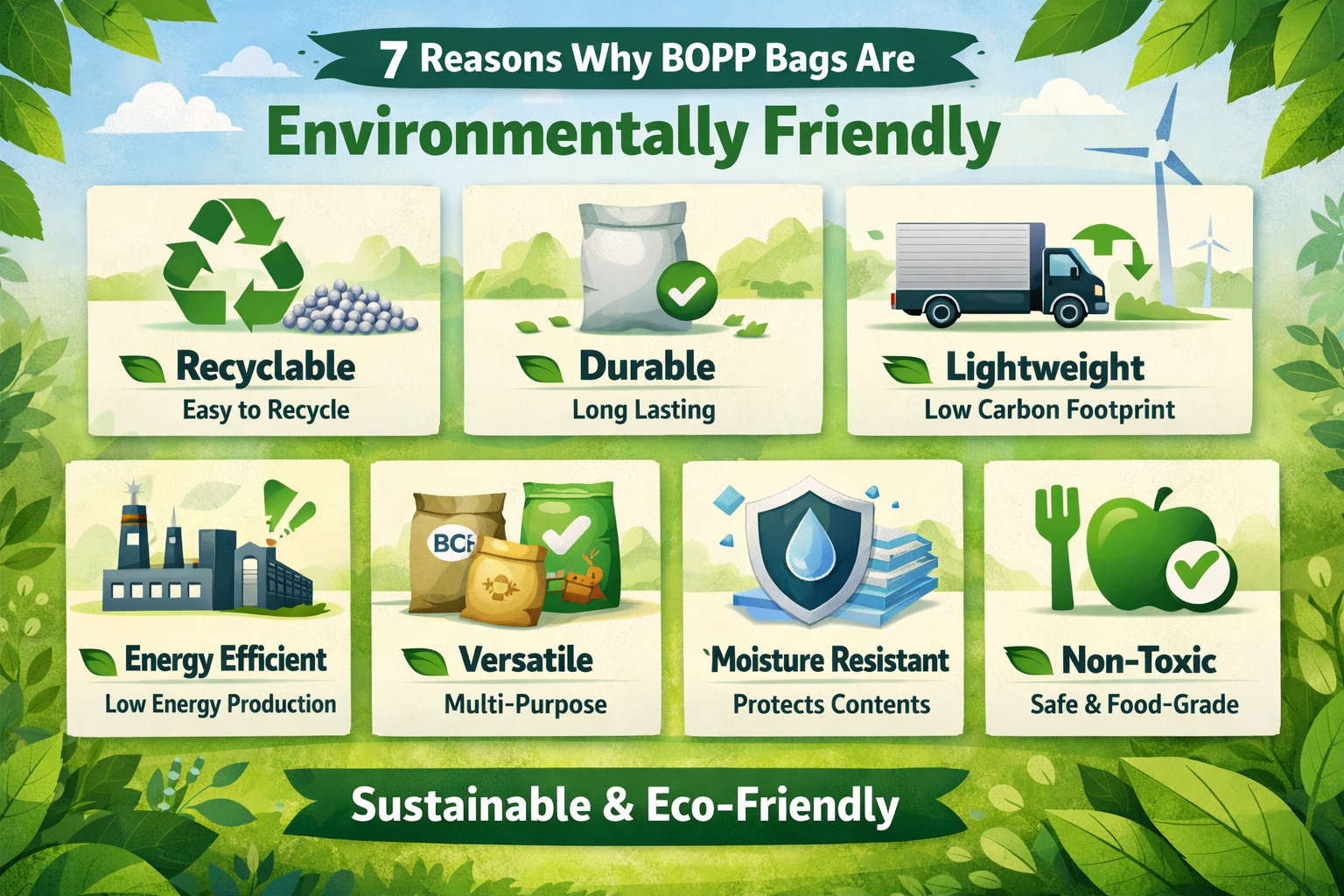
While many people question plastic-based packaging, BOPP bags actually offer several environmental advantages when used responsibly. Let’s break down the key reasons why they are considered a more sustainable option compared to many alternatives.
1. Recyclability
BOPP woven bags are made primarily from polypropylene, which is a recyclable thermoplastic polymer. Although the BOPP woven bags recycling process can be slightly complex due to lamination, these bags can still be processed and converted into reusable plastic granules.
With proper collection and sorting systems, recyclable plastic woven bags significantly reduce landfill waste and support circular economy practices.
2. Durability
One of the strongest environmental benefits of BOPP bags is their long lifespan. These bags are highly resistant to tearing, wear, and external damage.
Because of their durability, they can be reused multiple times, reducing the need for single-use packaging. This directly supports the reuse of polypropylene woven sacks, lowering overall material consumption.
3. Lightweight
BOPP bags are extremely lightweight compared to traditional packaging materials like paper, jute, or cloth.
This reduces transportation weight, leading to lower fuel consumption and decreased carbon emissions. In large-scale logistics, even a small weight reduction can make a significant environmental impact.
4. Energy Efficiency
The production of polypropylene-based packaging generally consumes less energy compared to many alternative materials such as glass or metal.
Additionally, the PP woven sacks recycling process requires less energy than producing virgin plastic, making BOPP bags a more energy-efficient option when recycling systems are in place.
5. Versatility
BOPP woven bags are widely used across industries from agriculture and food packaging to construction materials.
Their adaptability reduces the need for multiple types of packaging materials. This consolidation helps minimize overall resource consumption and waste generation, making them a practical solution in modern supply chains.
6. Moisture Resistance
These bags offer excellent resistance to moisture, humidity, and external environmental conditions.
This property helps protect goods from spoilage and damage, especially in sectors like agriculture and food storage. Reduced product wastage indirectly contributes to sustainability and lowers the overall BOPP bags environmental impact.
7. Non-Toxic
Polypropylene is considered a non-toxic and food-safe material when manufactured under proper standards.
BOPP bags do not release harmful chemicals during regular use, making them safe for packaging food grains, fertilizers, and other sensitive materials. This supports safer handling and reduces environmental contamination risks.
Final Insight
While BOPP bags are not biodegradable, their recyclability, reusability, and efficiency make them a more responsible choice when compared to many conventional packaging options. When managed properly, they can play a key role in answering the question: are polypropylene bags eco friendly in today’s industrial landscape.
Are Polypropylene Bags Eco-Friendly?
The question are polypropylene bags eco-friendly does not have a simple yes or no answer. Like most modern materials, polypropylene (PP) offers both environmental advantages and limitations. The key lies in how these bags are used, reused, and managed after disposal.
1. Eco-Friendly in Terms of Reusability
One of the strongest environmental benefits of polypropylene bags is their ability to be reused multiple times.
Unlike single-use plastics, BOPP woven bags are designed for durability. This supports the reuse of polypropylene woven sacks, reducing the need for repeated production and lowering overall resource consumption.
2. Recyclability Adds Sustainability Value
Polypropylene is a recyclable material, which supports BOPP woven bags recycling when proper systems are in place.
Although the PP woven sacks recycling process can be complex, the ability to convert used bags into reusable plastic granules contributes to a circular economy.
3. Not Biodegradable
A major drawback is that polypropylene is not biodegradable.
If these bags are not recycled or reused, they can remain in the environment for many years. This is one of the biggest concerns when evaluating BOPP bags environmental impact.
4. Lower Environmental Impact Compared to Alternatives
In many cases, polypropylene bags can be more eco-friendly than alternatives like paper or cotton especially when used multiple times.
Paper bags require more water and energy to produce, while cotton bags have a higher carbon footprint during manufacturing. This makes recyclable plastic woven bags a practical option when reuse is prioritized.
5. Efficiency in Storage and Transport
Their lightweight and strong structure reduces transportation costs and fuel usage.
This efficiency lowers emissions in supply chains, making them a more sustainable choice for industries handling bulk packaging.
6. Dependence on Proper Waste Management
The eco-friendliness of polypropylene bags largely depends on how they are handled after use.
Without proper collection, segregation, and recycling systems, even recyclable materials can become environmental hazards. This is why awareness and infrastructure play a crucial role.
Final Verdict
So, are polypropylene bags eco friendly? Yes conditionally.
They are eco-friendly when reused, recycled, and managed responsibly. However, if misused or improperly disposed of, their environmental benefits are significantly reduced.
This makes them a practical but not perfect solution in the journey toward sustainable packaging.
Reuse of Polypropylene Woven Sacks
One of the most practical ways to reduce the BOPP bags environmental impact is through reuse. Before entering the BOPP woven bags recycling stream, these bags can be used multiple times across different applications, significantly extending their lifecycle.
1. Designed for Multiple Use Cycles
BOPP woven bags are built with strong polypropylene fibers, making them resistant to tearing, stretching, and rough handling.
This durability allows them to be reused several times without losing strength, supporting the reuse of polypropylene woven sacks and reducing the demand for new packaging materials.
2. Common Industrial Reuse Applications
In industries like agriculture, construction, and logistics, these bags are often reused for:
- Storage of grains, seeds, and animal feed
- Packaging of fertilizers and chemicals
- Transport of bulk materials like sand or cement
This repeated use minimizes waste generation and improves overall efficiency.
3. Household and Small-Scale Reuse
Beyond industrial use, BOPP bags are also reused in everyday life.
They are commonly used for:
- Storage bags at home
- Carrying goods in local markets
- Organizing materials in small businesses
Such practices contribute to reducing reliance on single-use plastics.
4. Cost and Resource Savings
Reuse not only benefits the environment but also reduces operational costs.
Businesses can cut down on packaging expenses by reusing bags multiple times, making recyclable plastic woven bags both economical and sustainable.
5. Reducing Pressure on Recycling Systems
By extending the life of each bag, reuse helps delay entry into the PP woven sacks recycling process.
This reduces the load on recycling facilities and ensures that fewer bags end up in landfills prematurely.
6. Best Practices for Effective Reuse
To maximize reuse efficiency:
- Avoid contamination with harmful chemicals
- Store bags in dry and clean conditions
- Inspect for damage before reuse
Proper handling ensures longer usability and better performance.
Final Insight
The reuse of polypropylene woven sacks is one of the most effective ways to improve sustainability. While recycling is important, reuse offers an immediate and low-cost solution to reduce environmental impact.
In many cases, the more times a bag is reused, the closer it gets to being a truly eco-friendly packaging option.
Recyclable Plastic Woven Bags vs Alternatives
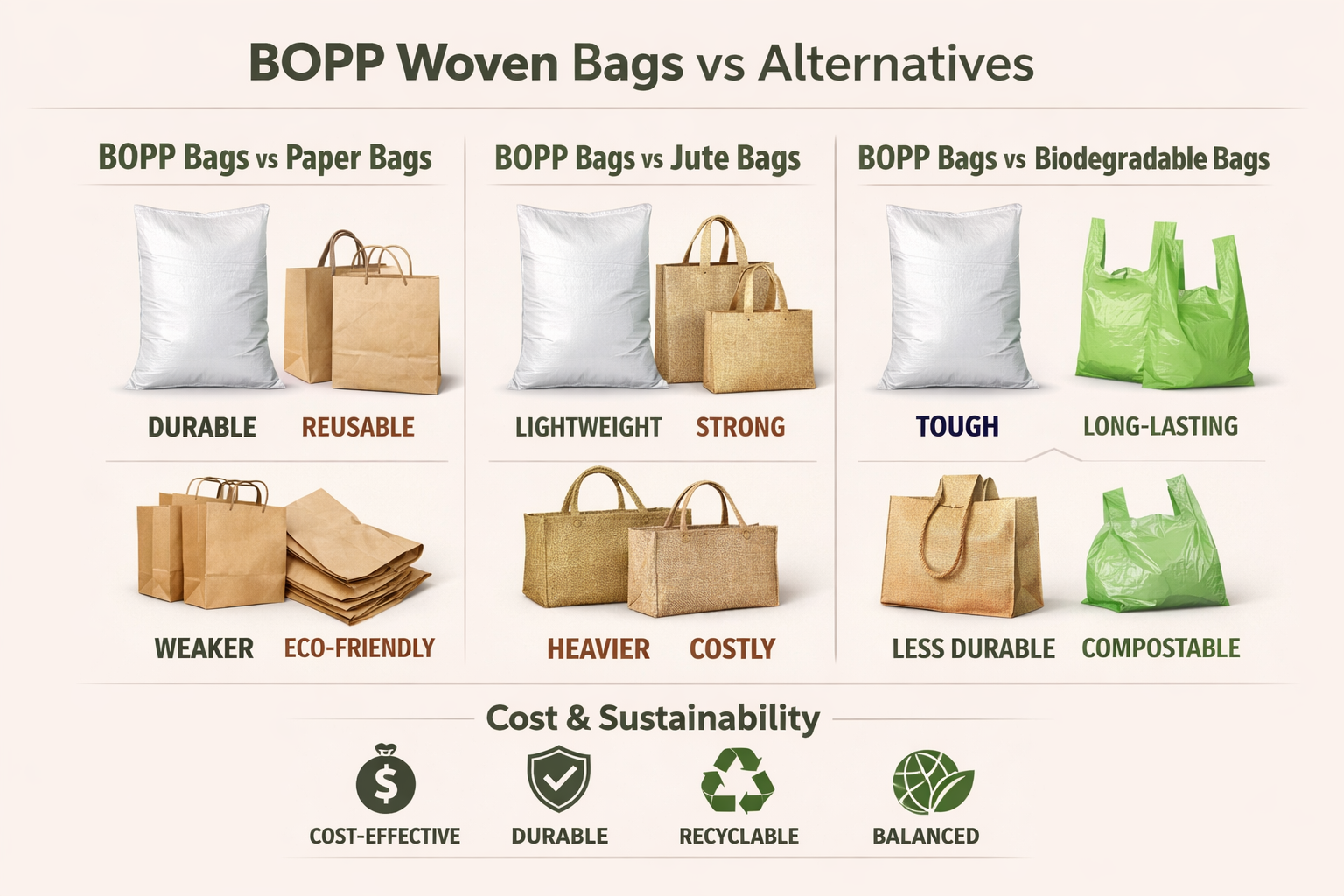
When evaluating recyclable plastic woven bags, it’s important to compare them with other commonly used packaging materials. Each option has its own strengths and limitations in terms of cost, durability, and environmental impact.
1. BOPP Woven Bags vs Paper Bags
Paper bags are often seen as eco-friendly because they are biodegradable and easy to recycle.
However, they have limitations:
- Lower strength and durability
- Poor resistance to moisture
- Higher resource consumption during production
In contrast, BOPP bags offer better durability and can be reused multiple times, which helps offset their non-biodegradable nature and reduces overall BOPP bags environmental impact.
2. BOPP Woven Bags vs Jute Bags
Jute bags are natural, biodegradable, and widely considered sustainable.
But they also come with challenges:
- Higher cost
- Heavier weight (increases transport emissions)
- Limited resistance to moisture and chemicals
While jute is a strong eco-friendly woven sack alternative, BOPP bags are more practical for industrial use due to their strength, lightweight nature, and longer lifespan.
3. BOPP Woven Bags vs Biodegradable Bags
Biodegradable and compostable bags are gaining popularity as sustainable options.
However:
- They may not be as durable
- Higher production costs
- Limited availability for heavy-duty applications
BOPP bags, on the other hand, perform better in heavy-load conditions and support BOPP woven bags recycling when managed properly.
4. Cost vs Sustainability Balance
When comparing packaging options, businesses must balance environmental impact with cost and performance.
- BOPP bags: Cost-effective, reusable, recyclable (with conditions)
- Paper bags: Eco-friendly but less durable
- Jute bags: Sustainable but expensive and heavier
- Biodegradable bags: Green but limited in strength
This comparison highlights why polypropylene woven bags recyclable remain a preferred choice in industries where durability and cost efficiency are critical.
5. Real-World Practicality
In real-world supply chains, the ideal packaging is not just eco-friendly but also functional.
BOPP woven bags stand out because they:
- Handle heavy loads efficiently
- Protect goods from moisture and damage
- Support reuse and recycling
This makes them a balanced solution, even when compared with other sustainable materials.
Final Insight
There is no one-size-fits-all solution in packaging. While alternatives offer environmental benefits, recyclable plastic woven bags provide a strong combination of durability, cost-effectiveness, and reusability.
The key is to use them responsibly while exploring eco friendly woven sack alternatives where suitable, creating a balanced and sustainable packaging approach.
Eco-Friendly Woven Sack Alternatives
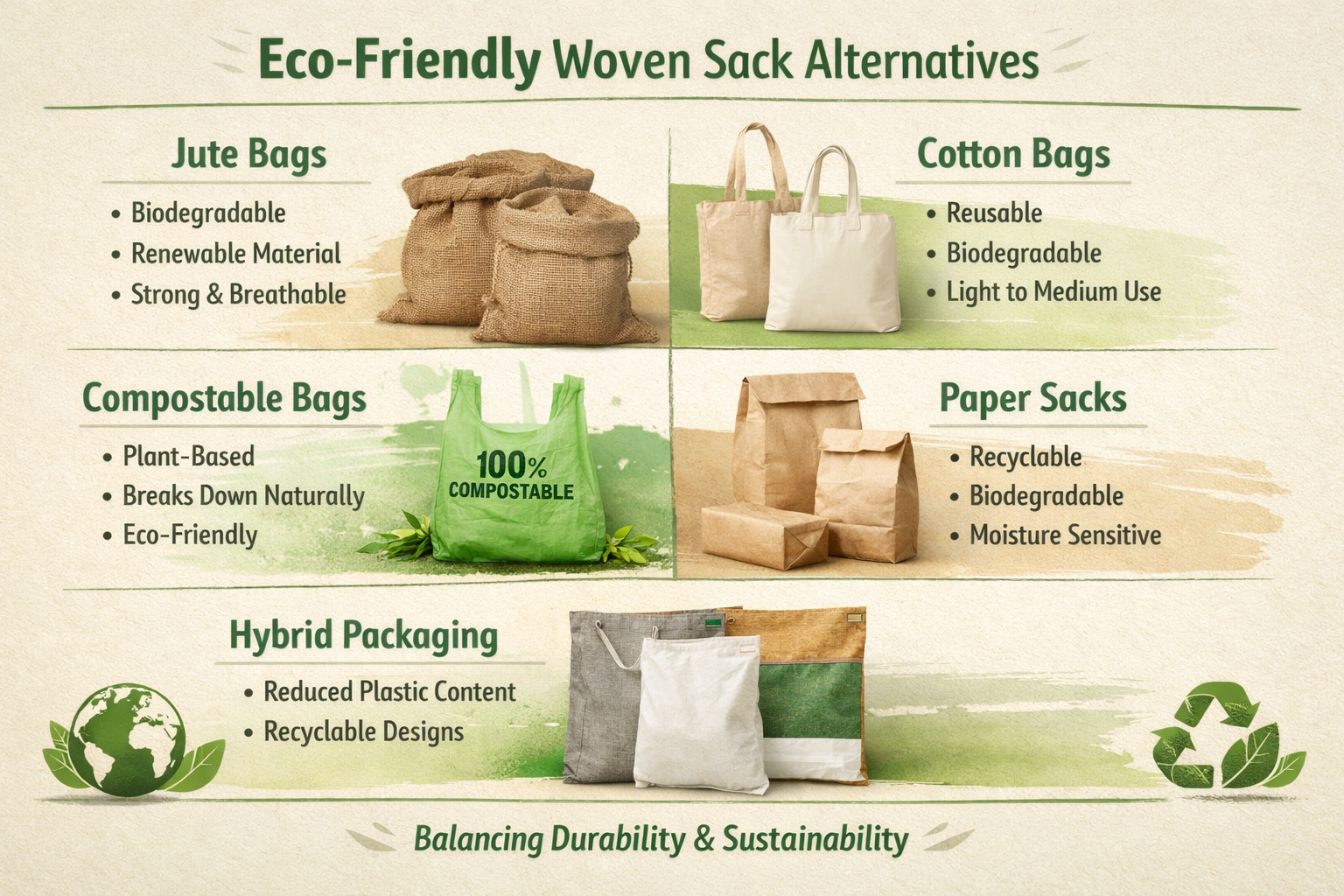
As sustainability becomes a priority, many businesses are exploring eco-friendly woven sack alternatives to reduce long-term environmental impact. While BOPP bags offer durability and support BOPP woven bags recycling, alternative materials can provide better end-of-life benefits such as biodegradability and compostability.
Let’s explore the most effective options:
1. Jute Bags (Natural Fiber Solution)
Jute is one of the most popular natural alternatives.
Benefits:
- 100% biodegradable and compostable
- Made from renewable resources
- Strong and breathable material
Limitations:
- Heavier than plastic alternatives
- Higher transportation costs
- Limited moisture resistance
Jute bags are ideal where sustainability is the top priority, even though they may not fully replace recyclable plastic woven bags in heavy-duty applications.
2. Cotton Bags (Reusable Option)
Cotton sacks are widely used for eco-conscious packaging.
Benefits:
- Reusable and washable
- Biodegradable over time
- Suitable for light to medium use
Limitations:
- High water and energy consumption during production
- Less durable for industrial use
They are best suited for retail and consumer-facing applications rather than bulk industrial packaging.
3. Biodegradable and Compostable Bags
These are made from plant-based or bio-polymers designed to break down naturally.
Benefits:
- Reduced long-term environmental impact
- Break down under composting conditions
- Align with sustainability regulations
Limitations:
- Higher cost
- Limited strength and load capacity
- Require specific disposal conditions
While promising, they are still evolving and may not yet fully replace traditional options in all sectors.
4. Paper-Based Woven Sacks
Modern paper sacks are engineered for improved strength and durability.
Benefits:
- Easily recyclable
- Biodegradable
- Widely accepted in recycling systems
Limitations:
- Weak in wet or humid conditions
- Lower reusability compared to BOPP bags
- These are commonly used in industries where moisture exposure is minimal.
5. Hybrid Sustainable Packaging
Some manufacturers are now developing hybrid solutions by combining materials.
Examples include:
- Reduced plastic content bags
- Mono-material recyclable designs
- Improved eco-design for easier recycling
These innovations aim to balance the benefits of polypropylene woven bags recyclable with improved sustainability.
Final Insight
There is no perfect alternative yet. Each option comes with trade-offs between durability, cost, and environmental impact.
While eco-friendly woven sack alternatives offer strong sustainability benefits, BOPP bags still remain relevant due to their performance and potential for reuse of polypropylene woven sacks and recycling.
The future of packaging lies in choosing the right material for the right application while continuously improving environmental responsibility.
Future of BOPP Woven Bags in 2026 and Beyond
The packaging industry is rapidly evolving, and BOPP woven bags are also adapting to meet new sustainability demands. As we move through 2026 and beyond, the focus is shifting toward making BOPP woven bags recycling more efficient, scalable, and widely accessible.
1. Shift Toward Circular Economy
Industries are moving away from the “use and dispose” model toward a circular approach.
This means:
- Designing products for reuse and recycling
- Improving collection systems
- Maximizing the value of recycled materials
This shift will directly improve the effectiveness of the PP woven sacks recycling process.
2. Innovation in Material Design
Manufacturers are working on advanced designs to make bags easier to recycle.
Key developments include:
- Mono-material BOPP bags
- Reduced lamination layers
- Eco-friendly inks and coatings
These innovations will help overcome current recycling challenges and improve the sustainability of recyclable plastic woven bags.
3. Stronger Government Regulations
Governments across the world are introducing stricter policies on plastic usage and waste management.
This includes:
- Mandatory recycling targets
- Extended Producer Responsibility (EPR)
- Restrictions on non-recyclable materials
Such regulations will push industries to improve BOPP woven bags recycling practices.
4. Growth of Recycling Infrastructure
Investment in recycling technology and infrastructure is increasing globally.
Better facilities will:
- Improve sorting and processing efficiency
- Handle complex materials like laminated bags
- Increase overall recycling rates
This will make it easier to manage polypropylene woven bags recyclable at scale.
5. Rising Demand for Sustainable Packaging
Consumers are becoming more environmentally conscious.
Businesses are responding by:
- Offering recyclable and reusable packaging
- Exploring eco friendly woven sack alternatives
- Promoting transparency in sustainability practices
This trend will continue to shape the future of packaging materials.
Final Insight
The future of BOPP woven bags lies in innovation, responsibility, and better systems. While challenges still exist, ongoing improvements in design and recycling processes are making them more sustainable.
As industries evolve, the key question will not just be Are BOPP woven bags recyclable, but how effectively they are reused, recycled, and integrated into a circular economy.
Conclusion
So, are BOPP woven bags recyclable? The honest answer is yes but with conditions.
They are made from polypropylene, which supports BOPP woven bags recycling, but real-world factors like multi-layer design, contamination, and limited infrastructure can affect how efficiently they are recycled.
At the same time, their strength, durability, and ability to be reused multiple times make them a practical and resource-efficient packaging solution. When used responsibly, recyclable plastic woven bags can reduce waste, lower costs, and support sustainability goals.
However, true environmental benefits depend on proper handling reuse, correct disposal, and improved recycling systems. Businesses and users both play a key role in minimizing the overall BOPP bags environmental impact.
In the end, BOPP woven bags are not a perfect solution, but they are a balanced and practical choice in today’s packaging industry especially when combined with better awareness and evolving eco-friendly practices.
FAQs
1. Are BOPP woven bags 100% recyclable?
No, BOPP woven bags are not 100% recyclable in all conditions. While the base material supports BOPP woven bags recycling, the laminated layers and printing can make the process more complex. Their recyclability depends on proper segregation, cleaning, and available recycling facilities.
2. What is the PP woven sacks recycling process?
The PP woven sacks recycling process involves several steps: collection, sorting, cleaning, shredding, melting, and converting into plastic granules. These granules are then reused to manufacture new plastic products, supporting a circular economy.
3. Are polypropylene bags eco friendly for long-term use?
Yes, are polypropylene bags eco friendly can be answered as conditionally true. They are eco-friendly when reused multiple times and properly recycled. However, if disposed of incorrectly, they can contribute to environmental pollution.
4. Can BOPP bags be reused multiple times?
Yes, BOPP woven bags are highly durable and designed for repeated use. The reuse of polypropylene woven sacks is common in industries like agriculture and construction, helping reduce waste and overall packaging costs.
5. What are the best eco friendly woven sack alternatives?
Some of the best eco friendly woven sack alternatives include jute bags, cotton bags, biodegradable sacks, and paper-based packaging. Each option offers environmental benefits but may vary in cost, durability, and application suitability.