Introduction
In the modern competitive world of packaging, PP woven bags have proved to be one of the most dependable and widely used packaging solutions. Industries such as agriculture, food processing, cement, chemicals, fertilizers, and many others rely on PP woven bags because they are strong, safe, and cost-effective.
PP woven bags are known for their durability, lightweight structure, and ability to carry heavy loads without damage. Their versatility makes them suitable for both the Indian market and international export requirements. This complete guide explains PP woven bags in simple and clear language, covering manufacturing quality, raw materials, production processes, applications, and long-term value.
Whether you are a business owner, distributor, exporter, or packaging buyer, this guide will help you understand why PP woven bags are a reliable and practical packaging option.
What Are PP Woven Bags?
PP woven bags are packaging bags made from polypropylene, a strong and flexible plastic material. The term "woven" refers to the process in which thin polypropylene tapes are interlaced in a criss-cross pattern to form a durable fabric.
This woven structure gives the bags high strength and tear resistance, making them ideal for packing bulk and heavy products. PP woven bags are commonly used for packaging rice, wheat, sugar, flour, cement, animal feed, seeds, fertilizers, and chemicals.
Because polypropylene is resistant to moisture and many chemicals, PP woven bags help protect goods during storage and transportation.
Key Features and Benefits of Polypropylene Woven Bags
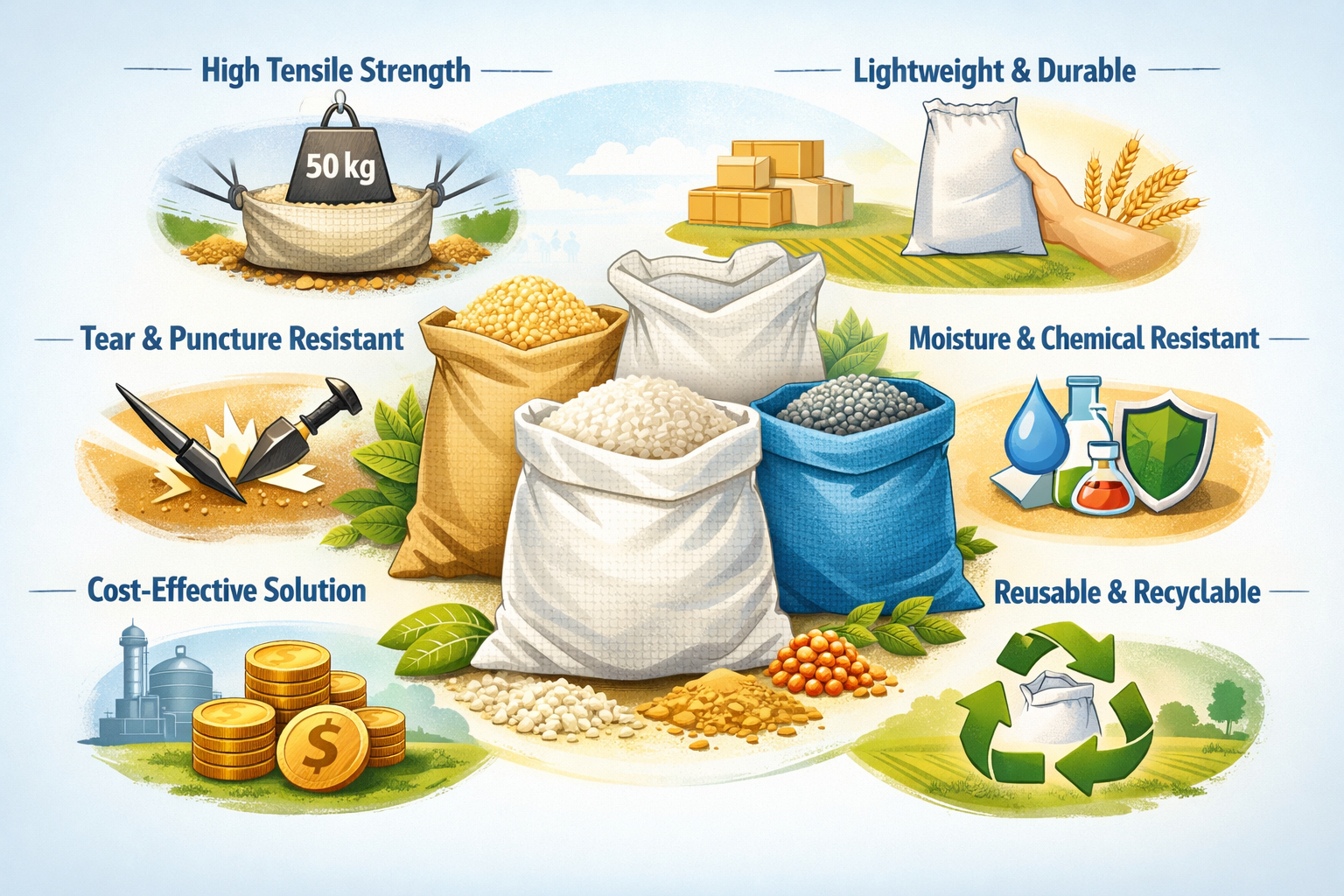
Polypropylene Woven Bags are widely used across multiple industries because they combine strength, flexibility, and cost efficiency. These bags are manufactured from woven polypropylene tapes, creating a strong fabric structure that can safely hold heavy materials. Due to their reliable performance and durability, many businesses prefer woven polypropylene bags for packaging agricultural products, industrial materials, and bulk commodities.
Below are the key features and benefits that make polypropylene woven bags one of the most trusted packaging solutions in modern industries.
High Tensile Strength
One of the most important advantages of polypropylene woven bags is their high tensile strength. The woven structure created by interlacing polypropylene tapes provides excellent load-bearing capacity. This means the bags can carry heavy materials without easily tearing or breaking.
Because of this strength, woven polypropylene bags are commonly used for packaging products such as cement, grains, fertilizers, sand, and chemicals. The strong woven fabric distributes the weight evenly across the bag, reducing the risk of damage during storage and transportation.
Lightweight Yet Durable
Despite their strong structure, pp woven bags are lightweight compared to many other packaging materials. This lightweight design makes them easy to handle, transport, and store.
At the same time, the woven construction ensures durability and long-lasting performance. Even when filled with heavy materials, woven polypropylene bags maintain their shape and strength, making them suitable for demanding industrial applications.
Cost-Effective Packaging Solution
Another major benefit of pp woven bags is their cost efficiency. These bags provide a strong and reliable packaging option at a relatively low production cost.
For businesses that need to package large quantities of materials, woven polypropylene bags offer an economical solution without compromising quality. Their durability also reduces the risk of product loss caused by bag breakage, which further improves cost savings.
Because of their affordability and reliability, many industries prefer polypropylene woven bags for bulk packaging and transportation.
Tear and Puncture Resistance
The woven structure of these bags provides excellent resistance to tearing and punctures. Unlike thin plastic bags that can easily rip under pressure, woven polypropylene bags are designed to handle rough handling and heavy loads.
This feature makes them particularly useful in industries such as construction and agriculture where materials are often heavy or sharp. The strong fabric helps prevent damage during loading, stacking, and transportation.
As a result, polypropylene woven bags ensure safe and secure packaging for a wide range of products.
Moisture and Chemical Resistance
Polypropylene woven bags offer good resistance to moisture and many types of chemicals. When laminated with a protective coating, these bags provide an additional barrier against water and external contaminants.
This property makes woven pp bags ideal for packaging products that must remain dry, such as cement, fertilizers, powdered chemicals, and food grains. The moisture resistance helps protect the quality of the packaged materials during storage and transportation.
Reusability and Recyclability
Another important advantage of polypropylene woven bags is their reusability. Because of their strong construction, these bags can often be reused multiple times before disposal.
In addition, polypropylene is a recyclable material. Many woven polypropylene bags can be recycled and processed into new plastic products, reducing environmental waste.
This combination of durability and recyclability makes polypropylene woven bags a more sustainable packaging option compared to many single-use plastic bags.
Reliable Packaging for Multiple Industries
Thanks to their strength, flexibility, and durability, polypropylene woven bags are used in a wide range of industries. From agriculture and construction to food processing and chemical manufacturing, these bags provide a dependable packaging solution.
Businesses rely on woven polypropylene bags to store and transport bulk materials safely while maintaining product quality.
Raw Materials Used in PP Woven Bag Manufacturing
Polypropylene Granules
Polypropylene granules are the primary raw material used to manufacture PP woven bags. These granules are melted and processed into tapes, which are later woven into fabric.
Virgin polypropylene granules are used for food-grade and export-quality bags to ensure cleanliness, strength, and uniform quality. Recycled polypropylene is often used for non-food and industrial applications where cost efficiency is a priority.
Masterbatches and Additives
Manufacturers add specific additives to improve bag performance, including:
- UV stabilizers to protect bags from sunlight
- Color masterbatches for consistent appearance
- Anti-slip agents for better stacking
- Anti-static additives for chemical packaging
The correct combination of raw materials plays a key role in ensuring consistent quality and durability.
Step-by-Step Manufacturing Process of PP Woven Bags
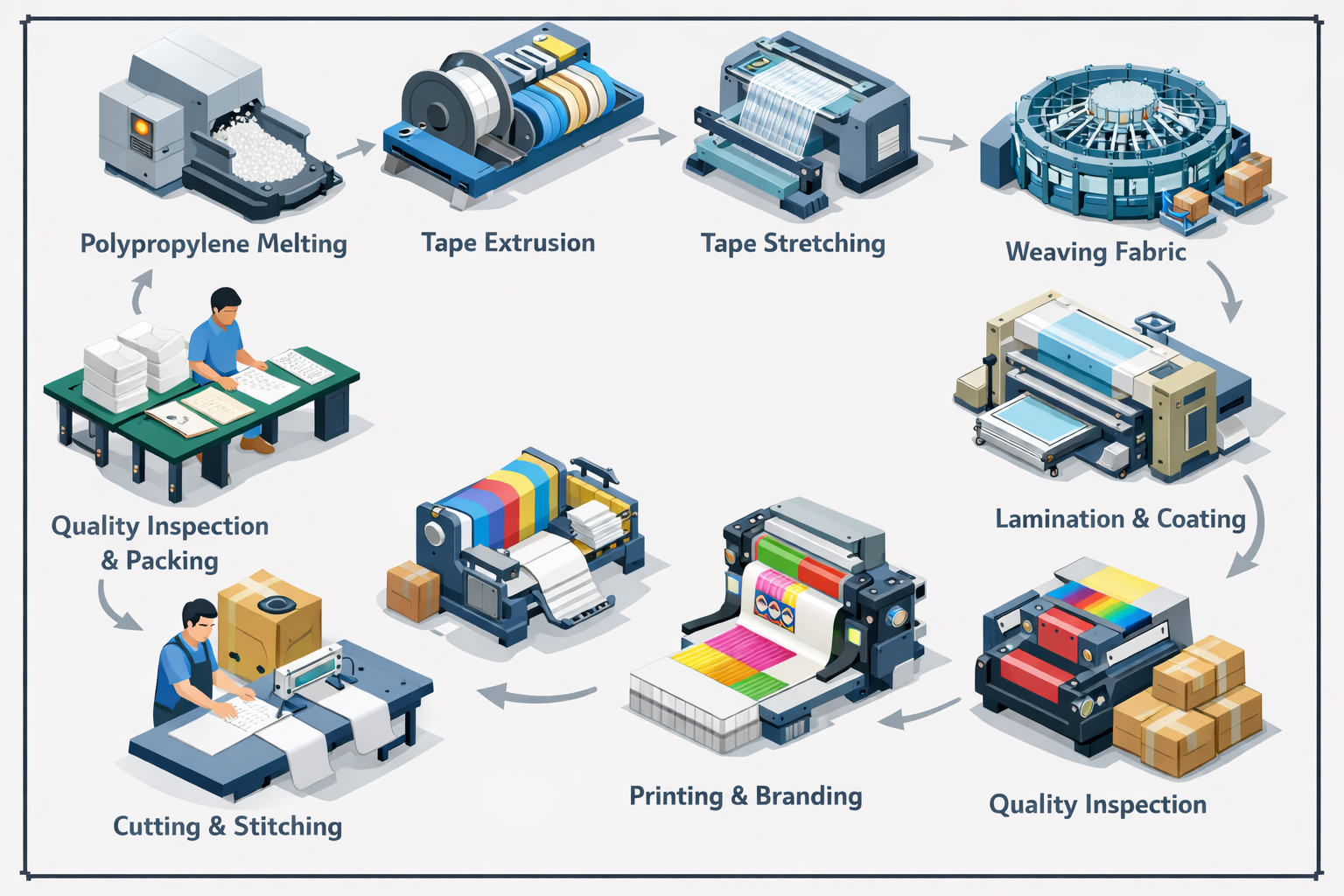
The PP woven bag manufacturing process involves several carefully controlled stages that convert polypropylene raw material into strong and durable packaging bags. Each step is designed to improve the strength, flexibility, and overall performance of the final product.
Because these bags are used for heavy-duty packaging in industries such as agriculture, construction, and food processing, manufacturers follow precise production techniques to ensure high quality and consistency.
Below is a step-by-step explanation of the PP woven bag manufacturing process.
1. Polypropylene Granules Melting
The manufacturing process begins with polypropylene (PP) granules, which are the primary raw material used to produce woven bags. These small plastic pellets are fed into an extrusion machine where they are heated at high temperatures until they melt.
During this stage, the molten polypropylene becomes a flexible material that can be shaped into thin tapes. The quality of the raw polypropylene granules plays an important role in determining the strength and durability of the final woven bag.
This step forms the foundation of the entire PP woven bag manufacturing process, as it prepares the material for further processing.
2. Tape Extrusion Process
Once the polypropylene granules are melted, the molten plastic is passed through a flat die to create thin plastic films. These films are then cooled and cut into narrow strips known as polypropylene tapes.
These tapes serve as the basic building blocks for the woven fabric used in bag production. The extrusion process must be carefully controlled to maintain uniform thickness and strength of the tapes.
Proper extrusion ensures that the tapes are strong enough to withstand the stress of weaving and later packaging applications.
3. Tape Stretching for Strength
After extrusion, the polypropylene tapes undergo a stretching process. In this step, the tapes are heated and stretched longitudinally to increase their molecular orientation.
This stretching significantly improves the tensile strength of the tapes. As a result, the final woven fabric becomes stronger and more resistant to tearing.
The stretching stage is one of the most important steps in the PP woven bag manufacturing process because it enhances the load-bearing capacity of the finished bags.
4. Weaving Fabric on Circular Looms
Once the tapes are prepared, they are transferred to circular weaving looms. These machines weave the polypropylene tapes together to form a strong fabric structure.
The tapes are interlaced in two directions warp and weft creating a tightly woven pattern. This weaving technique produces a fabric that is flexible yet highly durable.
The woven fabric produced at this stage is the core material used to manufacture PP woven bags. The strength of this fabric allows the bags to carry heavy materials such as cement, grains, fertilizers, and chemicals.
5. Laminating or Coating Process
Depending on the application requirements, the woven fabric may undergo a lamination or coating process. In this step, a thin layer of polypropylene film is applied to the fabric surface.
Lamination improves several properties of the bag, including:
- Moisture resistance
- Dust protection
- Improved durability
- Better printing surface
For certain applications, manufacturers may also apply BOPP film lamination, which allows high-quality graphics and branding on the bags.
Not all bags require lamination. Some industries prefer unlaminated woven bags that allow air circulation for agricultural products.
6. Printing and Branding
After lamination (if required), the woven fabric moves to the printing stage. This step allows manufacturers to add logos, product information, branding, and instructions on the bags.
Modern printing machines can produce high-quality designs with multiple colors, especially when BOPP laminated surfaces are used. Clear printing is essential for product identification, brand recognition, and regulatory information.
Many businesses rely on customized printing to make their packaging more attractive and recognizable in the market.
7. Cutting and Stitching
Once printing is completed, the large rolls of woven fabric are cut into the required bag sizes. The fabric pieces are then folded and stitched using industrial sewing machines.
During this stage, the bottom of the bag is sealed to create a secure structure capable of holding heavy materials. Depending on the product requirements, manufacturers may add additional features such as:
- Valve openings for cement bags
- Gussets for increased storage capacity
- Handles for easier handling
This step transforms the woven fabric into finished PP woven sack bags ready for industrial use.
8. Quality Inspection and Packaging
The final stage of the PP woven bag manufacturing process involves strict quality inspection. Manufacturers carefully examine each batch of bags to ensure they meet industry standards and customer specifications.
Quality checks typically include:
- Strength testing
- Stitching quality inspection
- Size accuracy
- Printing clarity
- Lamination consistency
After inspection, the bags are bundled, packed, and prepared for shipment. Proper packaging ensures that the bags remain clean and undamaged during transportation to customers.
Types of PP Woven Bags
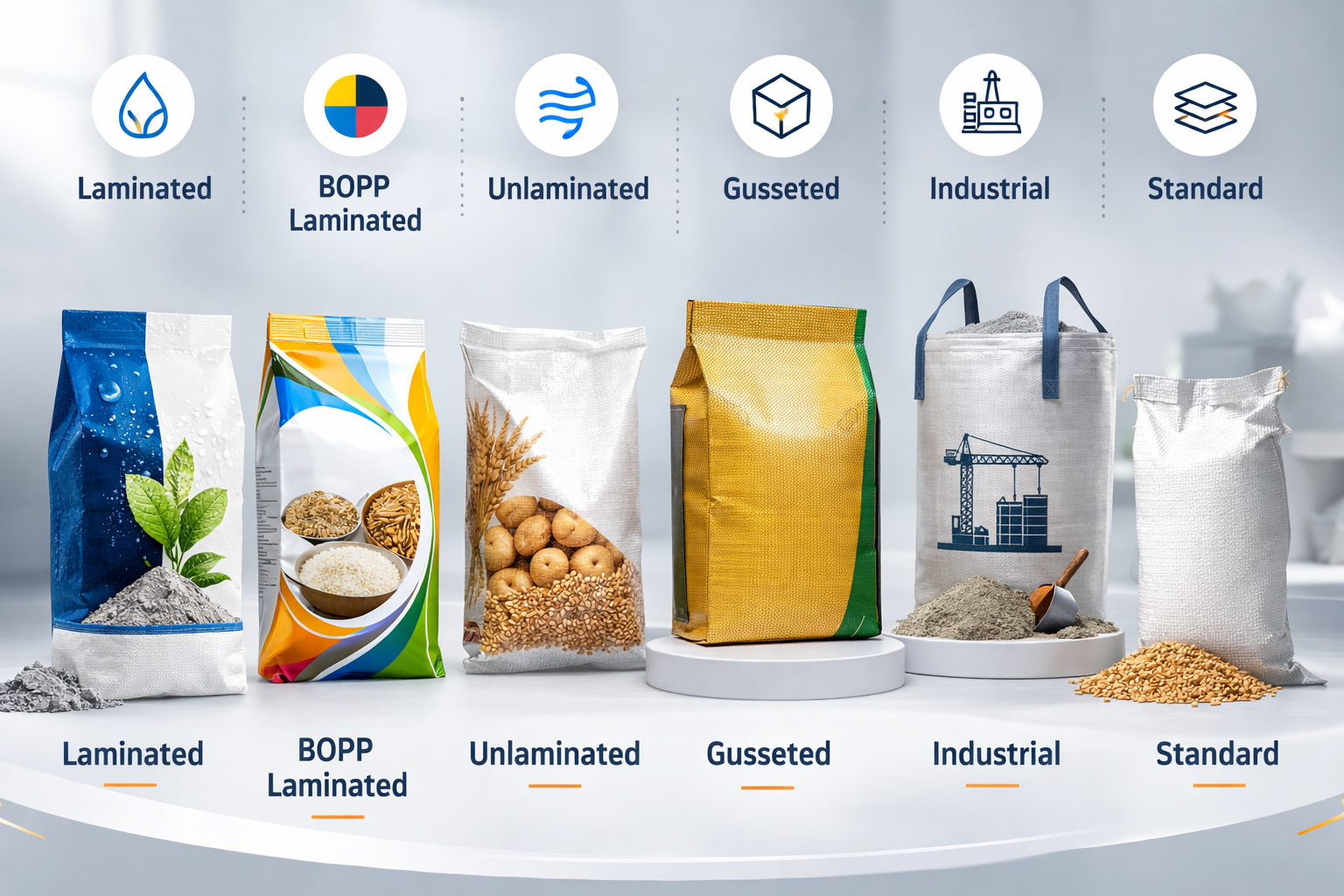
PP Woven Bags are available in several types depending on the packaging requirements of different industries. Manufacturers design these bags with specific features such as lamination, printing, or extra storage capacity to meet various industrial and commercial needs.
From agriculture and food packaging to heavy industrial materials, different woven polypropylene bags are used to ensure safe storage and transportation. Understanding the different types helps businesses choose the right packaging solution for their products.
Below are the most common types of polypropylene woven sack products available in the market.
Laminated PP Woven Bags
Laminated PP woven bags are widely used in industries that require additional protection against moisture, dust, and contamination. In this type of bag, a thin layer of polypropylene film is applied on the woven fabric surface through a lamination process.
This additional layer strengthens the bag and improves its barrier properties, making it suitable for storing products that must remain dry and protected during transportation.
One of the major advantages of laminated PP woven bags is their ability to resist moisture. This makes them particularly useful for packaging materials such as cement, chemicals, fertilizers, and powdered products.
Key features of laminated woven bags include:
- Improved moisture resistance
- Increased durability and strength
- Better protection against dust and external elements
- Enhanced printing surface for branding
Because of these advantages, laminated bags are widely used for PP woven packaging bags in construction and chemical industries where product protection is essential.
BOPP Laminated Woven Bag
BOPP laminated woven bags are considered one of the most advanced types of woven polypropylene bags used in modern packaging. BOPP stands for Biaxially Oriented Polypropylene, a special film that is laminated onto the woven fabric to improve both strength and appearance.
The biggest advantage of BOPP laminated woven bags is their superior printing capability. High-resolution graphics can be printed on the BOPP film, allowing brands to create attractive packaging designs.
These bags are commonly used in industries where product presentation and branding play an important role, such as food packaging and retail packaging.
Major benefits of BOPP laminated bags include:
- High-quality multi-color printing
- Glossy and attractive appearance
- Better resistance to moisture and tearing
- Improved brand visibility
Many companies choose BOPP laminated woven bags for packaging products like rice, flour, sugar, animal feed, and seeds because they combine durability with premium visual appeal.
Unlaminated PP Woven Bags
Unlaminated PP woven bags are the simplest and most cost-effective type of PP woven sack bags. These bags are made from woven polypropylene fabric without any additional coating or lamination layer.
Because they do not have a laminated surface, these bags remain breathable. This makes them ideal for packaging products that require air circulation, such as agricultural produce and grains.
The breathable structure prevents moisture buildup inside the bag and helps maintain the quality of the stored materials.
Key advantages of unlaminated bags include:
- Excellent breathability
- Lightweight and flexible design
- Cost-effective packaging solution
- Suitable for agricultural storage
These woven polypropylene bags are commonly used for packaging potatoes, onions, grains, seeds, and other agricultural products.
Gusseted PP Woven Bags
Gusseted PP woven bags are designed with expandable sides, known as gussets, which allow the bag to increase its storage capacity. These gussets provide extra space, making the bag more stable when filled.
When the bag is filled with materials, the side gussets expand and allow the bag to maintain a rectangular or box-like shape. This makes stacking and transportation easier.
The design of gusseted bags helps maximize storage efficiency and improves the handling of bulk products.
Important features of gusseted bags include:
- Increased storage capacity
- Better stacking stability
- Efficient use of storage space
- Improved transportation handling
Because of these benefits, gusseted polypropylene woven sack packaging is widely used for bulk food products, fertilizers, and industrial materials.
Industrial PP Woven Bags
Industrial PP woven bags are specifically designed for heavy-duty applications where strong and durable packaging is required. These bags are built with thicker woven fabric and high tensile strength to handle heavy loads.
Industries such as construction, chemicals, and mining depend on industrial PP woven bags for packaging and transporting materials like cement, sand, minerals, and industrial powders.
These bags are engineered to withstand rough handling during transportation and storage.
Key characteristics of industrial woven bags include:
- High load-bearing capacity
- Strong resistance to tearing and punctures
- Durable construction for heavy materials
- Reliable performance in harsh environments
Because of their strength and reliability, industrial PP woven bags are widely used in industrial supply chains where packaging durability is critical.
Standard PP Woven Sack Bags
Standard PP woven sack bags are basic packaging bags made from woven polypropylene fabric. These bags are widely used for general bulk packaging and storage purposes.
Unlike laminated or specialty bags, standard sacks focus primarily on strength and cost efficiency. They provide a reliable packaging solution for transporting large quantities of materials.
These PP woven sack bags are commonly used for packaging grains, animal feed, fertilizers, and other agricultural products.
Advantages of standard woven sack bags include:
- Affordable packaging solution
- Lightweight yet strong material
- Suitable for bulk storage and transportation
- Easy handling and stacking
Due to their versatility, woven polypropylene bags remain one of the most widely used packaging options across agriculture, food processing, and industrial sectors.
PP Woven Bags Uses in Different Industries
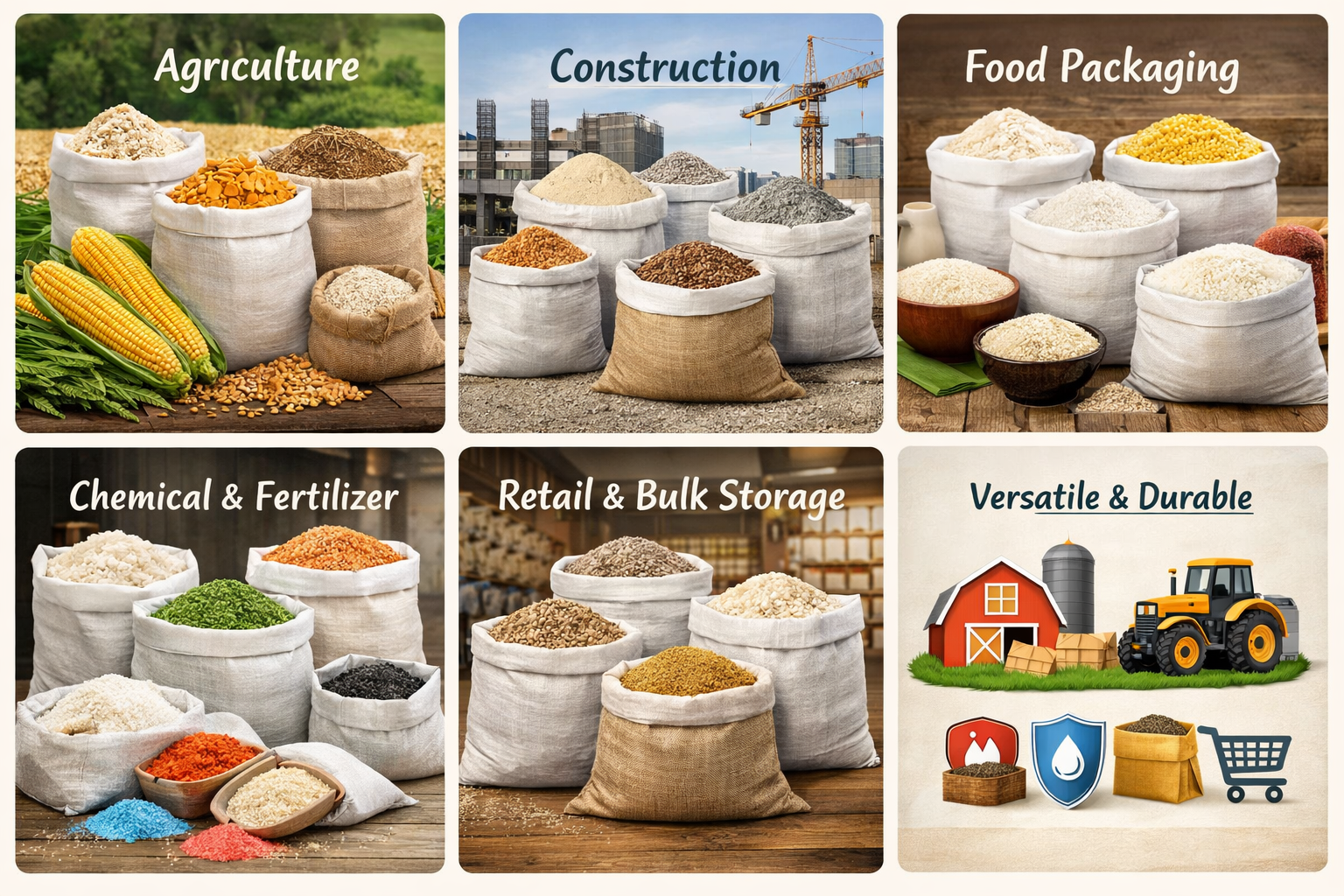
PP Woven Bags are widely used across many industries because of their strength, flexibility, and cost efficiency. These bags are designed to safely store and transport bulk materials while maintaining product quality during handling and transportation. Due to their durable woven structure, polypropylene woven bags have become one of the most reliable packaging solutions for industrial and agricultural applications.
Different industries use PP woven packaging bags depending on the type of product being stored, the weight of the material, and environmental conditions such as moisture or dust exposure.
Below are the major industries where PP Woven Bags uses are most common.
Agriculture Industry
One of the largest users of PP woven packaging bags is the agriculture sector. Farmers and agricultural suppliers rely on these bags for packaging and transporting various types of crops and agricultural materials.
Woven polypropylene bags are ideal for agricultural packaging because they are strong, breathable, and resistant to environmental conditions. These bags help protect crops during storage and transportation while allowing proper ventilation when required.
Common agricultural products packaged in polypropylene woven bags include:
- Rice
- Wheat
- Corn
- Seeds
- Fertilizers
- Animal feed
Because of their durability and ability to handle heavy loads, PP Woven Bags are widely used for bulk grain storage and agricultural supply chains.
Construction Industry
The construction industry also heavily depends on industrial PP woven bags for packaging materials that require strong and reliable containers. Construction materials are often heavy and abrasive, which means packaging must be capable of handling rough conditions.
Woven polypropylene bags provide the strength needed to transport building materials safely.
Common construction materials packaged in these bags include:
- Cement
- Sand
- Gravel
- Construction chemicals
- Tile adhesives
Many cement manufacturers specifically use laminated PP woven packaging bags because they offer moisture protection and prevent material leakage.
Food Packaging Industry
The food industry requires packaging solutions that are strong, safe, and capable of protecting products during long-distance transportation. Polypropylene woven bags are commonly used for bulk food packaging because they maintain product freshness and reduce the risk of contamination.
Many food manufacturers choose woven polypropylene bags because they can be customized with printed product information and branding.
Typical food products packaged in these bags include:
- Rice
- Sugar
- Flour
- Pulses
- Salt
In many cases, BOPP laminated PP woven bags are used in food packaging because they allow high-quality printing and provide additional protection against moisture.
Chemical and Fertilizer Industry
The chemical and fertilizer industry requires packaging materials that are durable and resistant to external environmental factors. Industrial PP woven bags are commonly used for storing and transporting powdered or granular chemicals.
These bags offer strong resistance to tearing and can withstand the heavy weight of chemical products.
Common products packaged using PP woven packaging bags include:
- Fertilizers
- Industrial chemicals
- Plastic granules
- Mineral powders
The laminated structure of certain polypropylene woven bags helps prevent moisture from affecting the product, which is especially important for fertilizers and chemical compounds.
Retail and Bulk Storage
Retail suppliers and wholesale distributors also rely on PP Woven Bags for packaging and bulk storage of various products. These bags are ideal for transporting large quantities of goods because they are lightweight yet capable of carrying heavy loads.
Woven polypropylene bags can also be customized with attractive designs and branding, making them suitable for retail packaging in some markets.
Products commonly stored in these bags include:
- Animal feed
- Flour and grain products
- Seeds and agricultural supplies
- Industrial raw materials
Because of their versatility, polypropylene woven bags are widely used for both industrial logistics and commercial distribution.
Why Businesses Choose Reliable PP Woven Bag Manufacturers
Choosing the right manufacturer is important to ensure strong, durable, and high-quality PP Woven Bags. Reliable PP woven bag manufacturers use quality raw materials, modern machinery, and strict quality control to produce dependable woven polypropylene bags for different industries.
Consistent Quality
Trusted manufacturers ensure every batch of PP Woven Bags meets strength and durability standards required for industrial and agricultural packaging.
Customization and Printing
Many PP woven bag suppliers offer customized sizes, lamination options, and high-quality printing for branding and product information.
Bulk Production Capacity
Reliable manufacturers can produce large quantities of woven polypropylene bags while maintaining consistent quality and timely delivery.
Global Supply and Export
Professional PP woven bag exporters provide reliable supply chains and deliver packaging solutions to businesses across domestic and international markets.
Why Choose Oberon Polypack
Oberon Polypack is a trusted manufacturer providing high-quality PP Woven Bags for agriculture, construction, food, and industrial packaging. With advanced production technology and strict quality standards, Oberon Polypack ensures durable and reliable packaging solutions for businesses.
How to Choose the Right PP Woven Bags for Your Business
Selecting the right PP Woven Bags is important for ensuring safe packaging, efficient transportation, and product protection. Different industries have different packaging requirements, so businesses should consider several factors before choosing the most suitable woven polypropylene bags for their products.
Below are some practical factors to consider when selecting the right packaging solution.
Bag Size and Capacity
The size and load capacity of the bag should match the type and quantity of the material being packaged. Larger bags are suitable for bulk materials such as grains or fertilizers, while smaller woven polypropylene bags may be used for retail packaging or lighter products.
Lamination Requirement
Lamination is important when products need protection from moisture, dust, or contamination. Laminated PP Woven Bags provide an extra protective layer, making them ideal for packaging cement, chemicals, or powdered materials.
Printing and Branding
Many businesses use PP Woven Bags as a branding tool. High-quality printing allows companies to display product information, company logos, and attractive designs. BOPP laminated bags are often preferred for clear and high-resolution branding.
Strength Requirements
The strength of the bag should match the weight and handling conditions of the product. Heavy materials such as sand, cement, or industrial chemicals require strong woven polypropylene bags with high tensile strength to prevent tearing or damage.
Industry-Specific Needs
Different industries have unique packaging requirements. For example, agricultural products may require breathable bags, while chemical or construction materials may need laminated PP Woven Bags for added protection.
Moisture Protection
If the packaged material is sensitive to humidity or water exposure, moisture-resistant bags should be selected. Laminated woven polypropylene bags help prevent moisture from affecting the quality of the stored products.
By considering these factors, businesses can select the most suitable PP Woven Bags that provide durability, protection, and efficient packaging for their specific industry needs.
Conclusion
PP Woven Bags are a reliable and cost-effective packaging solution used across agriculture, construction, food, and industrial sectors. Their strong woven structure, lightweight design, and durability make polypropylene woven bags ideal for carrying and storing bulk materials safely.
Because of their versatility and long-lasting performance, many businesses prefer woven polypropylene bags for modern packaging needs. By choosing trusted manufacturers like Oberon Polypack, companies can ensure high-quality bags that provide safe, efficient, and dependable packaging solutions.
Frequently Asked Questions (FAQs)
1. What makes PP woven bags suitable for heavy packaging?
PP woven bags are made using tightly woven polypropylene tapes, which give them high tensile strength. This structure allows the bags to carry heavy loads without tearing or breaking during handling and transportation.
2. Are PP woven bags safe for food packaging?
Yes, PP woven bags are safe for food packaging when manufactured using virgin polypropylene granules. These food-grade bags are commonly used for rice, wheat, sugar, flour, and other food products.
3. What is the difference between laminated and non-laminated PP woven bags?
Non-laminated PP woven bags are breathable and mainly used for agricultural and industrial products. Laminated PP woven bags have an added protective layer that helps prevent moisture, dust, and contamination.
4. Can PP woven bags be customized with printing and branding?
Yes, PP woven bags can be customized with brand logos, product information, colors, and designs using modern printing techniques. This helps businesses improve product presentation and brand visibility.
5. Are PP woven bags reusable and recyclable?
PP woven bags are reusable and recyclable, making them an environmentally responsible packaging choice. Many industries reuse these bags multiple times before sending them for recycling.
6. Which industries commonly use PP woven bags?
PP woven bags are widely used in agriculture, food processing, cement and construction, chemicals, fertilizers, animal feed, and industrial raw material packaging.