Functionality is no longer sufficient in modern-day packaging. Companies now require packs that protect their merchandise, help facilitate effective logistics and reinforce brand presence. It is here that pp woven bags have found a favorable solution in the agricultural, food processing, construction, chemicals and industrial industries.
With increasing competition and regulatory requirements, Printed PP Woven Bags are now widely used to display branding, product information, and handling instructions directly on packaging. Printing enhances plain woven bags into value addition packaging. This guide explains printing options, design considerations, cost factors, and how to choose the right printing solution for Custom PP Woven Bags.
What Are Printed PP Woven Bags?
Printed PP Woven Bags are bags manufactured from woven polypropylene fabric with printed text, logos, or graphics applied directly to the surface. The material is the base and this is made by weaving polypropylene tapes into a strong load bearing fabric.
Key characteristics of printed PP woven bags:
- High tensile strength and tear resistance
- Practical when it comes to heavy and bulk packaging.
- Good legibility of information printed.
- Lasts long without being destroyed by roughness.
Printed bags are more traceable and brand recognizable compared to simple polypropylene woven bags as they are durable as well. They are commonly used as pp woven sacks for grains, cement, fertilizers, and industrial raw materials.
Why Choose Custom Printed PP Woven Bags for Packaging?
Much of the generic packaging fails to satisfy the branding and operations requirements. Custom PP Woven Bags allow businesses to design packaging that matches product requirements and market positioning.
Key benefits of custom printed PP woven bags:
- Name of brand and product imprinted on bag.
- Elimination of external labels that can peel or fade
- Easy presentation of information on weight, grade, and handling of the product.
- Better warehouse recognition and logistics.
For businesses handling bulk goods, printed woven polypropylene bags reduce errors, improve visibility, and enhance professionalism across the supply chain.
Understanding the Base Material: PP Woven Fabric
The performance of printed bags depends heavily on the quality of pp woven fabric. This is an alternative fabric created by weaving of stretched polypropylene tapes into a pattern within the surface which evenly distributes weight across the surface.
Good fabric guarantees adhesion of print and long term clarity. Uneven weaving or defective fabric material may influence sharpness and stability in printed material. This becomes especially important for pp woven fabric bags and pp woven big bag applications where bags are exposed to rough handling.
The right fabric GSM and weave density will be used to make sure that printing is retained across the lifecycle of the bag.
What Are the Common Printing Options for PP Woven Bags?
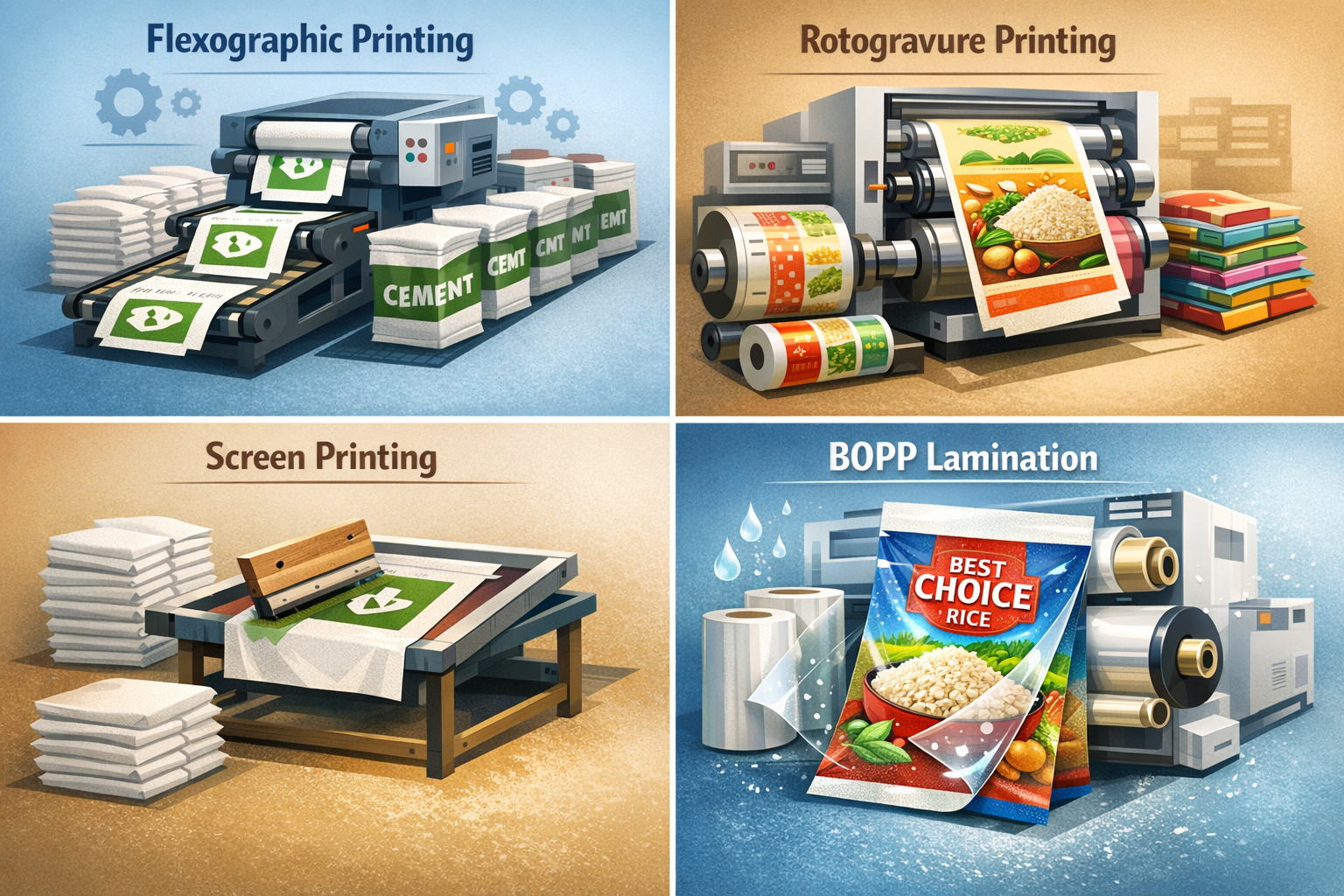
The various printing techniques are applied depending on the volume of orders, level of design, and need of application. The appropriate method will guarantee the economy of costs and print durability.
Flexographic Printing on PP Woven Bags
Flexographic printing is the most widely used method for printed pp woven bags. It employs flexible printing plates and quick-drying inks and is therefore good at high volume production.
The process is effective with simple design, logos, and single color printing. Flexographic printing is cost-effective and suitable for pp woven sacks used in agriculture, cement, and fertilizers.
Although flexo printing does not provide photo-quality print, it can provide consistent results in the area of functional and industrial packaging.
Rotogravure Printing for High-Quality Designs
The rotogravure printing is preferred in case of high quality desired in print and depth of colors. It is a technique where sharp and detailed designs are made by engraving cylinders.
It is ideal for export packaging and premium branded pp bags where appearance plays a key role. Rotogravure printing supports many colors and fineness however the costs of setting it up are higher so it is more applicable to large production runs.
Laminated applications are often used by companies that want to have the best visual appearance.
Screen Printing for Limited Designs
Small batches or simple designs are normally done using screen printing.
When screen printing makes sense:
- Single-color logos or symbols
- Small production runs
- Temporary or internal-use packaging
It is not a perfect technique when it comes to large volume and multi-color designs.
BOPP Lamination Printing
BOPP lamination involves reverse printing on a BOPP film, which is then laminated onto woven polypropylene bags. The result is a high-gloss, premium finish with excellent durability.
These printed pp woven bags are waterproof, scratch-resistant, and visually attractive, making them popular for export-grade packaging. The lamination also improves moisture protection while maintaining strong branding visibility.
Single-Side vs Double-Side Printing: Which Is Better?
The decision between single and double-side printing is based on the visibility criteria and budget. Single-side printing is also less costly and will be adequate on the majority of pp woven bags applied to bulk packaging.
Through the double-side printing, increased brand exposure is available, and it is common with the retail-facing or export packaging. A reliable pp woven bags manufacturer can help determine the best option based on application and cost considerations.
Single-Side vs Double-Side Printing: Comparison Table
| Parameter | Single-Side Printing | Double-Side Printing |
|---|---|---|
| Printing Area | One side of the bag only | Both front and back sides |
| Cost | More economical | Higher printing cost |
| Brand Visibility | Limited to one side | Enhanced brand visibility |
| Design Complexity | Simple designs | More flexible design options |
| Production Time | Faster turnaround | Slightly longer production time |
| Color Usage | Fewer colors generally used | Supports multiple colors on both sides |
| Best Suited For | Bulk and industrial packaging | Branded and export packaging |
| Common Applications | PP woven sacks, fertilizer bags, cement bags | Retail-facing bags, premium packaging |
| Logistics Identification | Basic product information | Clear visibility from both sides |
| Recommended By | Cost-focused buyers | Brand-focused businesses |
How Lamination Affects Printing Quality on PP Woven Bags
Laminated pp woven bags include an additional coating layer that protects printed surfaces from moisture, abrasion, and fading. Lamination boosts the brightness of color and increases the life of print, particularly in the outdoor or damp conditions.
Food grains, fertilizers as well as chemical packaging are packed in laminated bags. The lamination also enhances the smoothness of the surface making it seem more lively and professional.
Lamination is highly advisable to use in applications with a long shelf life and where there is a visual standard.
Color Options and Design Limitations in Printed PP Woven Bags
A printed cloth needs viable design preparation.
Important design considerations:
- Large fonts help in place of fineness.
- Colours with a large contrast enhance the readability.
- Colour printing is costly and excessive.
- Fabric texture can affect image sharpness
A skilled woven bags manufacturer helps optimize designs to balance clarity, durability, and cost.
What Information Should Be Printed on PP Woven Bags?
Safety, compliance and logistics management is enhanced by printed information.
Ordinary printed information comprises:
- Product name and grade
- Net weight and batch number
- Manufacturer or brand logo
- Handling and storage instructions
- Regulatory or export markings
Visibility lowers the chances of mistakes and enhances efficiency in tracking the supply chain.
How Printing Impacts the Cost of PP Woven Bags
The cost of printing is determined by the number of colors, method used to print, as well as the number of printing orders. Flexographic printing is less expensive at large volume and rotogravure at high quality is more expensive.
It is significant to balance branding needs and budget. A professional pp woven bags manufacturer helps optimize printing specifications without unnecessary expense.
Quality Standards and Manufacturing Process Overview
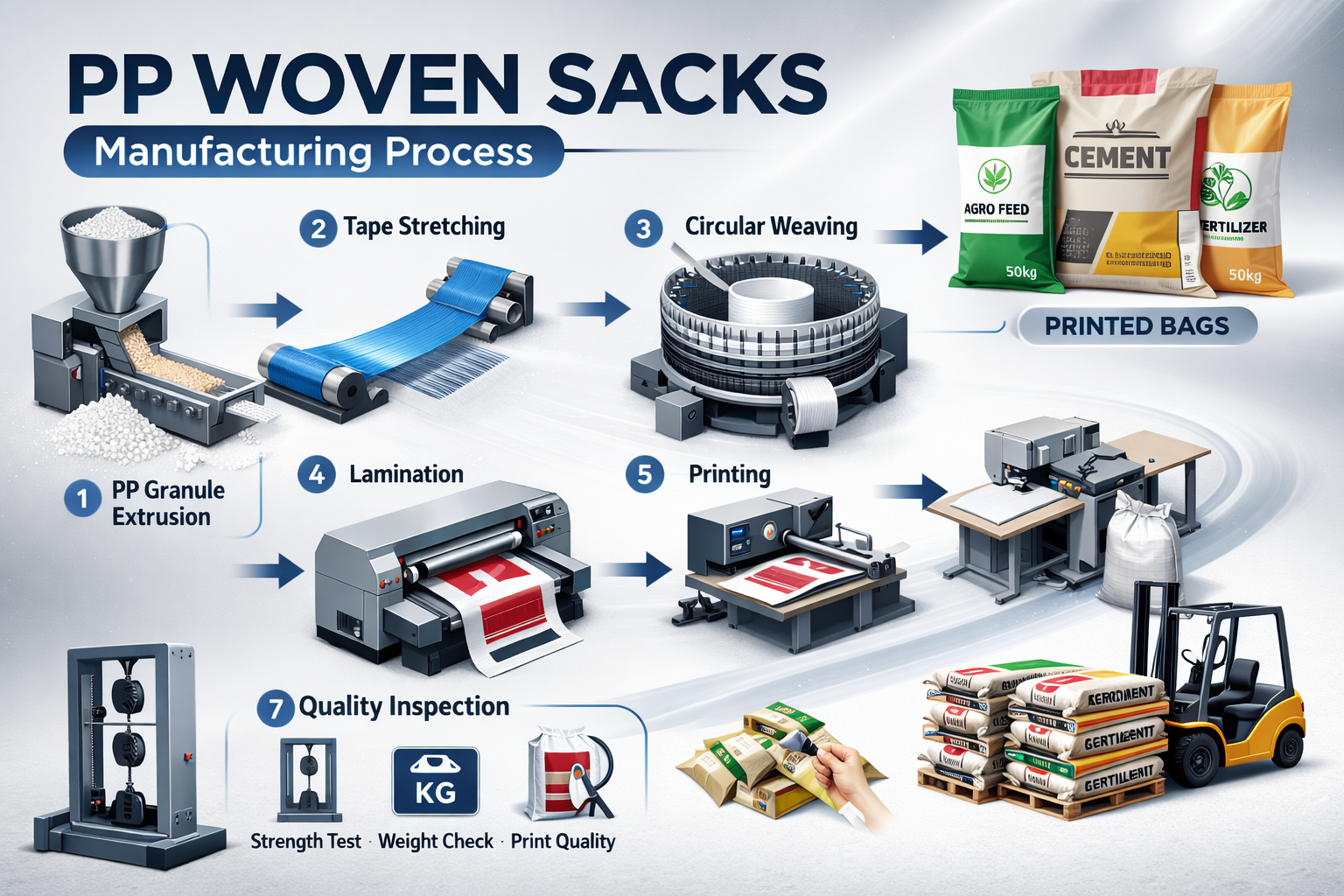
High-quality pp woven sacks are the result of a controlled and standardized manufacturing process. A reliable pp woven bags manufacturer follows strict quality parameters at every stage to ensure durability, strength, and consistent printing results.
Below is a brief overview of how premium woven packaging is produced.
PP Granule Extrusion
The process begins with high-grade polypropylene granules. These raw materials are melted at controlled temperatures and extruded into thin plastic sheets. The sheets are then slit into narrow tapes that form the base material for pp woven fabric.
The quality of granules directly impacts the bag’s tensile strength and load-bearing capacity.
Tape Stretching
The extruded tapes are stretched under precise heat conditions. This stretching process aligns the polymer molecules, increasing strength and flexibility. Proper stretching ensures the final pp woven sacks can handle heavy weights without tearing.
Circular Weaving
The stretched tapes are fed into circular weaving looms to create tubular pp woven fabric. This interwoven structure gives the bags their signature strength and durability.
The weaving density (GSM) is carefully monitored to match the intended application whether for agriculture, cement, or industrial packaging.
Lamination (If Required)
For moisture-sensitive products, a lamination layer is applied to the woven surface. Laminated bags offer improved water resistance and better print quality. This step is especially important for food and export-grade packaging.
Printing
Once the fabric is prepared, branding and product details are printed using appropriate techniques such as flexographic or rotogravure printing. A professional pp woven bags manufacturer ensures color accuracy and long-lasting ink adhesion.
Cutting & Stitching
The woven fabric is cut into required sizes and stitched securely at the bottom. Options such as valve bags, gusseted designs, and custom dimensions are prepared based on customer requirements.
Quality Inspection
Before dispatch, each batch undergoes strict quality checks. Strength testing, weight verification, stitching inspection, and print clarity evaluation ensure the final pp woven sacks meet industry standards.
A structured manufacturing process combined with rigorous quality control ensures that businesses receive reliable, durable, and professionally finished packaging solutions.
Industries That Benefit Most from Printed PP Woven Bags
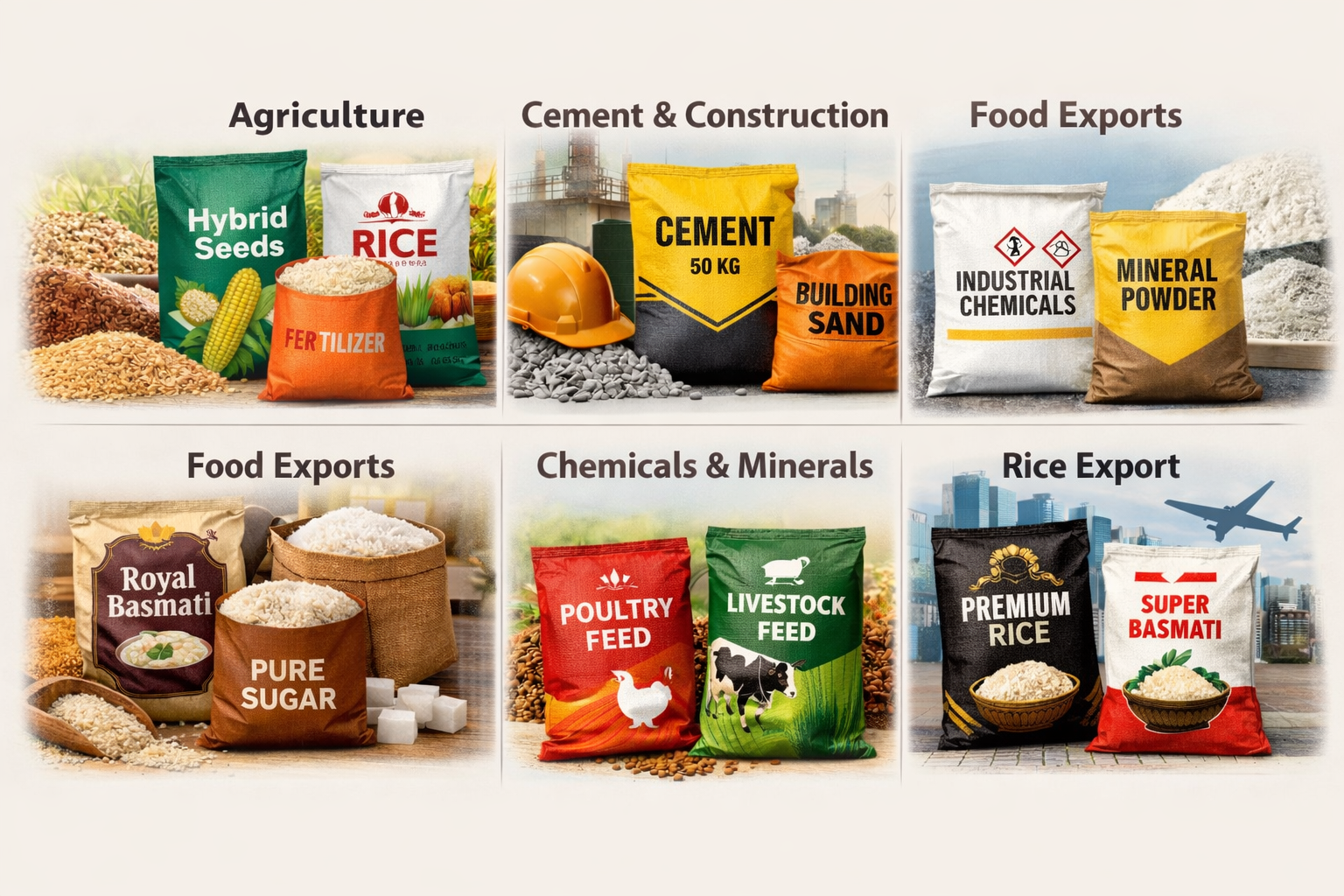
Printed PP Woven Bags are widely used across multiple industries because they combine strength, durability, and branding advantages. Their versatility makes them suitable for both domestic distribution and export packaging.
Agriculture (Seeds, Grains, Fertilizers)
The agricultural sector is one of the largest users of pp woven sacks. These bags are ideal for storing and transporting seeds, wheat, rice, pulses, and fertilizers.
Strong woven polypropylene bags protect products from moisture, tearing, and rough handling during bulk transportation. Printed designs help farmers, distributors, and retailers easily identify product type, weight, and brand.
Cement & Construction
In the construction industry, durability is critical. pp woven fabric bags are commonly used for cement, sand, and construction materials because they can withstand heavy loads and stacking pressure.
Custom printing on these bags ensures clear branding, manufacturing details, and safety instructions. This improves product identification at project sites and warehouses.
Food & Rice Exports
Exporters rely on high-quality woven polypropylene bags for rice, flour, sugar, and other food grains. Attractive printed packaging enhances shelf appeal in international markets.
Laminated and moisture-resistant pp woven sacks protect food products during long-distance shipping while maintaining a premium appearance.
Chemicals & Minerals
Industrial products like resins, powders, and mineral compounds require secure packaging. Strong pp woven fabric bags provide reliable containment and resistance to tearing.
Printed labeling helps meet regulatory requirements by clearly displaying safety information, handling instructions, and batch details.
Animal Feed
Animal feed manufacturers use woven polypropylene bags for bulk and retail packaging. These bags offer strength, ventilation (if required), and print flexibility.
Clear branding on pp woven sacks builds trust among distributors and farm owners while ensuring easy product identification.
Across industries, the adaptability of Printed PP Woven Bags makes them a preferred packaging solution for businesses seeking durability, compliance, and strong brand presence.
How to Choose the Right PP Woven Bags Manufacturer for Printing
The selection of the manufacturer is most important in ensuring consistency of prints and performance of bags. Seek experience in printed packaging, in-house printing and good quality control systems.
A dependable pp woven bags manufacturer offers technical guidance, sampling support, and reliable delivery schedules, ensuring smooth execution of printed packaging projects.
Why Oberon Polypack for Printed PP Woven Bags
Oberon Polypack is a trusted name in the packaging industry, offering high-quality Printed PP Woven Bags for diverse industrial applications.
Oberin Polypack has 3 state-of-the-art manufacturing plants and has higher quality requirements and is able to provide durable pp woven bags with precise printing and optional lamination. The company specializes in Custom PP Woven Bags, bulk packaging solutions, and export-grade woven bags designed for long-term performance.
They are consistent, customized, and customer-satisfied, which makes Oberon Polypack a good choice as a partner of printed woven packaging solutions.
Conclusion
The pp woven bags, which are used as mere packaging, have been turned into potent branding and identification tools by custom printing. Through appropriate choice of printing technique, fabric and lamination, the business can enjoy a lasting and appealing packaging.
Learning about printing possibilities assists the companies in making sound choices that are cost-effective, high-performance, and brand awareness. With the right pp woven bags manufacturer, printed woven bags become a reliable and value-driven packaging solution.
FAQs
1. What is the optimal printing technique to use on PP woven bags?
Flexographic printing is more suitable in large quantities of printing in the industries whereas rotogravure is the best in high quality designs.
2. Are printed PP woven bags suitable for food packaging?
Yes, and particularly with laminated protection.
3. Is lamination better at increasing print durability?
Yes, lamination is used to shield prints against moisture and abrasion.
4. What is the maximum number of colors to be printed on PP woven bags?
This will change depending on the method of printing and design needs.
5. Is it possible to print custom designs on PP woven bags?
Yes, Custom PP Woven Bags support logos, text, and branding elements.
6. How long does printed PP woven bags production take?
The time of production depends on the size of the orders, printing technique, and the level of customization.