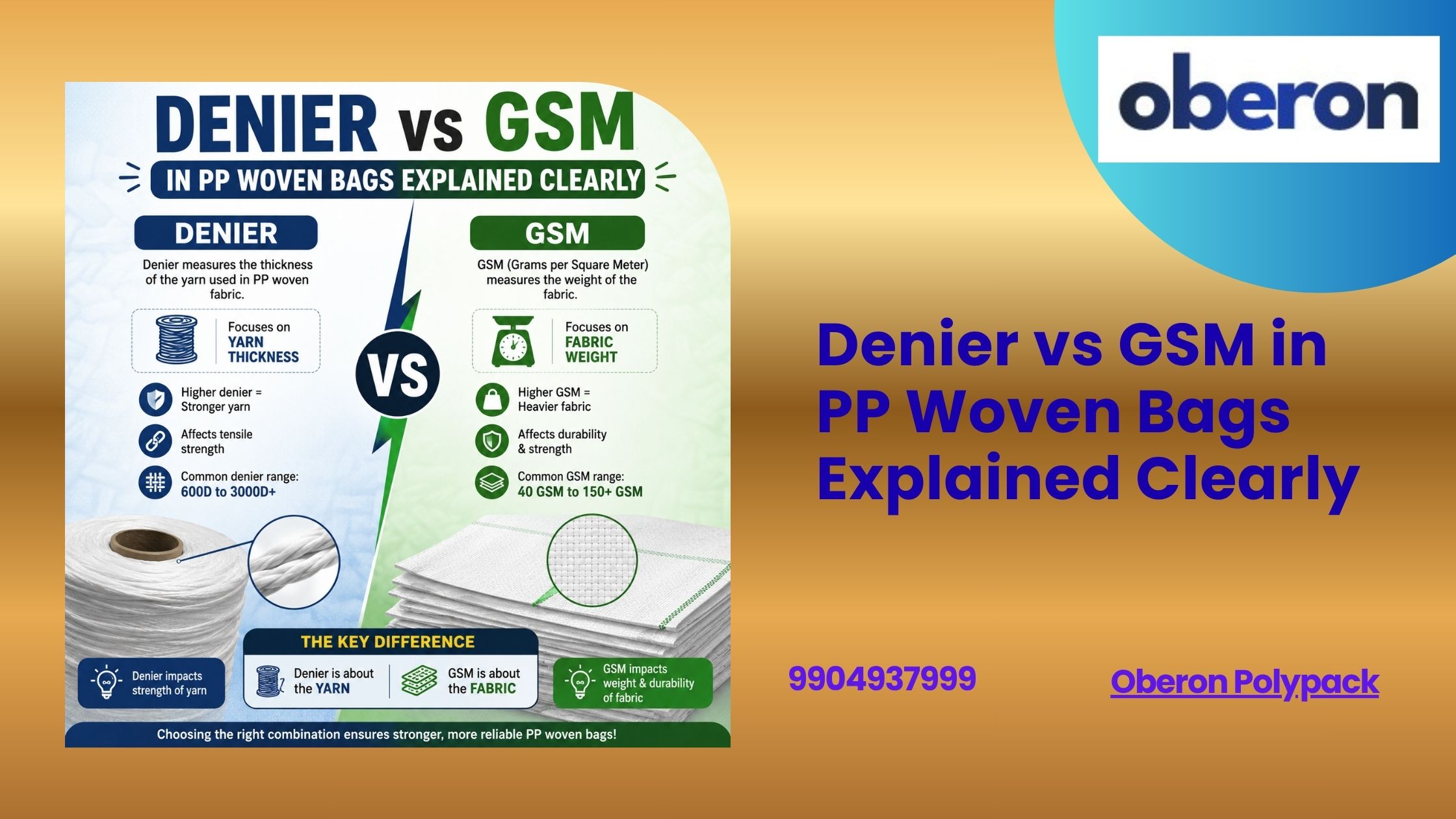
In the PP woven packaging industry, technical terms often sound more complicated than they actually are. Buyers hear words like GSM, denier, tape strength, tensile performance, and suddenly a simple packaging order starts feeling like an engineering exam. The truth is much simpler. If you understand the basics of Denier vs GSM in PP Woven Bags, you can make far better decisions about durability, performance, cost, and packaging quality.
Many businesses focus only on GSM when selecting woven sacks. Others ask for higher denier without understanding how it affects fabric structure. Both measurements matter, but they measure completely different things. Confusing the two is surprisingly common in industrial packaging, especially among first-time buyers or businesses shifting from traditional sacks to modern polypropylene woven packaging.
For manufacturers, exporters, and bulk packaging buyers, understanding Denier vs GSM in PP Woven Bags is important because these specifications directly affect load-bearing capacity, puncture resistance, bag lifespan, and transportation performance. Whether you are packaging rice, fertiliser, flour, cement, chemicals, or agricultural products, choosing the right fabric specifications helps avoid packaging failures later.
What Is Denier in PP Woven Fabric?
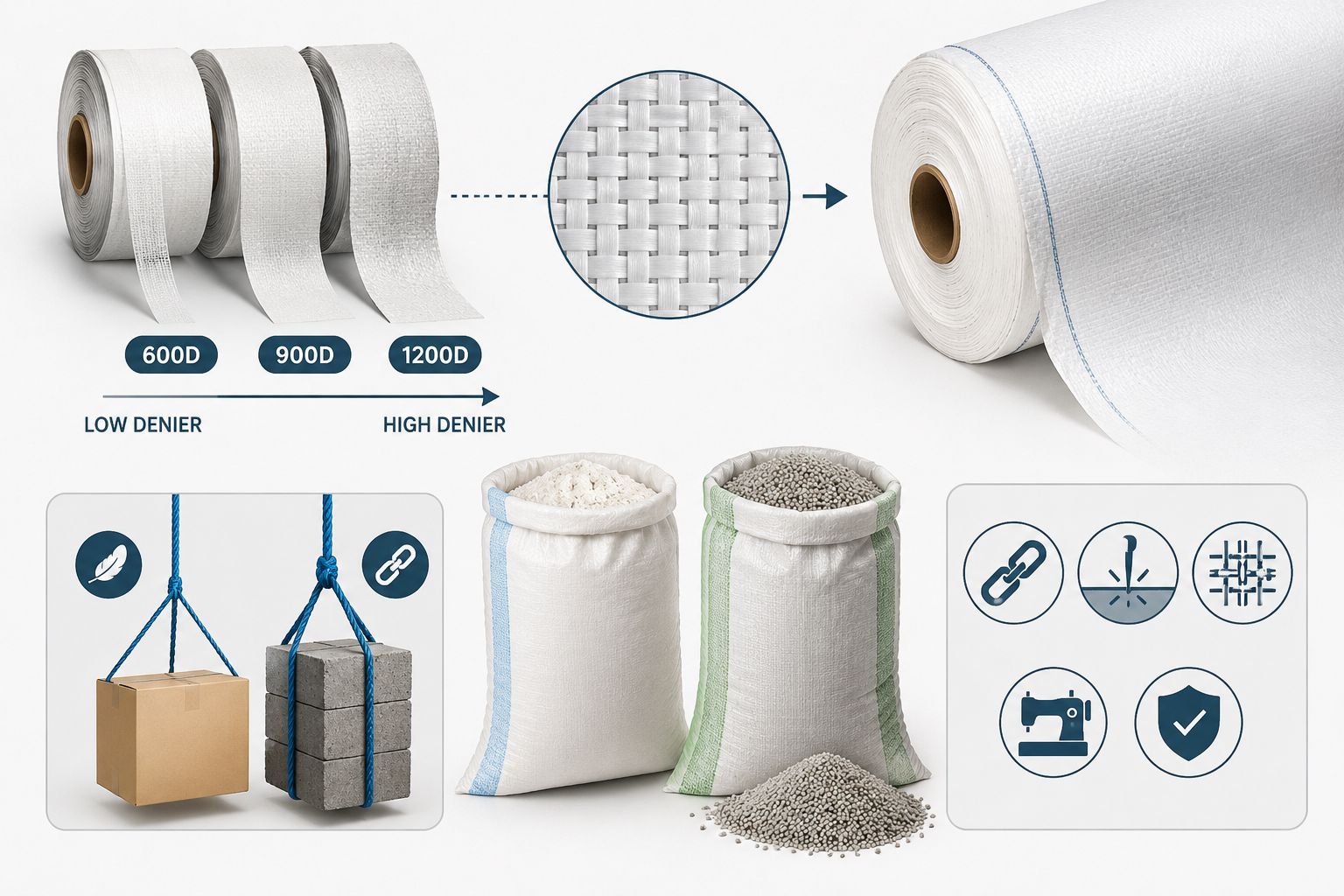
Denier is a measurement used to describe the thickness of polypropylene tapes or yarns used during woven fabric production. In simple terms, denier tells you how thick and strong the individual woven tapes are before they become fabric.
The higher the denier value, the thicker the tape structure becomes. Thicker tapes generally improve tensile strength and load-bearing performance, especially for industrial packaging applications requiring heavy-duty durability.
For example, woven bags designed for lightweight flour packaging may use lower denier tapes, while fertiliser sacks or industrial bulk packaging often require higher denier fabric for better strength.
Think of denier like the thickness of rope fibres. A thin rope may handle light tasks comfortably, but heavy industrial lifting requires stronger and thicker material. PP woven fabric works similarly.
Manufacturers calculate denier based on the weight of yarn over a fixed length. In woven bag production, this specification helps determine:
- tape strength,
- puncture resistance,
- flexibility,
- stitching performance,
- and overall bag durability.
Higher denier does not always mean better packaging, though. Excessively thick tapes may increase weight and production cost unnecessarily. The ideal specification depends on the packaging application, product weight, and transport conditions.
What Is GSM in PP Woven Bags?
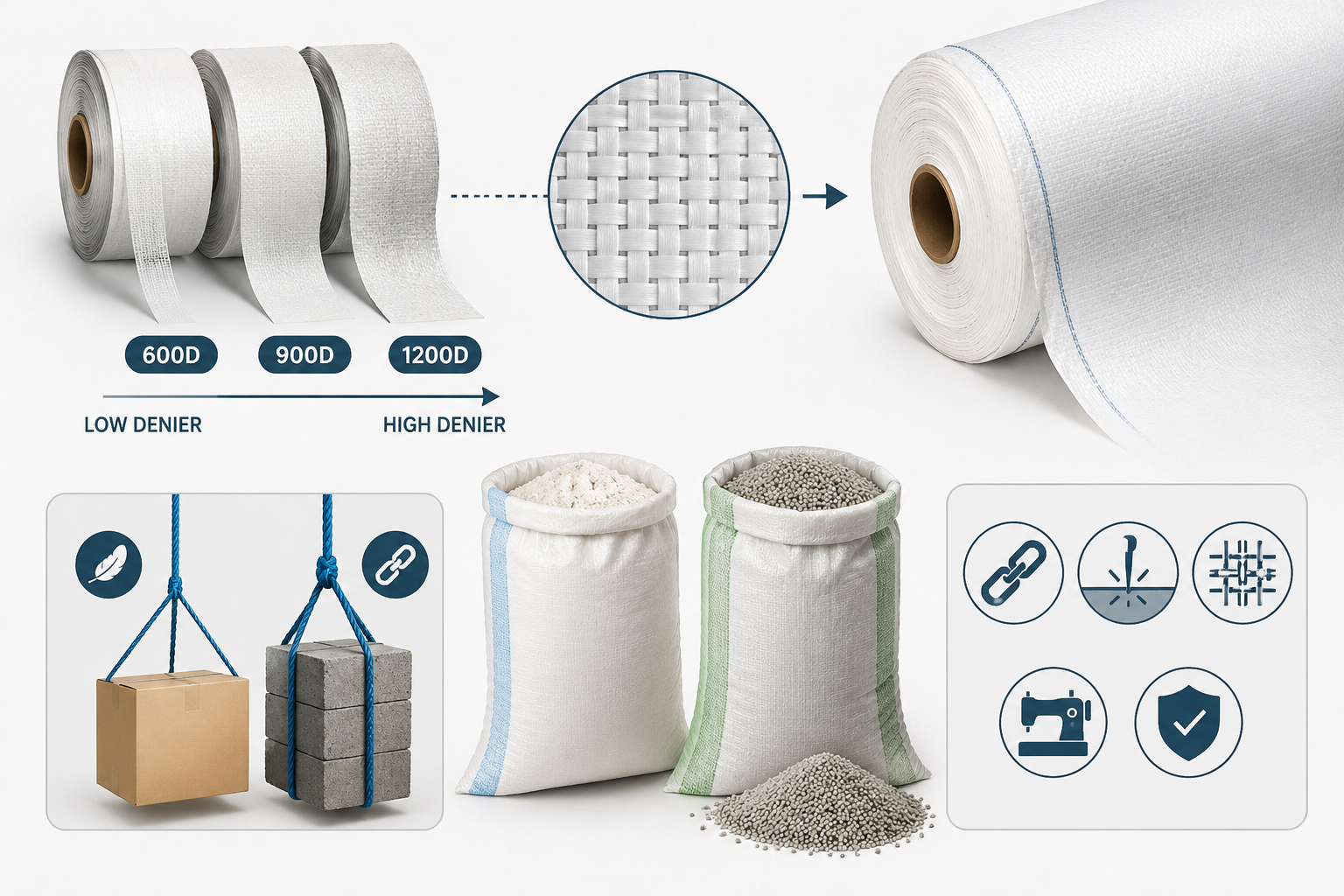
GSM stands for “grams per square metre.” It measures the overall weight and density of woven fabric across one square metre of material. While denier focuses on tape thickness, GSM focuses on total fabric weight.
This is where many buyers become confused during woven bag selection.
Two woven fabrics may have similar GSM values but completely different denier structures. Likewise, fabrics with similar denier may produce different GSM results depending on weaving density and tape spacing.
In practical packaging terms, GSM affects:
- fabric heaviness,
- material consumption,
- durability,
- cost,
- and handling performance.
Higher GSM woven fabric usually feels thicker and heavier. It may offer improved durability for products requiring strong stacking performance during storage and export shipping.
For example:
- lightweight retail packaging may use lower GSM fabric,
- while industrial cement sacks often require higher GSM woven material.
However, higher GSM alone does not automatically guarantee stronger bags. Fabric quality also depends heavily on tape strength, weaving consistency, and manufacturing quality control.
This is exactly why understanding Denier vs GSM in PP Woven Bags matters for industrial buyers. GSM measures fabric weight, while denier measures tape strength. Both work together to influence final packaging performance.
Denier vs GSM in PP Woven Bags: What Is the Difference?
The easiest way to understand Denier vs GSM in PP Woven Bags is to think of them as two different measurements describing different parts of the same fabric structure.
Denier measures:
- tape or yarn thickness.
GSM measures:
- total fabric weight per square metre.
Many procurement teams incorrectly assume GSM alone determines bag strength. In reality, woven bag performance depends on the balance between denier, weave density, raw material quality, and production consistency.
| Specification | Denier | GSM |
|---|---|---|
| Measures | Tape thickness | Fabric weight |
| Focus Area | Yarn strength | Fabric density |
| Impacts | Tensile strength | Material heaviness |
| Important For | Load capacity | Cost & durability |
| Affects | Tape quality | Fabric structure |
A woven bag with low-quality tapes can still show high GSM simply because more material was used during weaving. Meanwhile, a properly engineered high-denier fabric may provide excellent strength with lower overall fabric weight.
Experienced manufacturers carefully balance both measurements depending on application requirements.
For export packaging, this balance becomes especially important. Businesses want strong woven bags without unnecessarily increasing shipping weight or packaging cost.
Choosing the correct Denier vs GSM in PP Woven Bags ultimately depends on:
- product weight,
- transport conditions,
- stacking requirements,
- storage environment,
- and customer expectations.
How Denier and GSM Affect Woven Bag Strength
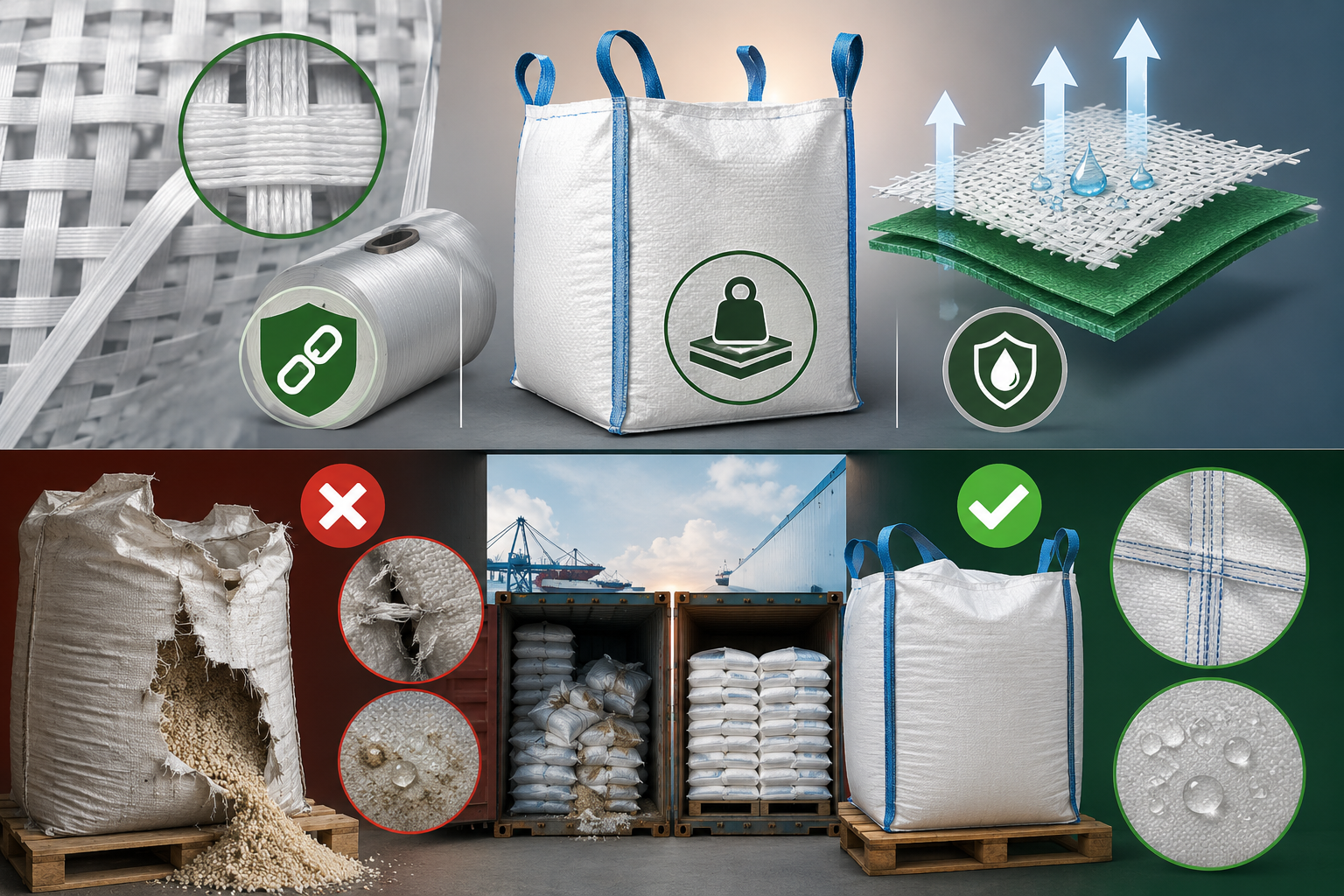
Woven bag performance is not determined by a single technical specification. Real-world durability depends on how different fabric properties work together under actual industrial conditions.
Higher denier tapes usually improve tensile strength and puncture resistance. This becomes important when bags experience:
- rough handling,
- sharp product edges,
- heavy stacking pressure,
- or long-distance shipping stress.
Meanwhile, GSM affects overall fabric density and material stability. Higher GSM woven fabric generally provides stronger structure during lifting and stacking operations.
Imagine two export containers filled with agricultural products. One uses properly balanced woven fabric specifications. The other uses low-quality lightweight material chosen only to reduce packaging costs. The second shipment often experiences:
- torn sacks,
- stitching failures,
- moisture exposure,
- and product leakage during transit.
This is why industrial packaging buyers pay close attention to Denier vs GSM in PP Woven Bags before finalising specifications.
High-strength woven bags used in:
- fertiliser industries,
- chemical packaging,
- cement transportation,
- and bulk grain exports
usually require carefully engineered denier and GSM combinations for safe handling performance.
Choosing the Right GSM and Denier for Different Industries
Different industries require different woven fabric specifications because packaging environments vary significantly.
Rice packaging often prioritises balanced strength and print quality. Flour bags may require lighter fabric with hygienic lamination. Cement sacks demand stronger puncture resistance and load-bearing performance.
Typical industry requirements include:
| Industry | Common Requirement |
|---|---|
| Rice Packaging | Medium GSM + balanced denier |
| Flour Packaging | Lightweight laminated fabric |
| Fertiliser Bags | High denier + strong GSM |
| Cement Packaging | Heavy-duty woven structure |
| Animal Feed | Moisture-resistant fabric |
| Export Packaging | Durable lightweight balance |
Export businesses especially focus on balancing strength with shipping efficiency. Overly heavy woven bags increase freight costs, while weak packaging increases damage risks.
This is why experienced manufacturers customize PP woven bag specifications according to product application rather than using identical fabric structures for every industry.
Why Export Buyers Check GSM and Denier Carefully
Export packaging faces far more stress than local transportation. Woven bags shipped internationally may spend weeks inside containers while handling changing temperatures, stacking pressure, humidity exposure, and repeated cargo movement. This is why experienced export buyers carefully evaluate both GSM and denier before approving woven bag specifications.
Container loading performance is one major concern. Bags stacked improperly or manufactured with weak fabric balance can collapse during long-distance transport. Higher denier tapes generally improve tensile strength, while properly balanced GSM helps maintain structural stability during stacking and handling operations.
Puncture resistance also becomes critical for export shipments involving agricultural products, fertilisers, chemicals, or industrial raw materials. Sharp product edges and rough loading conditions can damage low-quality woven fabric quickly. Buyers therefore look for packaging specifications capable of handling real shipping environments instead of just laboratory measurements.
Moisture handling is another important factor. Containers travelling across international routes often experience humidity fluctuations during ocean transport. Woven bags with poor fabric consistency may absorb moisture more easily, affecting packaging performance and product protection.
Freight efficiency matters too. Exporters want strong woven bags without adding unnecessary packaging weight that increases shipping costs. This is where balancing Denier vs GSM in PP Woven Bags becomes extremely important. Properly engineered woven fabric helps businesses maintain durability while improving transport efficiency and reducing packaging risks during export operations.
Common Buyer Mistakes When Selecting PP Woven Bags
One of the most common buyer mistakes is focusing only on GSM while completely ignoring denier quality. A higher GSM bag may appear stronger initially, but poor tape quality can still reduce overall durability significantly.
Another issue is unclear supplier communication. Some buyers request “strong bags” without defining:
- load weight,
- product type,
- storage conditions,
- or transportation requirements.
Packaging specifications should always match actual industrial usage.
Overpaying for unnecessary thickness is another surprisingly common problem. Some businesses assume heavier woven bags automatically mean better quality. In reality, excessive material usage may simply increase packaging cost without meaningful performance improvement.
Low-quality raw material also creates problems. Even well-designed specifications fail if manufacturers use inconsistent polypropylene material or poor weaving control during production.
Understanding Denier vs GSM in PP Woven Bags helps buyers ask better technical questions before placing bulk orders.
How Manufacturers Control Fabric Quality
Producing high-quality PP woven fabric involves much more than basic weaving. Modern manufacturers carefully monitor multiple production stages to maintain fabric consistency and packaging performance.
The process usually begins with polypropylene extrusion, where raw material is converted into thin tapes. These tapes are stretched, cooled, and processed according to required denier specifications.
After extrusion, weaving machines interlace tapes into woven fabric structures. Weaving consistency directly affects:
- fabric balance,
- load distribution,
- tensile performance,
- and overall bag quality.
Manufacturers also monitor:
- tape width,
- denier accuracy,
- GSM consistency,
- lamination quality,
- stitching strength,
- and printing performance.
Quality testing often includes:
- tensile strength testing,
- drop testing,
- puncture resistance checks,
- and load capacity verification.
Experienced manufacturers regularly test denier consistency and GSM balance because even small fabric variations can affect woven bag performance during industrial handling and export transportation.
According to Bureau of Indian Standards (BIS), industrial packaging materials should maintain consistent manufacturing quality and performance standards for safe commercial usage.
Experienced manufacturers understand that small production inconsistencies can create major packaging failures later during industrial handling or export transportation.
Why Industries Trust Oberon Polypack for High-Quality PP Woven Fabric Solutions
In industrial packaging, technical specifications only matter when manufacturers can maintain them consistently at scale. Oberon Polypack has built a strong reputation in the woven packaging industry by producing PP woven bags and woven fabric solutions designed for durability, strength consistency, and export-quality performance. From agricultural packaging and food-grade woven sacks to industrial bulk packaging applications, the company focuses on maintaining reliable denier control, GSM consistency, and high-quality raw material processing throughout manufacturing.
Modern buyers increasingly look for manufacturers who understand the technical relationship between Denier vs GSM in PP Woven Bags instead of simply offering standard packaging products. Oberon Polypack supports businesses with customised woven bag solutions based on load requirements, product type, transportation conditions, and industrial application needs. Their focus on quality testing, advanced weaving systems, strong tape manufacturing, and export-ready packaging standards makes them a practical partner for businesses looking for dependable long-term woven packaging solutions.
Future Trends in PP Woven Fabric Technology for 2026
The woven packaging industry is evolving quickly as manufacturers balance strength, sustainability, and production efficiency.
One major trend involves lightweight high-strength woven fabric development. Manufacturers are creating stronger tape structures using less raw material, helping businesses reduce packaging weight without sacrificing durability.
Advanced extrusion systems are also improving denier consistency and fabric performance. Better tape engineering allows manufacturers to optimise Denier vs GSM in PP Woven Bags more precisely than before.
Sustainability is becoming increasingly important too. Many buyers now prefer recyclable woven packaging materials and lower-plastic-consumption manufacturing systems.
Smart packaging integration is another emerging trend. Export packaging increasingly includes:
- QR tracking,
- digital identification systems,
- anti-counterfeit printing,
- and automated inventory compatibility.
As global logistics standards continue evolving, technical packaging specifications will become even more important for industrial buyers and exporters.
Conclusion
Understanding Denier vs GSM in PP Woven Bags helps businesses make smarter packaging decisions based on actual performance requirements rather than assumptions. Denier affects tape strength and tensile performance, while GSM measures overall fabric density and material weight. Both specifications work together to determine durability, puncture resistance, load capacity, and export packaging reliability.
Understanding the relationship between Denier vs GSM in PP Woven Bags also helps businesses reduce packaging failures, improve freight efficiency, and maintain consistent product protection during storage and export transportation.
As industrial packaging standards continue evolving, businesses that understand woven fabric specifications will achieve better packaging efficiency, lower transportation risks, and improved product protection. Choosing the right combination of denier and GSM is not simply a technical decision — it directly impacts packaging quality, operational performance, and long-term cost efficiency for industrial and export packaging industries.
FAQs
1. What is denier in PP woven bags?
Denier measures the thickness of polypropylene tapes or yarns used during woven fabric manufacturing. Higher denier generally indicates thicker tapes and improved tensile strength.
2. What does GSM mean in woven fabric?
GSM stands for grams per square metre. It measures the total weight and density of woven fabric material across one square metre.
3. Which is more important: GSM or denier?
Both measurements are important because they measure different fabric properties. GSM measures fabric weight, while denier measures tape thickness and yarn strength.
4. Does higher GSM mean stronger bags?
Not always. Higher GSM increases fabric weight, but overall bag strength also depends on denier quality, weaving consistency, and raw material performance.
5. What GSM is best for PP woven bags?
The ideal GSM depends on the application, product weight, storage conditions, and transportation requirements. Different industries require different fabric specifications for optimal performance.