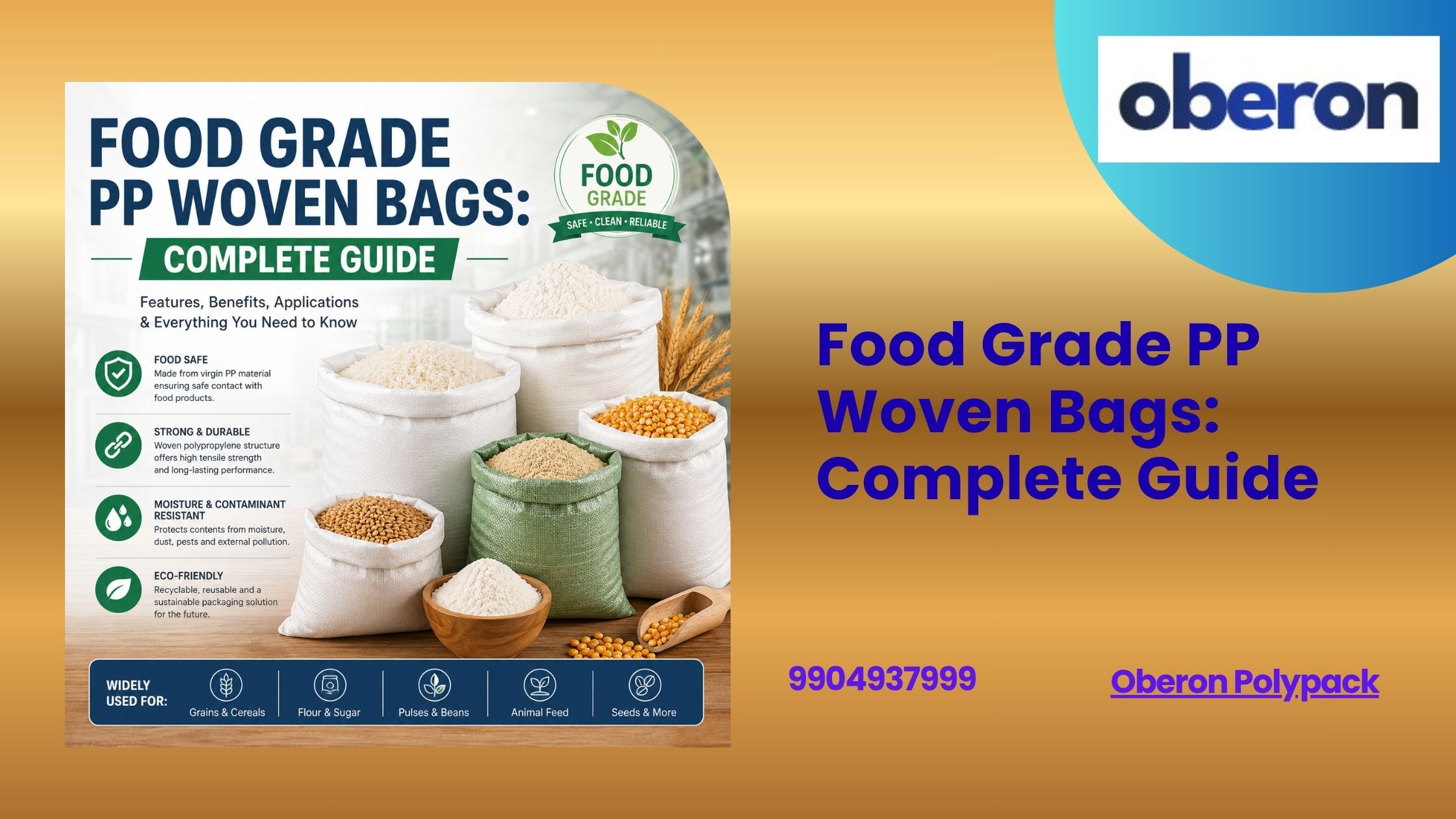
Food packaging has quietly become one of the biggest trust signals in modern business. Before anyone tastes the rice, flour, sugar, or grains inside, they notice the bag first. A weak, dusty, poorly stitched sack instantly raises doubts.
A clean, durable, professionally printed woven bag? That tells buyers the product inside is handled properly. In today’s export-driven market, packaging is no longer just packaging. It is protection, branding, logistics, and reputation rolled into one.
That is exactly why Food Grade PP Woven Bags have become the preferred choice across agriculture, food processing, wholesale distribution, and export industries. Businesses need packaging that survives transport, protects food quality, handles bulk storage, and still looks presentable sitting in warehouses or retail environments.
Modern food manufacturers are now moving toward hygienic, lightweight, and moisture-resistant woven packaging because traditional sacks simply cannot keep up with today’s supply chain demands.
Food safety standards are also becoming stricter worldwide. Importers, distributors, and supermarkets now expect packaging materials that maintain hygiene during transportation and storage. Whether you are exporting rice to Europe or supplying flour locally, the quality of your packaging matters more than most businesses realise. In many cases, the packaging itself becomes part of the customer’s buying decision.
What Are Food Grade PP Woven Bags?
Food Grade PP Woven Bags are specially manufactured polypropylene packaging bags designed for storing and transporting food products safely. Unlike ordinary woven sacks, these bags are produced using virgin polypropylene material under hygienic manufacturing conditions to ensure the packaging remains suitable for direct or indirect food contact.
Polypropylene, often called PP, is a lightweight thermoplastic polymer known for its strength, flexibility, and resistance to moisture. During manufacturing, PP tapes are woven together into durable fabric sheets that are later converted into bags. The result is a strong yet lightweight packaging solution that handles bulk food storage exceptionally well.
What makes food grade polypropylene bags different from ordinary woven sacks is the attention to cleanliness and contamination control during production.
Food packaging woven sacks are manufactured in controlled environments where dust, recycled plastics, and impurities are minimised. Many manufacturers also use food-safe liners or BOPP lamination to provide additional protection.
Industries using Food Grade PP Woven Bags include:
- Rice processing
- Flour mills
- Sugar packaging
- Pulses and grains
- Animal feed production
- Seed industries
- Agricultural exports
- Dry food storage businesses
The rise of export-quality PP woven bags is closely tied to global trade expansion. Buyers want packaging that performs well during shipping while maintaining product quality for weeks or even months in storage. Food grade woven packaging has become the quiet hero behind global food distribution.
Why Food Industries Prefer Food Grade PP Woven Bags
Walk through any grain market, flour warehouse, or agricultural export facility and you will notice one thing immediately — woven bags dominate the space. There is a reason for that. Food Grade PP Woven Bags solve several practical problems at once without dramatically increasing packaging costs.
First comes durability. These bags are designed to carry heavy loads without tearing easily. Whether filled with rice, wheat, sugar, or animal feed, woven bags maintain structural strength during loading, stacking, and transport.
Traditional paper packaging may look attractive initially, but expose it to warehouse humidity or rough handling and things go downhill quickly.
Moisture resistance is another major advantage. Food products hate moisture almost as much as accountants hate unnecessary losses. Laminated food grade bags help reduce exposure to humidity and external contaminants, making them ideal for long-distance transportation and export markets.
Weight efficiency also matters more than people think. Compared to rigid packaging options, PP woven bags for food packaging are lightweight and easier to transport in bulk. This reduces shipping costs, especially for exporters handling container loads regularly.
There is also the branding factor. Modern BOPP food packaging bags allow high-quality printing with sharp colours and product information. A professionally designed woven bag immediately creates a stronger market impression compared to plain industrial sacks.
In competitive food markets, appearance often influences trust before product quality even enters the conversation.
Another reason industries prefer woven packaging is sustainability. Many businesses are shifting toward recyclable woven bags as governments and consumers push for more environmentally responsible packaging practices.
Food grade woven bags can often be reused and recycled, making them a practical middle ground between performance and sustainability.
Common Applications of Food Grade Woven Bags
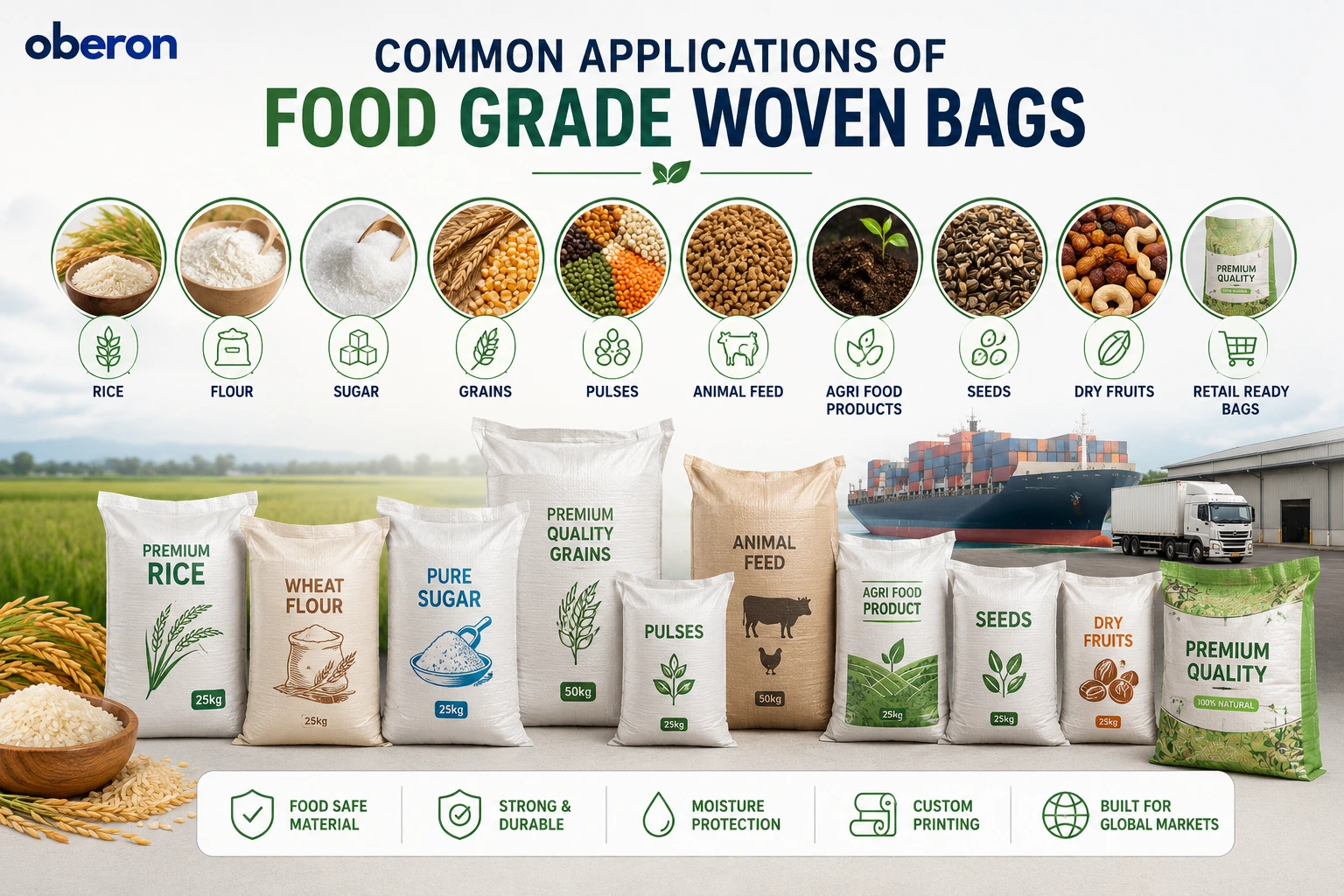
Food Grade PP Woven Bags are used across a surprisingly wide range of industries because they adapt well to different storage and transport requirements. Some products need moisture protection. Others need breathability. Some require premium retail printing, while export businesses prioritise durability during container shipping.
Common applications include:
- Rice packaging bags
- Flour packaging woven sacks
- Sugar storage bags
- Grain export packaging
- Pulses and lentil packaging
- Animal feed bags
- Fertiliser-adjacent agricultural food products
- Seed storage and transport
- Dry fruit bulk packaging
- Retail-ready BOPP laminated food bags
Rice manufacturers often prefer laminated woven bags because they protect against moisture and improve shelf presentation. Flour industries commonly use food safe woven bags with inner liners to maintain hygiene during storage and transportation.
Animal feed companies also heavily rely on bulk food packaging bags because woven packaging handles weight efficiently while remaining cost-effective. Some feed bags are exposed to rough warehouse environments for months, making durability essential rather than optional.
Export businesses, meanwhile, usually prefer custom printed food packaging bags with branding, handling instructions, and multilingual product details. A strong bag with weak printing feels incomplete in global markets.
Food Grade PP Woven Bags vs Traditional Packaging
Packaging comparisons become interesting because every material has strengths and weaknesses. The real question is not which packaging is perfect. It is which packaging works best for specific business needs.
Paper bags, for example, are biodegradable and visually appealing. However, they struggle in humid conditions and can tear under heavy loads. Jute bags offer natural aesthetics and breathability but are less moisture-resistant and heavier during transportation.
Food Grade PP Woven Bags sit somewhere in the practical sweet spot. They combine durability, affordability, lightweight handling, and moisture resistance in a way few alternatives can match.
| Packaging Type | Durability | Moisture Resistance | Printing Quality | Cost Efficiency |
|---|---|---|---|---|
| PP Woven Bags | High | High | Excellent | Excellent |
| Paper Bags | Medium | Low | Good | Medium |
| Jute Bags | Medium | Low | Limited | Medium |
| Plastic Containers | Very High | Very High | Medium | Expensive |
Laminated food grade bags also outperform many traditional sacks in storage conditions where humidity control matters. This is one reason woven bags for rice packaging and grain exports continue gaining popularity globally.
There is another overlooked advantage too: storage flexibility. Empty woven sacks occupy far less space compared to rigid packaging solutions. Warehouses appreciate that detail more than most marketing brochures ever mention.
Understanding FDA and Food Safety Standards
Food packaging cannot simply “look clean.” It must meet recognised safety standards that reduce contamination risks and maintain product integrity throughout the supply chain.
Many food grade polypropylene bags are manufactured using virgin raw materials approved for food contact applications. The production process usually avoids recycled plastics that may contain unknown contaminants. Food-safe manufacturing also includes cleanliness controls during weaving, lamination, stitching, and printing.
In export markets, compliance matters heavily. Importers increasingly request documentation proving that packaging materials meet international food safety expectations. This becomes especially important for rice, flour, sugar, grains, and processed food exports.
According to the Australian Department of Agriculture, Fisheries and Forestry, packaging materials used in food-related industries must maintain hygiene standards that prevent contamination during transport and storage.
Some manufacturers also provide FDA approved woven bags or comply with ISO-certified quality systems depending on target export markets. Businesses should always confirm specifications before placing bulk packaging orders.
Important Features to Look for Before Buying
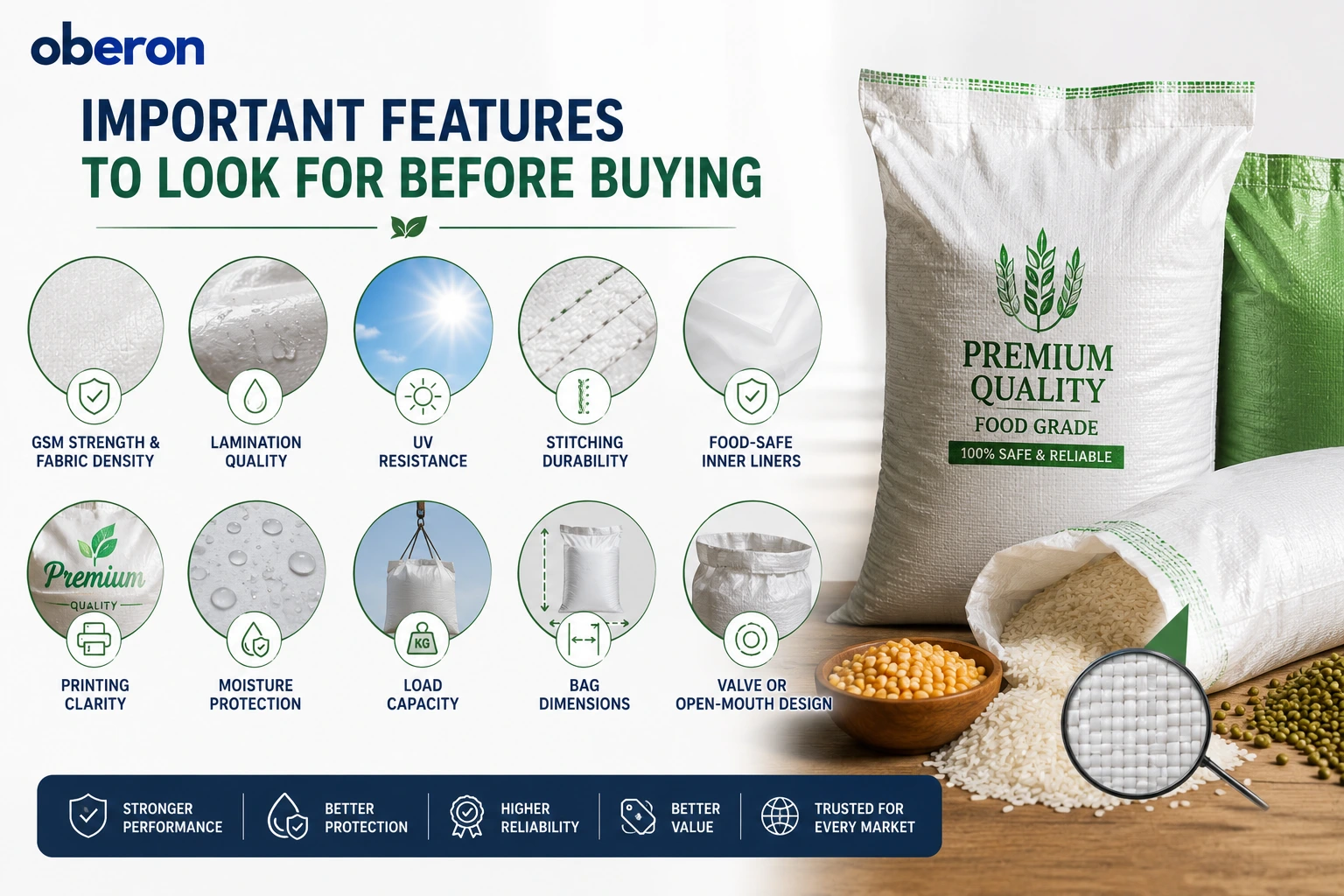
Not all woven bags are created equally. Two bags may look almost identical from a distance yet perform completely differently once filled, stacked, and transported.
When choosing Food Grade PP Woven Bags, buyers should pay attention to several technical factors:
- GSM strength and fabric density
- Lamination quality
- UV resistance
- Stitching durability
- Food-safe inner liners
- Printing clarity
- Moisture protection
- Load capacity
- Bag dimensions
- Valve or open-mouth design
GSM plays a huge role in determining overall strength. Higher GSM woven fabric generally offers better durability for heavier products, though excessively heavy fabric may increase costs unnecessarily. Smart packaging selection is about balancing strength with efficiency.
Lamination also matters. Laminated food grade bags provide improved moisture resistance and sharper printing quality, making them popular for export and retail packaging. Non-laminated sacks may work for products requiring airflow or lower-cost storage solutions.
UV protection becomes essential for agricultural industries storing products outdoors or under sunlight exposure. Without UV stabilisation, woven fabric can weaken over time.
Printing quality deserves attention too. Modern custom printed food packaging bags often serve as branding tools as much as packaging materials. Poor printing weakens brand perception instantly.
How Custom Printing Improves Food Packaging Branding
Packaging today behaves like a silent salesperson. Before distributors talk pricing or customers inspect product quality, the bag itself already communicates professionalism, reliability, and brand positioning.
This is why custom printed food packaging bags are becoming standard rather than optional. Businesses want packaging that performs functionally while strengthening brand recognition at the same time.
BOPP food packaging bags especially allow high-definition printing with vibrant colours and sharp details. Manufacturers can include:
- Product information
- Nutritional details
- Export markings
- Brand logos
- QR codes
- Handling instructions
- Multilingual text
- Certification icons
A professionally printed woven bag instantly stands out in wholesale markets where dozens of similar products compete for attention. Good packaging creates familiarity. Familiarity builds trust.
Retail-focused food brands particularly benefit from high-quality woven packaging because shelf appearance influences buying decisions heavily. People absolutely judge products by their packaging — even when they claim otherwise.
Sustainability and the Future of Food Grade Packaging
Packaging trends are changing rapidly as industries balance performance, branding, and environmental responsibility. Businesses no longer want packaging that only protects products. They also want materials aligned with sustainability goals and future regulations.
Food Grade PP Woven Bags are increasingly viewed as a practical solution because they are lightweight, reusable, and recyclable under suitable recycling systems. Compared to single-use alternatives, woven packaging often provides longer service life and lower material waste during transportation.
Manufacturers are also experimenting with thinner high-strength fabrics that reduce overall plastic consumption without compromising durability. Lightweight packaging innovation is becoming a major trend heading into 2026.
Another growing trend is smart packaging integration. Some export packaging solutions now include QR codes, traceability systems, anti-counterfeit printing, and digital inventory compatibility directly on woven bags.
Sustainable packaging is no longer just a marketing buzzword either. Importers, retailers, and regulators increasingly expect suppliers to adopt responsible packaging practices. Businesses that ignore sustainability conversations may eventually struggle in premium export markets.
At the same time, practical performance still matters. Nobody wants eco-friendly packaging that fails halfway through shipping. The future belongs to packaging solutions balancing sustainability with industrial reliability.
Choosing the Right Supplier for Food Grade PP Woven Bags
Finding the right packaging supplier is about more than price comparisons. A cheaper bag that tears during export can quietly become the most expensive decision in the supply chain.
Reliable manufacturers focus on consistent quality control, hygienic production environments, accurate GSM specifications, and dependable delivery timelines. Buyers should also evaluate whether suppliers understand export requirements, food safety standards, and custom branding needs.
Experienced woven bag manufacturers usually provide better technical guidance regarding lamination options, stitching styles, liner selection, and printing requirements. Good suppliers act more like packaging partners rather than simple product vendors.
Before finalising orders, businesses should request:
- product samples,
- load testing details,
- printing proofs,
- certification information,
- and manufacturing specifications.
In food packaging industries, consistency matters just as much as quality itself. One excellent shipment means little if the next order arrives with inconsistent fabric strength or printing quality.
Why Businesses Trust Oberon Polypack for Food Grade PP Woven Bags
When it comes to food-safe industrial packaging, consistency matters just as much as durability. Oberon Polypack has built a strong reputation in the woven packaging industry by supplying high-quality Food Grade PP Woven Bags designed for modern storage, transportation, and export requirements.
From rice and flour packaging to agricultural bulk storage solutions, the company focuses on hygienic manufacturing standards, reliable fabric strength, and customised packaging options tailored for food industries.
Businesses today need more than just a basic woven sack. They need packaging that protects products during long transport cycles while also supporting branding and market presentation.
Oberon Polypack offers solutions including laminated woven bags, moisture-resistant packaging, custom printing, and export-quality PP woven bags suitable for both domestic and international markets. Their focus on quality control, modern production systems, and durable packaging materials makes them a practical choice for food manufacturers, distributors, exporters, and bulk packaging buyers looking for dependable long-term packaging solutions.
Conclusion
Food Grade PP Woven Bags have become one of the most practical and reliable packaging solutions for modern food industries. They combine durability, hygiene, moisture resistance, lightweight handling, and branding flexibility in a way traditional packaging often struggles to achieve.
From rice exporters and flour mills to agricultural distributors and retail food brands, businesses across the supply chain continue choosing woven packaging because it delivers both performance and cost efficiency.
As global food packaging standards evolve, the importance of safe, durable, and export-ready packaging will only continue growing. Businesses looking to improve packaging quality, strengthen branding, and protect food products during storage and transportation should invest in high-quality woven bag solutions designed specifically for modern industrial needs.
FAQs
1. Are Food Grade PP Woven Bags safe for storing food?
Yes, Food Grade PP Woven Bags are specifically manufactured using virgin polypropylene material suitable for food packaging applications. These bags are produced under hygienic conditions to minimise contamination risks during storage and transportation.
2. Are PP woven bags recyclable?
Most polypropylene woven bags are recyclable under suitable recycling systems. Many industries also reuse woven sacks multiple times before recycling, making them a more sustainable packaging option compared to some single-use materials.
3. What foods are commonly packaged in woven bags?
Food grade woven bags are widely used for rice, flour, sugar, grains, pulses, seeds, animal feed, and various agricultural products. Export industries particularly rely on woven packaging because of its durability and moisture resistance.
4. What is the difference between laminated and non-laminated woven bags?
Laminated woven bags include an additional protective coating that improves moisture resistance and printing quality. Non-laminated bags are usually more breathable and may suit products requiring airflow during storage.
5. How long do Food Grade PP Woven Bags last?
The lifespan depends on storage conditions, load weight, UV exposure, and handling practices. High-quality woven bags stored properly can maintain performance for extended periods, especially when UV protection and strong stitching are included.