Introduction
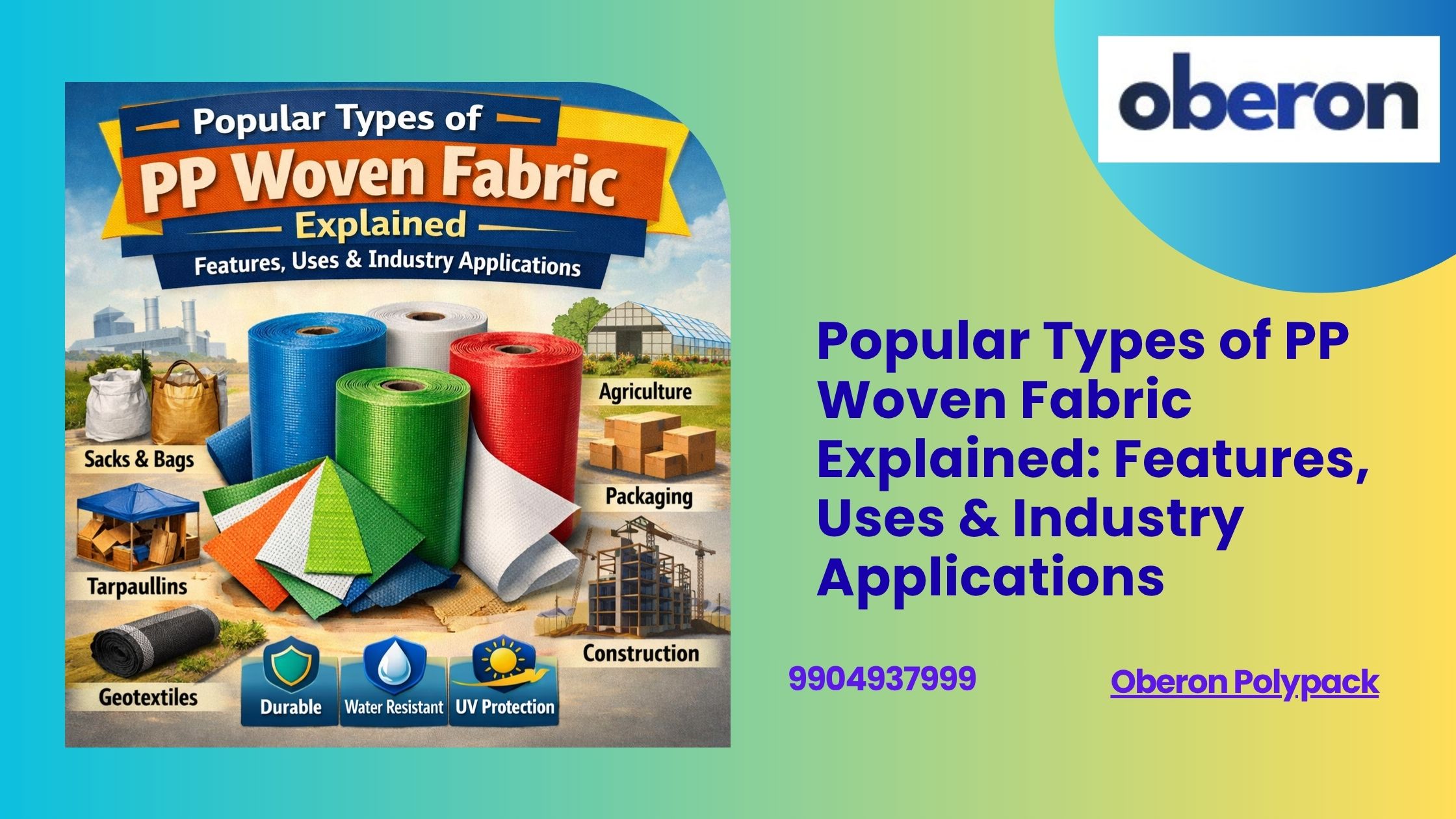
In today’s fast-evolving packaging industry, businesses are constantly looking for materials that offer strength, flexibility, and cost efficiency. This is where polypropylene woven fabrics have gained significant attention. Known for their durability and versatility, they have become a preferred choice across multiple sectors, from agriculture to heavy industrial packaging.
Understanding the different types of pp woven fabric is essential for manufacturers, exporters, and buyers who want reliable and high-performance packaging solutions. Each type is designed to serve specific needs, whether it is moisture resistance, breathability, or enhanced load-bearing capacity.
With increasing demand for efficient industrial packaging fabric, PP woven materials are now widely used for bulk storage, transportation, and product protection. Their ability to combine strength with lightweight properties makes them an ideal alternative to traditional packaging materials.
In this blog, we will explore the most popular pp woven fabric types, along with their features, uses, and applications across industries.
What is PP Woven Fabric?
PP woven fabric, also known as polypropylene woven fabric, is a material made by weaving flat strips of polypropylene (PP) into a strong and durable fabric structure. These strips are created by melting polypropylene resin and stretching it into thin tapes, which are then interlaced in a crisscross pattern using specialized looms.
This weaving process gives the fabric its unique combination of strength and flexibility, making it ideal for heavy-duty applications. Unlike traditional materials, PP woven fabric is lightweight yet capable of handling significant loads, which is why it is widely used as pp woven bags material across industries.
One of the key reasons behind its popularity is its adaptability. The fabric can be manufactured in various thickness levels (GSM), colors, and finishes, including coated and uncoated variants. This allows businesses to choose from different pp woven fabric types based on their specific packaging needs.
Additionally, PP woven fabric is resistant to moisture, chemicals, and wear, making it a reliable choice for long-term use. These qualities make it a preferred option for industrial packaging fabric, especially in sectors that require safe storage and transportation of bulk goods.
Overall, polypropylene woven fabric stands out as a cost-effective and high-performance solution, widely used in modern packaging due to its durability, reusability, and versatility.
Why Understanding Different Types of PP Woven Fabric Matters
Choosing the right material is a critical decision in any packaging or industrial application. Not all fabrics perform the same, which is why understanding different pp woven fabric types is essential for achieving the best results in terms of durability, cost, and efficiency.
Each type of PP woven fabric is designed with specific features that suit particular uses. For example, some fabrics are breathable and ideal for agricultural products, while others are coated to provide moisture resistance for chemicals and fertilizers. Selecting the wrong type can lead to product damage, increased costs, or reduced performance.
For manufacturers and exporters, having knowledge of the various types of pp woven fabric helps in making informed decisions that align with customer requirements and industry standards. It also allows businesses to optimize packaging solutions based on load capacity, environmental exposure, and transportation conditions.
Additionally, understanding these variations plays a key role in improving supply chain efficiency. The right choice of industrial packaging fabric ensures product safety, reduces wastage, and enhances overall operational reliability.
What are the main types of PP Woven Fabric?
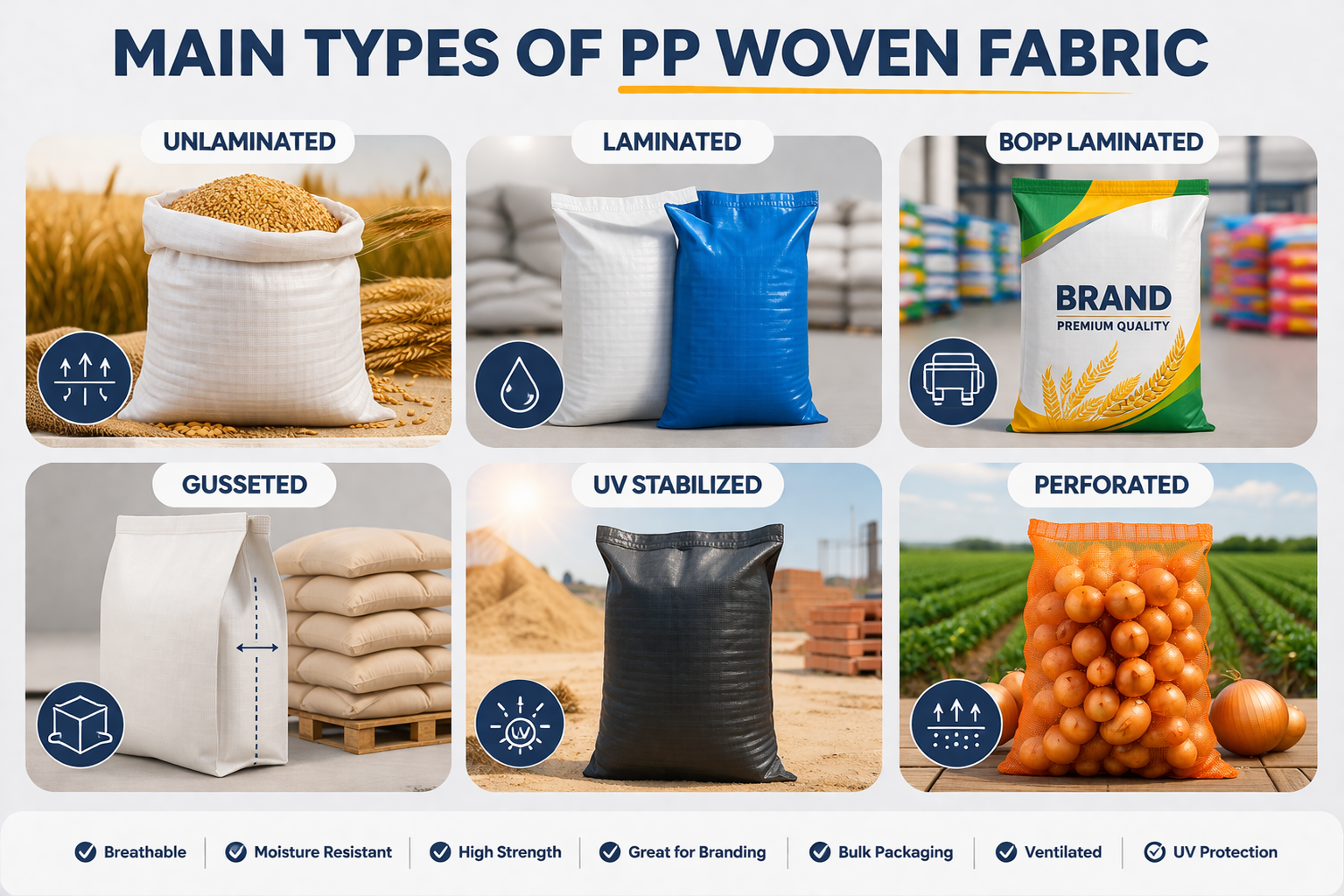
Understanding the different types of pp woven fabric is essential for selecting the right material based on application, durability, and performance requirements. Each type is designed to meet specific industrial and commercial needs. Below are the most widely used pp woven fabric types explained in detail:
1. Unlaminated PP Woven Fabric
Unlaminated PP woven fabric is the most basic and widely used form. It is made without any additional coating, allowing air to pass through the fabric.
This breathable structure makes it ideal for agricultural products such as grains, vegetables, and seeds. The airflow helps prevent moisture buildup and spoilage during storage and transportation.
It is also cost-effective compared to other variants, making it a popular choice for bulk packaging where moisture resistance is not a primary concern.
Key Features:
- Breathable and lightweight
- Economical option
- Suitable for dry goods
2. Laminated PP Woven Fabric
Laminated PP woven fabric is coated with a thin layer of polypropylene film, which enhances its strength and provides moisture resistance.
This type is widely used in industries where protection from water, humidity, or contamination is crucial. It is commonly used for packaging fertilizers, chemicals, cement, and food products.
The addition of lamination significantly improves durability and makes it one of the most reliable industrial packaging fabric options.
Key Features:
- Water and moisture resistant
- Stronger and more durable
- Ideal for heavy-duty applications
3. BOPP Laminated PP Woven Fabric
BOPP (Biaxially Oriented Polypropylene) laminated fabric is an advanced version that includes a printed BOPP film laminated onto the woven fabric.
This type is widely used for branded packaging, as it allows high-quality graphics, logos, and product information to be printed clearly. It is commonly used in retail packaging for products like rice, flour, pet food, and fertilizers.
In addition to visual appeal, it also provides excellent strength and protection, making it a premium pp woven bags material.
Key Features:
- High-quality printing and branding
- Enhanced strength and finish
- Suitable for retail packaging
4. Gusseted PP Woven Fabric
Gusseted PP woven fabric is designed with extra folds on the sides, allowing the bag to expand and hold more volume.
This structure improves storage efficiency and makes stacking easier, especially in warehouses and during transportation. It is widely used for bulk packaging of products like grains, sugar, and animal feed.
The added space and stability make it a practical choice for industries dealing with large quantities.
Key Features:
- Increased storage capacity
- Better stacking and handling
- Ideal for bulk packaging
5. UV Stabilized PP Woven Fabric
UV stabilized PP woven fabric is specially treated to withstand prolonged exposure to sunlight. Without UV protection, standard PP fabric may degrade when used outdoors for extended periods.
This type is commonly used in outdoor applications such as sandbags, construction materials, and agricultural storage. It ensures longer lifespan and maintains strength even under harsh environmental conditions.
Key Features:
- Resistant to UV rays and sunlight
- Long-lasting in outdoor environments
- Suitable for construction and agriculture
6. Perforated PP Woven Fabric
Perforated PP woven fabric contains small holes that allow controlled airflow. This makes it ideal for packaging fresh produce that requires ventilation.
It is commonly used for onions, potatoes, and other agricultural products where moisture buildup can lead to spoilage. The perforation helps maintain freshness during storage and transportation.
This type combines durability with functionality, making it highly useful in the agricultural sector.
Key Features:
- Ventilated design for airflow
- Prevents moisture accumulation
- Ideal for fresh produce packaging
By understanding these types of pp woven fabric, businesses can choose the most suitable option based on their specific needs. Each type offers unique advantages, making polypropylene one of the most versatile materials for modern industrial packaging fabric solutions.
Key Features and Benefits of PP Woven Fabric
High Strength and Load Capacity: The woven polypropylene weave provides exceptional tensile strength, allowing the fabric to carry heavy loads without tearing. This makes it ideal for bulk packaging of industrial materials (cement, minerals, etc.).
Lightweight: Despite its strength, PP woven fabric is very light. This makes handling and shipping easier and reduces transportation costs.
Moisture and Chemical Resistance: PP is inherently water-resistant and resists acids, alkalis and many chemicals. This protects stored goods (like fertilizers, chemicals or grains) from moisture damage, especially when laminated.
Breathability (when unlaminated): The plain woven structure allows some air flow. This breathability prevents mold or spoilage in agricultural goods. It’s especially useful for seeds, grains, and produce.
Durability and Reusability: PP woven fabric withstands rough handling and multiple uses. It is reusable and has a long service life, which cuts down on waste. Its toughness outperforms jute, paper or HDPE in many heavy-duty applications.
Printability and Customization: The smooth surface of laminated PP fabric accepts high-quality printing. Manufacturers can print logos, instructions or color codes easily. This is valuable for branding and compliance labeling.
Cost-Effectiveness: PP woven fabric is relatively inexpensive to manufacture, making it an economical packaging solution. Its reusability and recyclability also contribute to cost savings over time. Industries favor it for balancing performance with affordability.
Uses and Industry Applications of PP Woven Fabric
****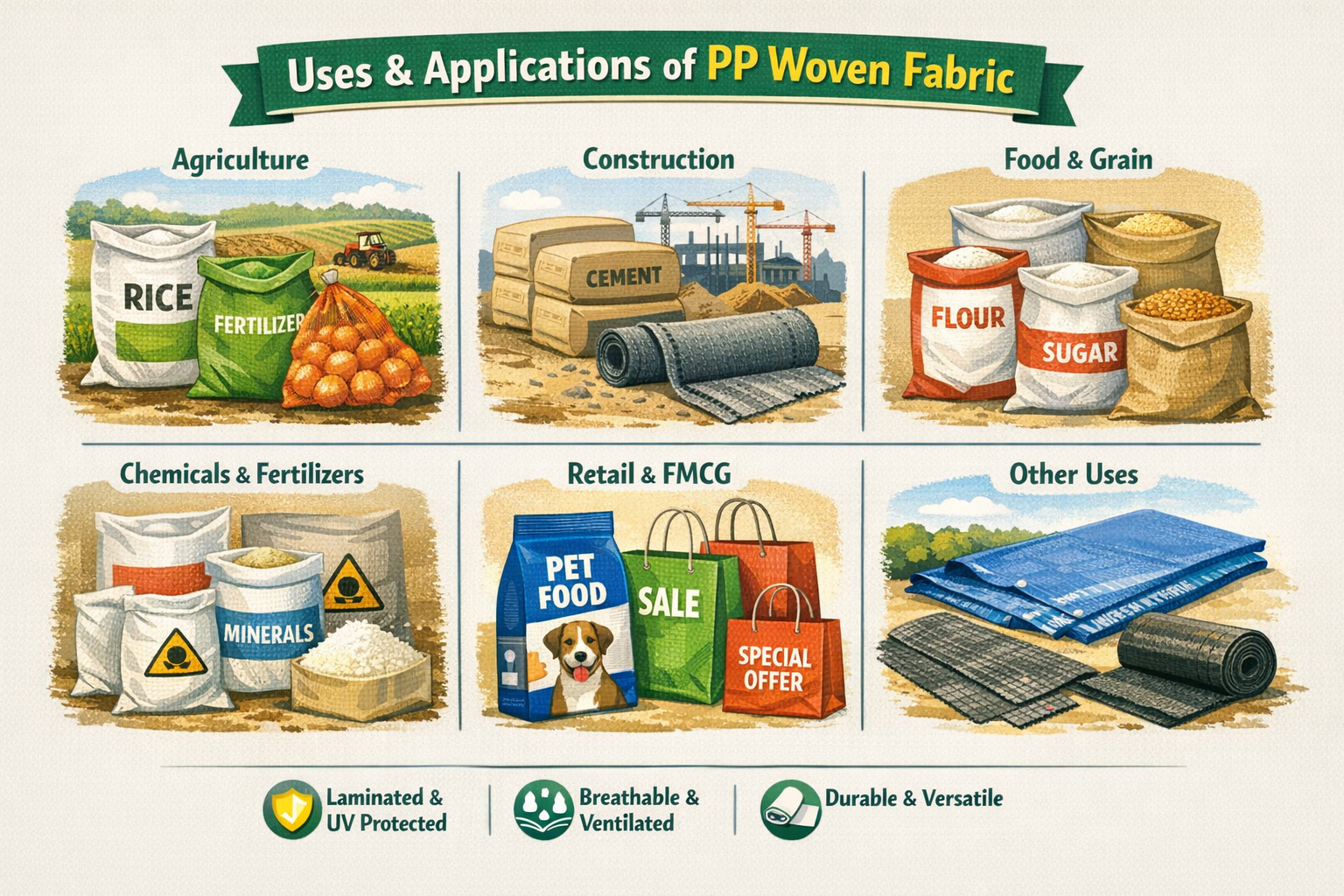
Agriculture: Widely used for sacks and bags of grains, pulses, seeds and fertilizers. (E.g. rice sacks, pulse bags, fertilizer packaging). Laminated or UV types protect agro-products during storage and transport; ventilated types protect fresh produce.
Construction: Used to pack cement, sand, and building materials. PP woven cement bags (often valve-style) allow dust-free filling; UV-stabilized fabric is chosen for cement stored outdoors. Also used in geotextiles (PP fabrics for soil reinforcement) and tarpaulins on construction sites.
Food & Grain Industry: Packaging dry foods like sugar, flour, spices, and rice. Here lamination or liners keep contents dry and hygienic. Breadth of PP fabric (breathable vs laminated) lets companies balance freshness (e.g. peanuts, onion sacks) with moisture protection (e.g. sugar, flour bags).
Chemicals & Fertilizers: Used for bags of fertilizer, pesticides, chemicals, and minerals. Laminated/liner fabrics prevent chemical leakage and moisture ingress. E.g. laminated PP sacks for agrochemicals or powdered minerals.
Retail & FMCG: Printed PP woven shopping bags, promotional bags, and branded retail packaging. BOPP-laminated PP bags are popular for pet food, rice, flour and retail commodities due to their shelf appeal.
Other Uses: PP woven fabric is also used for industrial covers, tarpaulins, ground sheets, and geotextile mats (for weed control or erosion). Its durability makes it suitable for long-term outdoor applications like deck covers or ground covers in landscaping.
Advantages of Using PP Woven Fabric
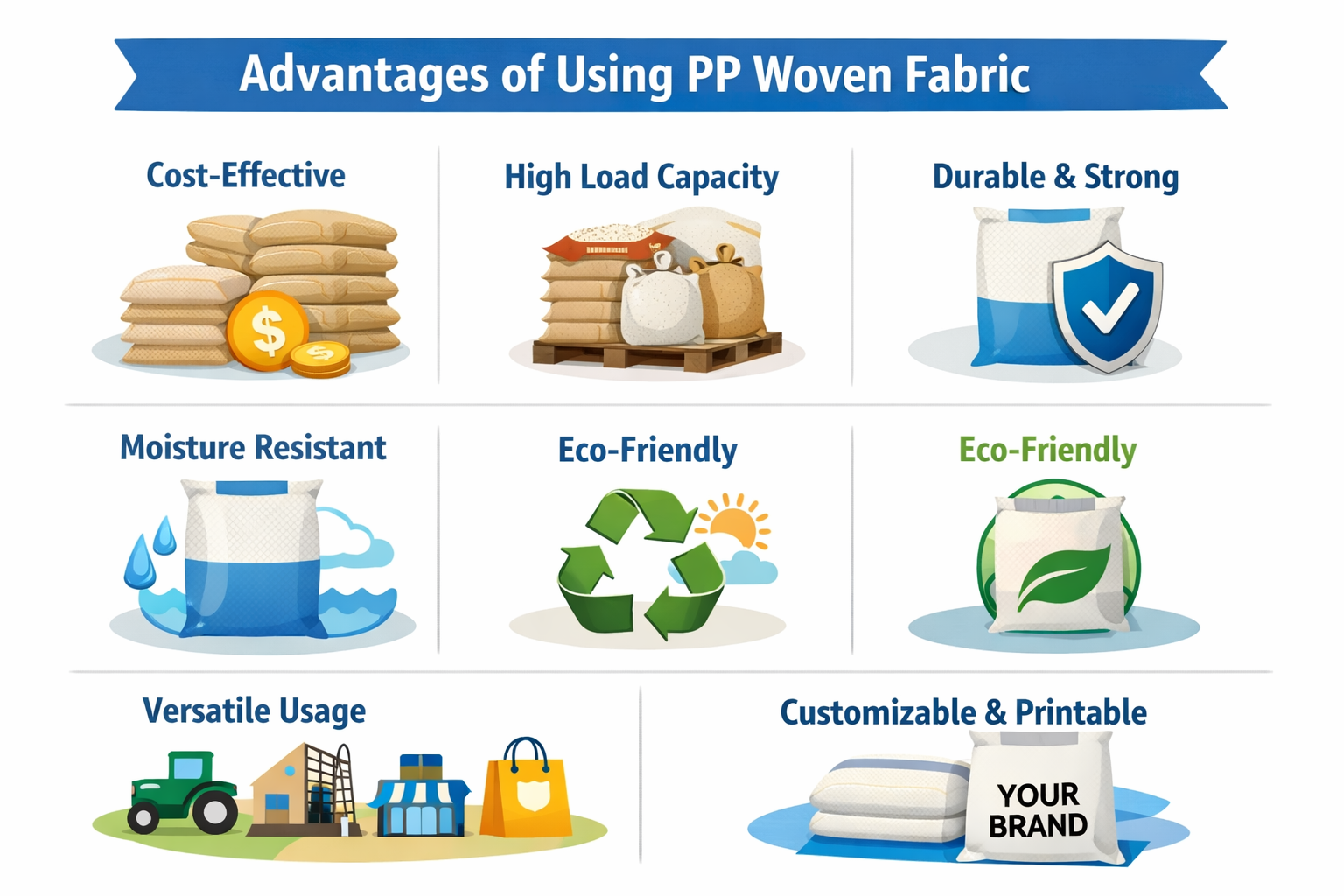
PP woven fabric offers a wide range of benefits that make it one of the most preferred materials across industries. Its practical features and cost efficiency make it a reliable choice for businesses looking for durable and high-performance industrial packaging fabric.
1. Cost-Effective Packaging Solution
One of the biggest advantages of PP woven fabric is its affordability. Compared to other packaging materials, it provides excellent performance at a lower cost.
Its reusability further reduces long-term expenses, making it an economical option for manufacturers and exporters.
2. High Load-Bearing Capacity
Thanks to its woven structure, this material can handle heavy weights without tearing. This makes it ideal for industries dealing with bulk storage and transportation.
Many pp woven fabric types are specifically designed to carry products like cement, grains, and chemicals safely.
3. Long-Lasting Durability
PP woven fabric is highly resistant to wear and tear, which ensures a longer lifespan. It can withstand rough handling during transportation and storage without losing its strength.
This durability makes it a dependable pp woven bags material for repeated use.
4. Moisture and Weather Resistance
The material naturally resists moisture, and coated options like laminated pp woven fabric provide additional protection against water and humidity.
This makes it suitable for both indoor and outdoor applications, especially in challenging environmental conditions.
5. Eco-Friendly Alternative
Although it is a plastic-based product, PP woven fabric is reusable and recyclable, making it more sustainable than single-use plastic packaging.
Its long lifecycle reduces waste generation, supporting environmentally responsible practices.
6. Versatility Across Industries
From agriculture to construction and retail, PP woven fabric can be used in multiple ways.
The wide range of polypropylene woven fabric uses ensures that businesses can find suitable solutions for different packaging needs.
7. Customization and Branding Options
PP woven fabric can be customized in terms of size, thickness, color, and printing.
Especially in BOPP laminated variants, businesses can create visually appealing packaging that enhances brand visibility and product presentation.
Overall, these advantages make PP woven fabric a smart and efficient choice for modern packaging requirements. Its balance of strength, affordability, and adaptability continues to drive its demand across various industries.
How to Choose the Right PP Woven Fabric Type
Selecting the right material from the available types of pp woven fabric is essential to ensure performance, safety, and cost efficiency. Each application has unique requirements, and choosing the wrong fabric type can impact product quality and logistics.
Below are key factors to consider when choosing the most suitable option:
1. Identify the Application Requirement
Start by understanding where and how the fabric will be used. Different industries require different specifications.
- Agriculture → breathable fabric
- Construction → high strength and durability
- Chemicals → moisture-resistant materials
This helps narrow down the most suitable pp woven fabric types for your needs.
2. Consider Load Capacity
The weight of the product plays a major role in fabric selection. Heavy materials like cement or sand require high GSM fabric with strong tensile strength.
Choosing the right strength ensures the industrial packaging fabric performs reliably without tearing.
3. Check Moisture Resistance Needs
If your product is sensitive to moisture, selecting laminated pp woven fabric is important. The additional coating protects contents from humidity, water, and contamination.
For dry goods, unlaminated options may be sufficient and more cost-effective.
4. Evaluate Environmental Conditions
Consider where the packaging will be stored or transported.
- Outdoor use → UV stabilized fabric
- Humid conditions → laminated fabric
- Fresh produce → perforated or breathable fabric
Matching the environment with the right material ensures longer lifespan and better performance.
5. Determine Storage and Handling Needs
If your product requires efficient stacking and storage, gusseted fabrics are a better option. They provide extra capacity and stability during transportation.
This is especially useful in bulk handling and export logistics.
6. Customization and Branding Requirements
For retail or branded products, appearance matters. BOPP laminated fabrics allow high-quality printing and branding.
Businesses using pp woven bags material for retail packaging can benefit from enhanced visual appeal and customer recognition.
7. Budget and Cost Efficiency
While selecting the right type, it is important to balance performance with cost. Some advanced options may offer better protection but at a higher price.
Choosing wisely among different polypropylene woven fabric uses ensures you get the best value without compromising on quality.
In conclusion, selecting the right PP woven fabric is not just about material choice it’s about aligning product needs, environmental conditions, and budget. By understanding the available options, businesses can make informed decisions and optimize their packaging efficiency.
PP Woven Fabric vs Other Packaging Materials
When selecting the right packaging solution, it is important to compare PP woven fabric with other commonly used materials. This helps businesses understand why it is widely preferred across industries and how it performs in different conditions.
PP Woven Fabric vs Non-Woven Fabric
PP woven fabric is created by weaving polypropylene tapes, whereas non-woven fabric is made by bonding fibers together without weaving.
- Strength: PP woven fabric offers much higher tensile strength
- Durability: Woven fabric is long-lasting, while non-woven is suitable for short-term use
- Applications: Woven is used for heavy-duty packaging; non-woven is often used in medical or disposable products
This makes woven fabric a better choice for demanding industrial packaging fabric needs.
PP Woven Fabric vs Jute Bags
Jute is a natural fiber and is often considered an eco-friendly option, but it has certain limitations compared to PP woven fabric.
- Moisture Resistance: PP woven fabric performs better in humid conditions
- Durability: Jute can degrade over time, while PP fabric lasts longer
- Cost: PP woven fabric is more cost-effective for bulk packaging
For many polypropylene woven fabric uses, especially in export and storage, PP woven fabric proves to be more reliable.
PP Woven Fabric vs Plastic Bags
Traditional plastic bags are lightweight but lack strength and reusability.
- Strength: PP woven fabric can carry much heavier loads
- Reusability: Woven bags can be reused multiple times
- Environmental Impact: While both are plastic-based, PP woven fabric reduces waste due to its longer lifecycle
This is why many industries are shifting toward PP woven bags as a more sustainable pp woven bags material.
PP Woven Fabric vs Paper Bags
Paper bags are biodegradable but not suitable for heavy-duty applications.
- Load Capacity: PP woven fabric handles bulk materials easily
- Water Resistance: Paper bags weaken when exposed to moisture
- Durability: PP fabric lasts significantly longer
For applications requiring strength and protection, different types of pp woven fabric offer far better performance than paper alternatives.
Why PP Woven Fabric Stands Out
Across all comparisons, PP woven fabric consistently delivers better strength, durability, and cost efficiency. Its versatility across various pp woven fabric types allows businesses to tailor packaging solutions according to specific needs.
In summary, while other materials have their own advantages, PP woven fabric remains the most practical choice for industries that require reliable, long-lasting, and high-performance packaging solutions.
Conclusion
PP woven fabric has established itself as a reliable and versatile solution in modern packaging. With a wide range of types of pp woven fabric available, businesses can choose materials that perfectly match their specific requirements whether it’s breathability for agricultural goods or moisture resistance for industrial products.
Understanding different pp woven fabric types allows manufacturers, exporters, and suppliers to make informed decisions that improve product safety, reduce costs, and enhance overall efficiency. From basic unlaminated variants to advanced laminated pp woven fabric, each type offers unique benefits suited to different applications.
The growing demand for durable and cost-effective industrial packaging fabric further highlights the importance of polypropylene solutions in today’s competitive market. Its strength, reusability, and adaptability make it a preferred choice across industries.
At Oberon Polypack, the focus is on delivering high-quality pp woven bags material that meets global standards and diverse industry needs. By choosing the right fabric type, businesses can ensure better performance, sustainability, and long-term value.
FAQs (People Also Ask)
1. What are PP woven fabrics used for?
PP woven fabric is primarily used for making strong, reusable bags and containers for bulk materials. It is used in agriculture (grain and fertilizer bags), construction (cement and sand bags), food storage, and general industrial packaging.
2. What is the difference between laminated and unlaminated PP fabric?
Unlaminated (plain) PP fabric is breathable and suitable for dry goods, while laminated PP fabric has a plastic coating layer that makes it moisture-proof and better for products sensitive to water or dust.
3. What is laminated PP woven fabric used for?
Laminated PP fabric provides an extra moisture/dust barrier, so it’s used for packaging goods like fertilizers, chemicals, sugar, and food grains that need protection during storage/transport.
4. Is PP woven fabric waterproof?
PP woven fabric itself is water-resistant but not fully waterproof. A laminated or coated PP fabric is required to make the material water-resistant or waterproof.
5. What makes PP woven fabric so durable?
Its tight woven structure gives high tensile strength, allowing it to carry heavy loads without tearing. It also resists UV and chemicals (especially when stabilized), contributing to its overall durability in harsh conditions.
6. Are PP woven fabrics eco-friendly?
Yes. PP woven bags and fabrics are reusable and recyclable because polypropylene is a thermoplastic. Their long lifespan and reusability reduce single-use waste.