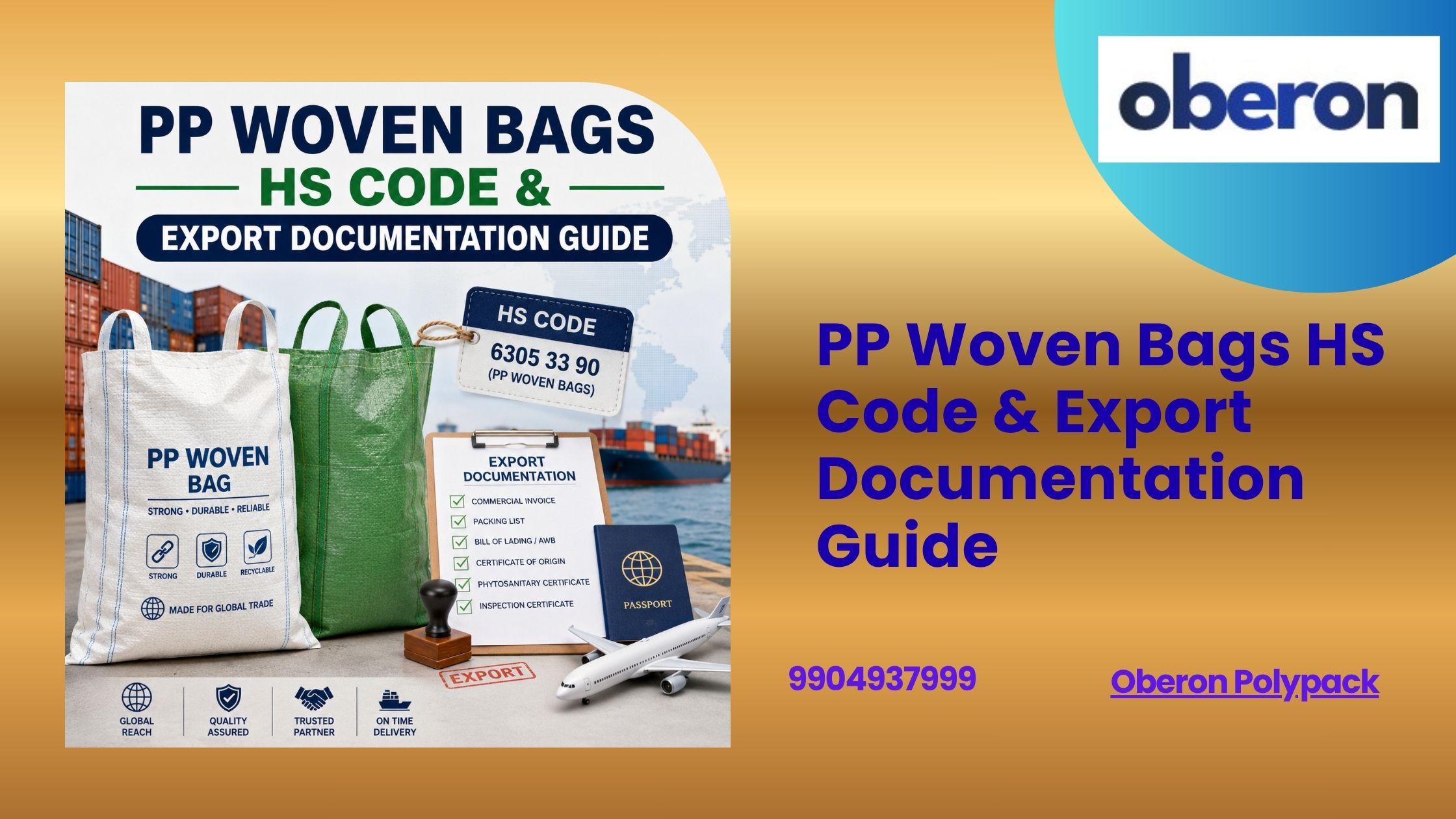
Global trade sounds exciting until customs paperwork enters the conversation. One missing document, one incorrect product description, or one wrong HS code can delay an entire shipment sitting at the port while everyone involved starts sending increasingly stressed emails. In the export business, packaging quality matters — but documentation accuracy matters just as much.
Understanding the correct PP Woven Bags HS Code helps exporters avoid customs delays, documentation errors, incorrect duty calculations, and shipment clearance problems during international trade operations.
For manufacturers and exporters dealing in PP woven bags, understanding the correct PP Woven Bags HS Code and export documentation process is essential for smooth international shipping. Whether you are exporting agricultural packaging, BOPP laminated sacks, food-grade woven bags, or industrial bulk packaging, customs authorities rely heavily on classification codes and shipping documents to clear cargo efficiently.
Modern global buyers also expect suppliers to understand export compliance professionally. A company that knows international shipping regulations instantly builds more trust than one scrambling to figure out customs paperwork after containers reach the port. This is why experienced exporters invest time in learning the complete export process instead of treating documentation like an afterthought.
What Is the PP Woven Bags HS Code?
The PP Woven Bags HS Code refers to the internationally recognised Harmonised System classification used for customs and international trade purposes. HS codes help customs authorities identify products, calculate import duties, apply regulations, and process shipments correctly during export and import procedures.
In simple terms, the HS code acts like a universal product identity card for international trade.
For PP woven sacks export process requirements, commonly used HS classifications may fall under categories related to plastic packaging materials, woven polypropylene sacks, or flexible intermediate packaging products. In many cases, exporters use codes under Chapter 39, which relates to plastics and plastic articles.
Some commonly referenced classifications include:
| Product Type | Common HS Code Range |
|---|---|
| PP Woven Bags | 6305 / 3923 |
| Polypropylene Packaging Sacks | 63053300 |
| Plastic Packing Articles | 39232990 |
| BOPP Laminated Bags | Country-specific classification |
However, there is one important thing exporters must understand: HS codes can vary slightly depending on the importing country and product specifications. A laminated BOPP bag may receive different classification treatment compared to a standard non-laminated woven sack.
This is why exporters should always confirm classification details with customs brokers, freight forwarders, or official customs authorities before shipping large consignments.
Incorrect HS code usage may lead to:
- customs delays,
- incorrect duty calculations,
- penalties,
- shipment inspections,
- or documentation rejection.
In international trade, small paperwork mistakes often create surprisingly large operational problems.
Choosing the correct PP Woven Bags HS Code helps exporters reduce customs risks, improve documentation accuracy, and avoid shipment clearance delays.
Why PP Woven Bags HS Code Matters in International Trade
Most exporters initially see HS codes as just another customs formality. In reality, these classification numbers quietly control several major parts of the international shipping process.
First, customs authorities use HS codes to calculate import duties and taxes. A wrong classification can result in incorrect duty payments, which may later trigger penalties or shipment disputes. Nobody enjoys receiving unexpected customs charges halfway through delivery.
Second, HS codes help governments track global trade statistics and regulate imports. Certain countries may apply specific packaging standards, environmental regulations, or inspection requirements based on the declared product category.
For PP woven bags exporter India businesses, accurate classification also helps avoid customs clearance delays. Ports already operate under tight schedules, and incomplete or inconsistent paperwork can slow container release significantly.
Another overlooked advantage of proper HS classification is smoother communication between exporters, freight forwarders, customs brokers, and importers. Everyone in the supply chain refers to the same standardised product identification system, reducing confusion during documentation processing.
Essential Export Documents for PP Woven Bags
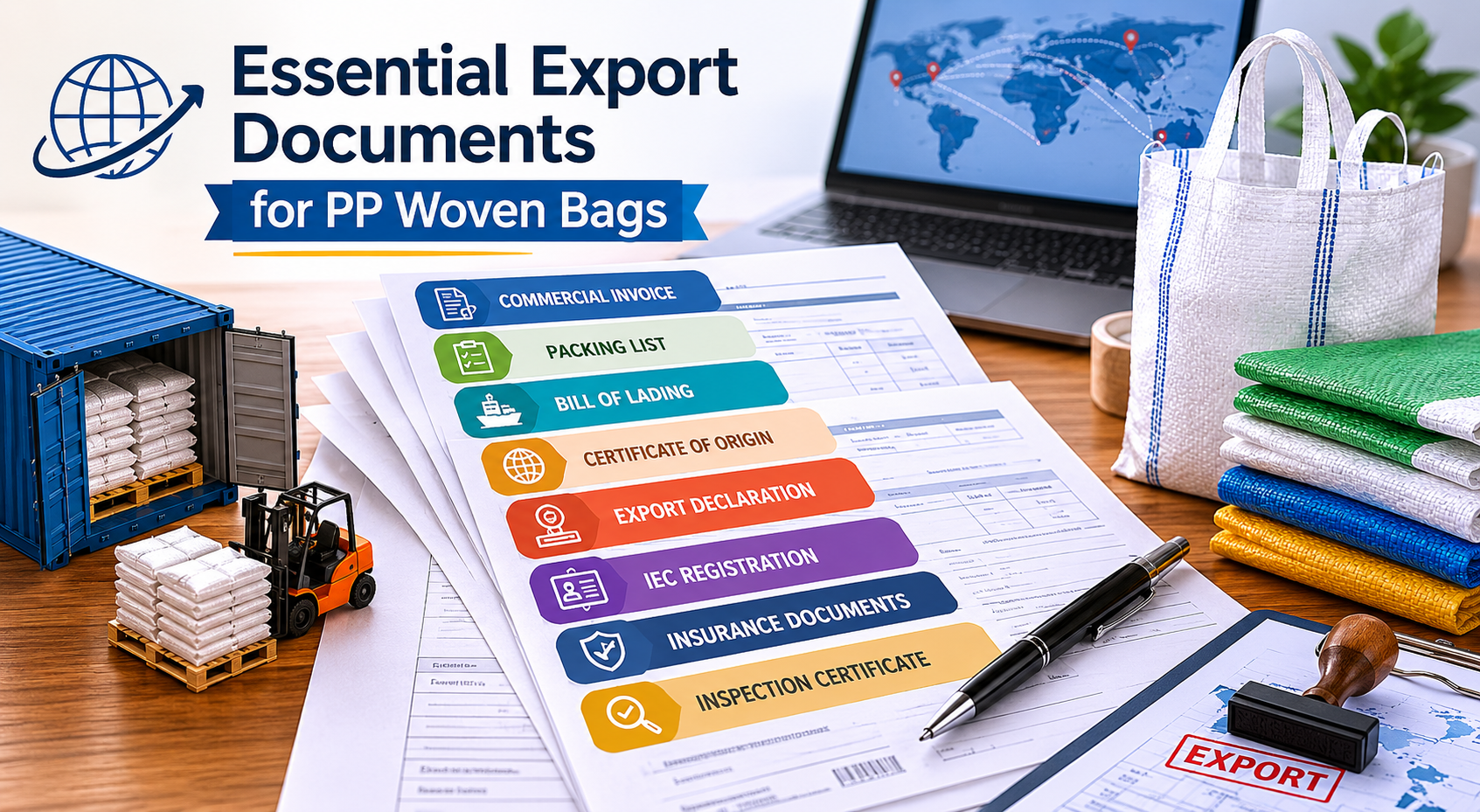
Exporting woven bags internationally involves more than manufacturing quality products. Documentation acts as the legal and logistical backbone of every shipment. Even perfectly manufactured goods can face clearance issues if paperwork is incomplete or inaccurate.
Accurate export paperwork combined with the correct PP Woven Bags HS Code helps international shipments move smoothly through customs procedures.
The most important export documents for woven bags include:
Commercial Invoice
The commercial invoice contains product descriptions, quantity, price, HS code, buyer details, seller information, and shipment terms. Customs authorities use this document to assess duties and verify transaction value.
Packing List
The packing list provides detailed shipment information including:
- bag quantity,
- package dimensions,
- gross weight,
- net weight,
- pallet details,
- and container information.
This document helps customs officials and logistics teams inspect cargo efficiently.
Bill of Lading
The Bill of Lading serves as both a shipping contract and cargo receipt issued by the shipping line. Without it, cargo ownership and shipment release become difficult during international shipping.
Certificate of Origin
Some importing countries require proof showing where the woven bags were manufactured. This document helps determine applicable trade agreements and duty benefits.
Export Declaration
Governments often require exporters to officially declare outgoing shipments through customs systems before cargo departure.
IEC Registration (India)
For Indian exporters, the Import Export Code issued by the Directorate General of Foreign Trade is mandatory before conducting export operations legally.
Insurance Documents
Marine insurance protects shipments against transport-related risks including damage, theft, or container accidents during international transit.
Inspection Certificates
Some buyers request third-party inspection reports confirming product quality, dimensions, weight specifications, or packaging compliance before shipment release.
Insert image of export documentation paperwork on office desk here.
Step-by-Step PP Woven Bags Export Process
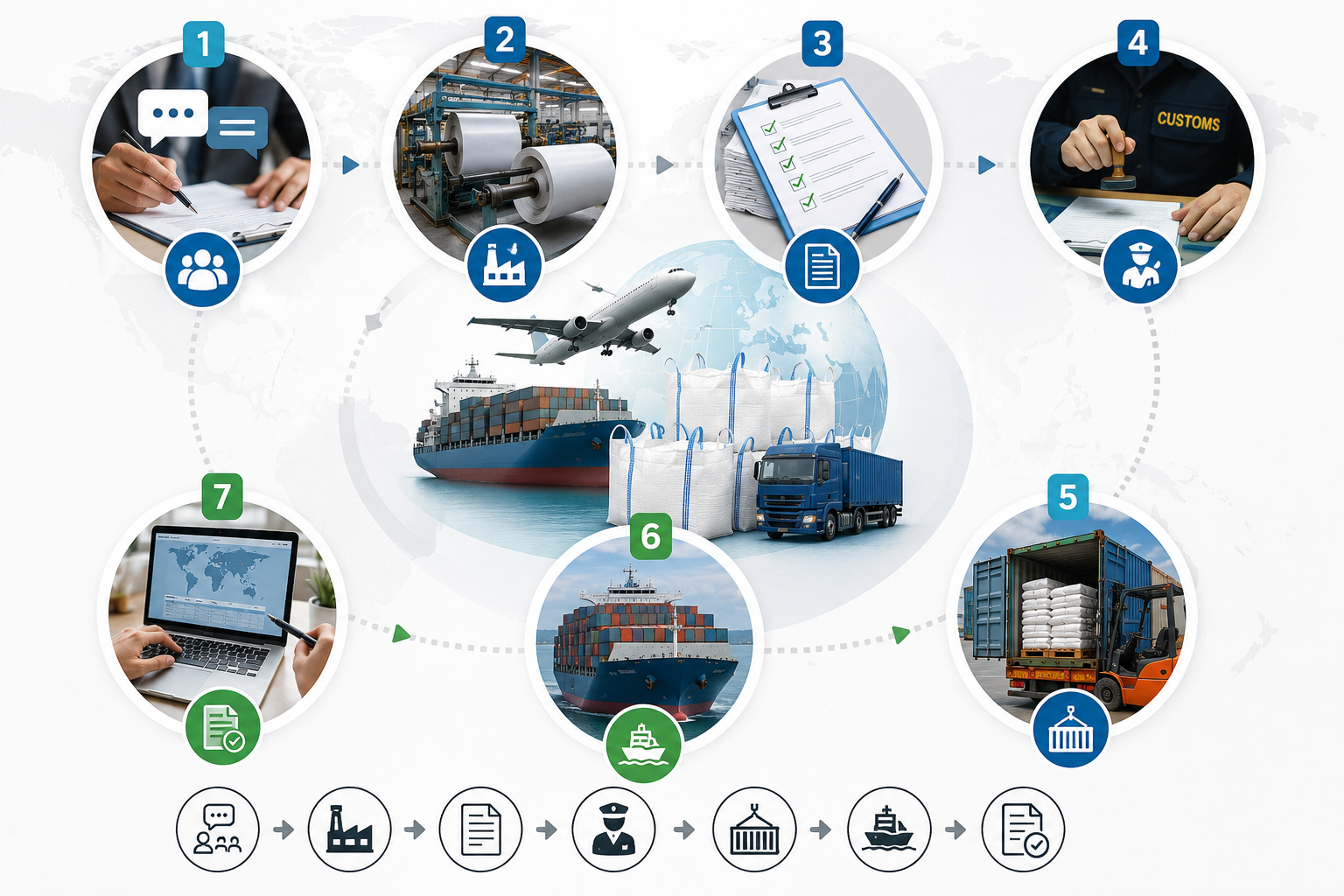
The export journey for woven bags usually starts long before containers reach the port. Every stage requires coordination between production teams, logistics providers, customs agents, and international buyers.
A typical PP woven sacks export process looks like this:
Buyer Inquiry and Quotation
The process begins when international buyers request pricing, specifications, GSM details, printing requirements, or shipping information. Exporters then prepare quotations including product costs, container capacity, delivery timelines, and Incoterms.
Production and Packaging
Once orders are confirmed, manufacturing begins based on approved specifications. This stage may include:
- fabric weaving,
- lamination,
- printing,
- stitching,
- quality inspection,
- and palletisation.
Documentation Preparation
Commercial invoices, packing lists, export declarations, and shipping instructions are prepared carefully. Accuracy here is critical because even minor inconsistencies can delay customs clearance later.
Many experienced exporters double-check the PP Woven Bags HS Code during documentation preparation because even small classification mistakes can delay container clearance.
Customs Clearance
Export cargo is submitted to customs authorities for inspection and clearance approval before shipment loading.
Container Loading and Shipping
The woven bags are loaded into shipping containers while maintaining moisture protection and safe stacking arrangements during transport.
International Delivery
After vessel departure, shipping documents are sent to buyers or banks depending on payment terms. Import customs clearance then takes place at the destination country.
The process sounds straightforward on paper, but experienced exporters know the real challenge lies in coordination timing. International shipping operates like a moving puzzle where paperwork, logistics, and production schedules must align properly.
Common Export Mistakes to Avoid
Many export problems happen quietly before shipments even leave the warehouse. Most are preventable with proper planning and documentation review.
One of the most common mistakes is incorrect HS code usage. Exporters sometimes copy classifications from older shipments without verifying whether product specifications or destination-country rules have changed.
Another issue involves incomplete product descriptions. Writing “bags” on customs paperwork is about as useful as labelling every restaurant meal simply as “food.” Customs authorities need clear descriptions including material type, product usage, and packaging details.
Missing documentation also creates avoidable delays. Some exporters forget certificates, insurance paperwork, or destination-specific compliance documents until customs authorities request them unexpectedly.
Improper palletisation and weak export packaging can also damage shipments during international transport. Moisture exposure, container movement, and rough cargo handling all affect packaging products during shipping.
Communication gaps between buyers, freight forwarders, and manufacturers create additional confusion regarding Incoterms, shipping schedules, and customs responsibilities.
Incorrect PP Woven Bags HS Code classification remains one of the most common causes of export documentation disputes in global trade.
PP Woven Bags HS Code and International Shipping Compliance
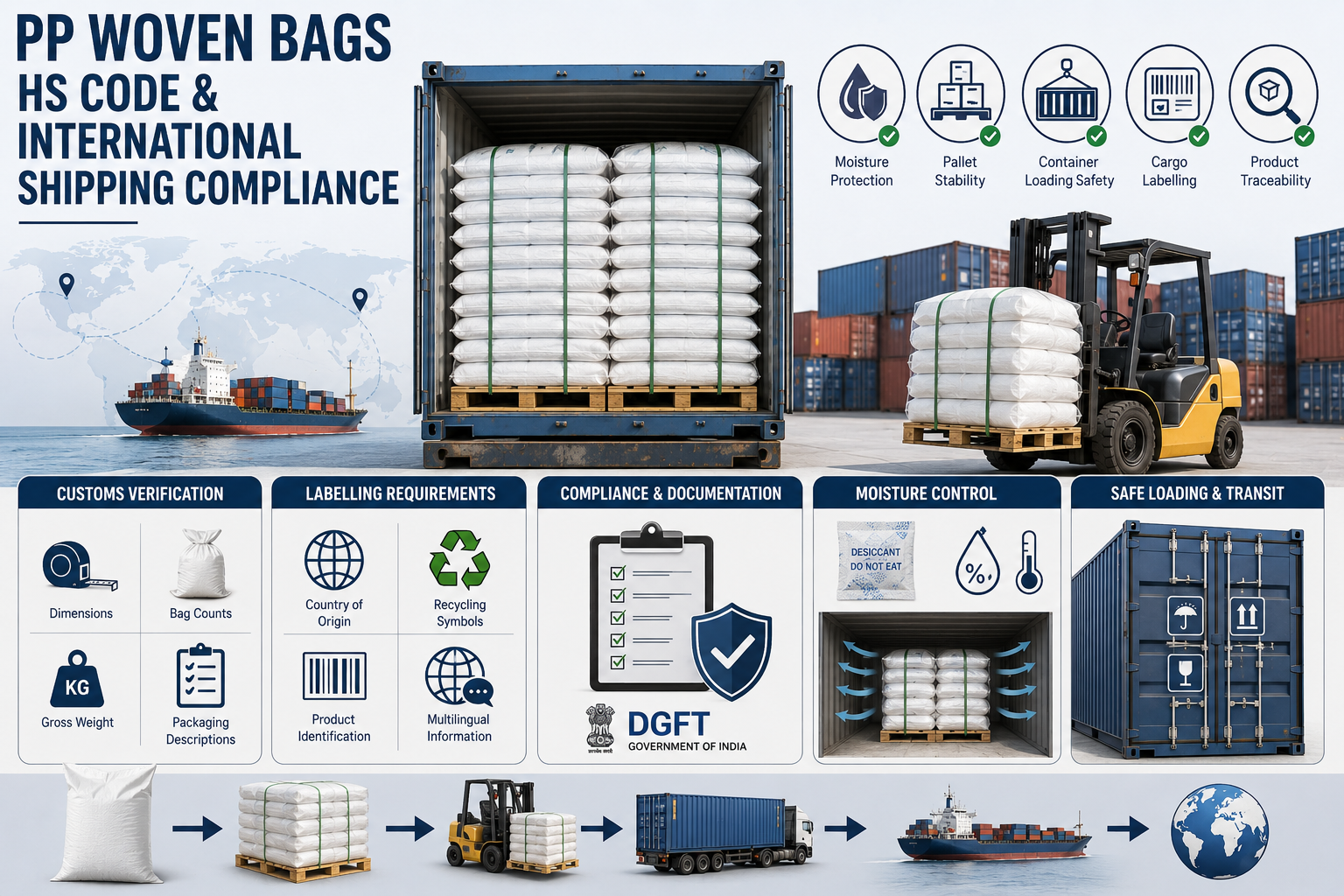
Export packaging must survive long shipping journeys, multiple handling points, and changing environmental conditions. A container travelling from India to Europe or Africa may experience humidity shifts, stacking pressure, rough handling, and temperature variations during transit.
This is why export packaging regulations exist. International shipping standards focus heavily on:
- moisture protection,
- pallet stability,
- container loading safety,
- cargo labelling,
- and product traceability.
For PP woven bags customs code declarations, packaging details often need to match actual shipment specifications exactly. Customs inspections may verify:
- dimensions,
- bag counts,
- gross weight,
- and packaging descriptions.
Labelling requirements also vary by country. Some markets require:
- country of origin labels,
- recycling symbols,
- product identification markings,
- or multilingual shipping information.
According to the Directorate General of Foreign Trade (DGFT) India, exporters must comply with applicable export regulations, licensing requirements, and shipping documentation procedures before international dispatch.
Experienced exporters also focus heavily on container moisture control because woven packaging products can absorb humidity during ocean transport if containers are not packed correctly.
How Indian Manufacturers Export PP Woven Bags Globally
India has become one of the world’s major manufacturing hubs for PP woven packaging products. Strong raw material availability, large-scale production infrastructure, competitive pricing, and export experience have helped Indian manufacturers supply woven packaging to markets across Europe, Africa, the Middle East, and Asia.
PP woven bags exporter India companies now produce a wide variety of products including:
- BOPP laminated bags,
- food-grade woven sacks,
- fertiliser packaging,
- industrial bulk bags,
- agricultural packaging,
- and custom printed export sacks.
One major advantage Indian exporters offer is manufacturing flexibility. Buyers can customise:
- GSM strength,
- dimensions,
- colours,
- printing,
- lamination,
and stitching designs according to destination market requirements.
Shipping infrastructure has also improved significantly. Major ports such as Mundra, Nhava Sheva, Chennai, and Kandla handle large container volumes efficiently for woven bag exports.
Global demand continues growing because industries everywhere need affordable, durable, and lightweight packaging solutions for agriculture, food storage, chemicals, and industrial goods.
Why Global Buyers Choose Oberon Polypack for PP Woven Bag Exports
In international trade, buyers are not just purchasing packaging products — they are investing in reliability, shipment consistency, and export expertise.
Oberon Polypack has established itself as a trusted manufacturer and exporter of PP woven bags by combining durable product quality with practical export support for global markets. From standard woven sacks to BOPP laminated export packaging, the company focuses on producing packaging solutions that meet modern shipping, storage, and compliance requirements.
Global importers often look for suppliers who understand both manufacturing and export documentation processes. Oberon Polypack supports businesses with export-quality PP woven bags designed for agriculture, food packaging, industrial storage, and bulk transportation industries. Their focus on quality control, custom printing, moisture-resistant packaging, and reliable shipment coordination makes them a practical partner for international buyers looking for long-term packaging solutions.
As export markets continue evolving, experienced manufacturers with strong production capabilities and export understanding are becoming increasingly valuable in the global packaging industry.
Future Trends in PP Woven Bag Exports for 2026
Export systems are becoming increasingly digital. Customs authorities worldwide are adopting electronic documentation systems that reduce paperwork delays and improve shipment tracking visibility.
Smart shipping documentation is another growing trend. Digital invoices, QR-coded shipment tracking, and integrated customs platforms are helping exporters process cargo faster.
Digital customs systems are also improving how PP Woven Bags HS Code classifications are verified during international trade procedures.
Sustainability is also reshaping packaging exports. International buyers increasingly prefer recyclable woven bags and environmentally responsible packaging materials. Exporters ignoring sustainability conversations may face stronger market pressure over the next few years.
Traceability systems are becoming more important too. Buyers want greater visibility regarding raw materials, manufacturing origin, compliance standards, and shipping timelines.
At the same time, global compliance expectations continue rising. Future export success will depend not only on competitive pricing but also on documentation accuracy, packaging consistency, and operational transparency.
The companies succeeding in 2026 will likely be the ones combining strong manufacturing with smarter export management systems.
Conclusion
Understanding the correct PP Woven Bags HS Code and export documentation process is essential for smooth international trade operations. Accurate classification, complete paperwork, proper packaging compliance, and organised shipping procedures help exporters avoid customs delays, reduce operational risks, and improve buyer confidence. In global trade, documentation accuracy is just as important as product quality itself.
As international packaging demand continues growing, exporters who understand customs procedures, compliance standards, and shipping documentation will maintain a stronger competitive advantage in global markets.
Businesses looking for export-ready PP woven packaging solutions should focus on reliable manufacturing, accurate paperwork management, and long-term logistics efficiency to ensure successful international shipments.
FAQs
1. What is the correct PP Woven Bags HS Code for export?
PP woven bags are commonly classified under HS codes related to plastic packaging and woven polypropylene sacks. Frequently used classifications include 63053300 and related categories depending on product specifications and importing country regulations.
2. Which export documents are mandatory for PP woven bag exports?
Mandatory documents usually include commercial invoices, packing lists, bills of lading, export declarations, and customs documentation. Some countries may also require certificates of origin or inspection certificates.
3. Can HS codes differ by country?
Yes, HS codes may vary slightly depending on local customs regulations and product interpretation. Exporters should always verify classification requirements with destination-country customs authorities or customs brokers.
4. What happens if the wrong HS code is used?
Incorrect HS code usage can result in customs delays, incorrect duty calculations, shipment inspections, penalties, or documentation rejection during international shipping processes.
5. Are PP woven bags exported worldwide?
Yes, PP woven bags are exported globally for food packaging, agriculture, industrial storage, chemicals, fertilisers, and bulk transportation industries due to their durability and cost efficiency.
6. Why is PP Woven Bags HS Code important during customs clearance?
The PP Woven Bags HS Code helps customs authorities identify products, calculate duties, apply import regulations, and process international shipments correctly. Incorrect classification can lead to delays, penalties, or shipment inspections.