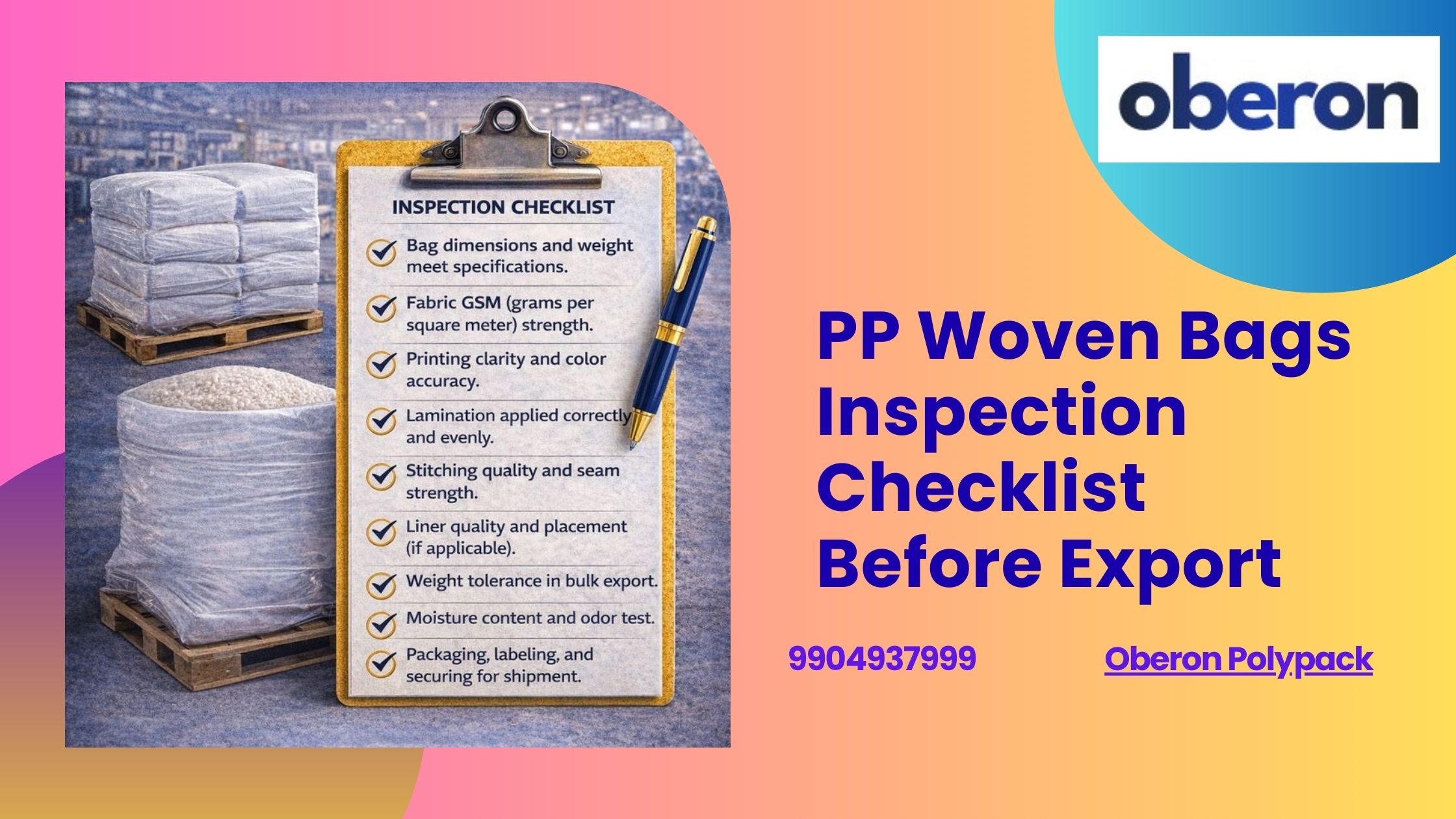
Packaging quality is similar to the product in terms of significance in international trade. For bulk commodities, industrial materials, and agricultural goods, pp woven bags remain one of the most reliable and widely used packaging solutions. They are strong, flexible and cost effective, hence export friendly. Nevertheless, any one minute quality failure can lead to rejection of shipments, loss of money or reputation over an extended period of time among buyers.
Strict conformance to specifications, performance and documentation are required in the export markets. This is where a structured pp woven bags inspection checklist before export becomes essential. Close inspection is in place to make sure that each shipment of bags is of the standards the buyer ordered, overseas laws, and even on-the-job demands. This guide provides a day-by-day explanation of the inspection process which can assist exporters reduce the risk and achieve the consistency of quality.
What Are PP Woven Bags and Where Are They Used?
PP woven bags are industrial packaging products manufactured using woven polypropylene fabric. These bags are provided with great tensile strength, tear resistance, and heavy load resistance due to the provided weaving structure.
Polypropylene woven bags are commonly used across multiple industries, including:
- Grains, seeds, sugar and animal feed agriculture.
- Cement, sand and mineral constructions.
- Chemical products and fertilizers.
- Packaging food stuffs that have linings.
- Raw material handling at industries.
Products such as pp woven sacks, woven polypropylene bags, pp woven fabric bags, and pp woven big bag solutions are designed to handle different capacities and storage conditions. They are widely used and therefore the reliability of quality is essential particularly in export deliveries.
Why Is a PP Woven Bags Inspection Checklist Necessary Before Export?
Export shipments are conducted with a high level of suspicion on the part of the buyer. Even experienced exporters are robbed of cheap problems when they have a weak or inconsistent inspection processes.
A set inspection checklist is required as it:
- Eliminates rejecting of shipment at the ports of destination.
- Maintains technical specifications of bags that are buyer approved.
- Minimizes conflict, claims and replacement expenses.
- Authenticates loading, transporting and storing performance.
- Enhances credibility of the exporters in the foreign markets.
Without proper inspection, defects in **pp bags **may remain unnoticed until the goods reach the buyer. By that point, it will be costly and harmful to business relations.
Key International Standards for PP Woven Bags Inspection
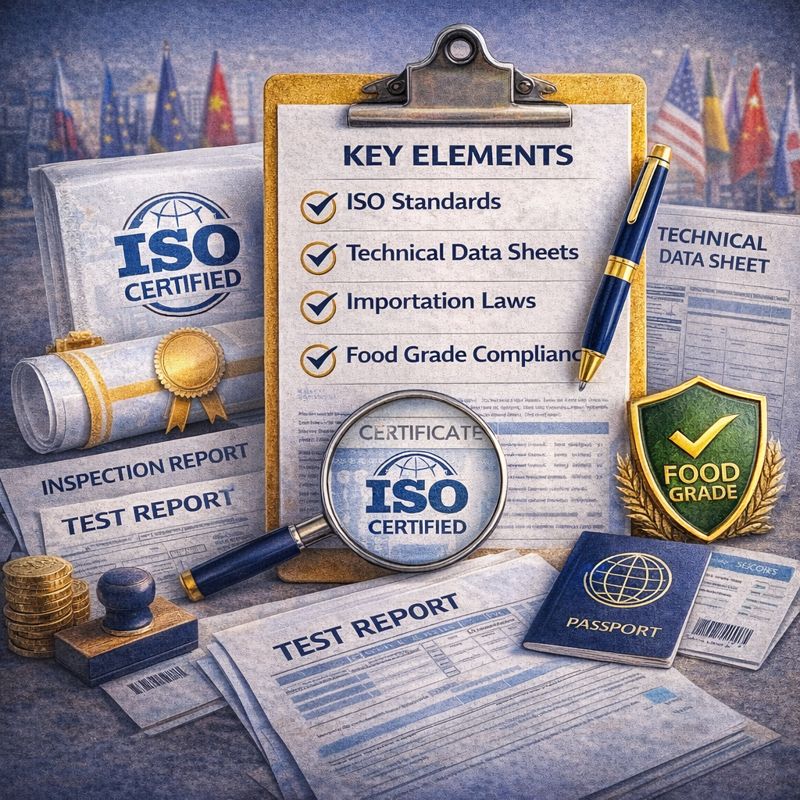
The quality of packaging that would be used in the export needs to be in accordance with international standards and also needs to match those of buyers. These requirements achieve uniformity and dependability in deliveries.
The inspection parameters are generally referring to:
- Packaging and quality standards of ISO.
- Technical data sheets sanctioned by buyers.
- Importation laws that are country-specific.
- Edible products compliance to food grade.
It enhances trust by keeping the records of inspection, test reports and traceability. Many buyers also insist on independent verification before approving shipments of woven polypropylene bags.
Pre-Production Inspection Checklist for PP Woven Bags
.png)
Quality assurance begins before manufacturing starts. Pre-production inspection ensures that the base materials and specifications are correct.
Raw Material Verification
- Check of polypropylene grade of resin.
- Virgin or buyer approved recycled content.
- Melt flow index consistency for smooth extrusion
Incorrect resin selection directly affects the strength and life span of pp woven fabric.
Fabric and Tape Specifications
- GSM tolerance in range of acceptance.
- Uniform tape width and thickness
- Consistent weaving density
- UV stabilization for outdoor or long-term storage
Color and Additive Checks
- Quality and dispersion of masterbatch.
- Shade consistency across batches
- Anti-slip or anti-static additives where specified
Effective pre-production control minimizes the chances of occurrence of defects in the manufacturing process.
In-Process Inspection Parameters During Manufacturing
In-process inspection helps identify quality issues early, preventing large-scale rejection later.
Weaving Process Inspection
Uniform weaving without broken or loose tapes
Clean fabric edges
No apparent weaving mistakes or holes.
Lamination Quality Checks
- Consistent lamination thickness
- Strong adhesion between layers
- None of the bubbles, wrinkles or peeling.
Printing Quality Control
- Sharp print clarity and correct alignment
- Ink adhesion and rub resistance
- Accurate color matching with approved artwork
This stage is especially important for printed pp woven bags and laminated pp woven bags, where appearance influences buyer acceptance.
Finished PP Woven Bags Inspection Checklist
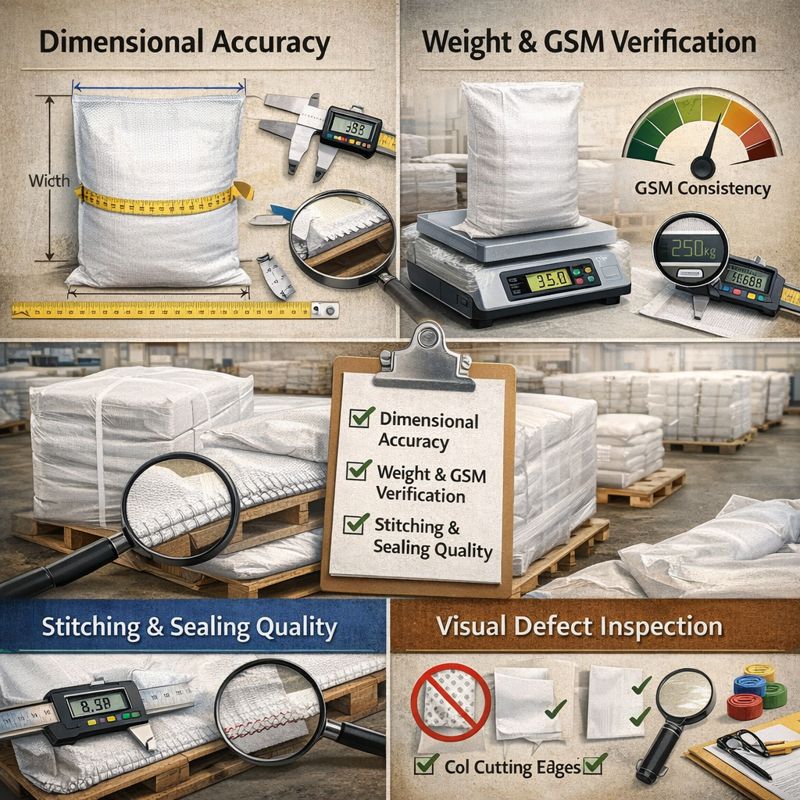
The last stage before approval of export is inspection of finished goods.
Dimensional Accuracy
Measurement of length, width, and gusset
Compliance with buyer-approved tolerances
Weight and GSM Verification
The consistency of the weight of individual bags.
Fabric GSM assurance to give needed strength.
Stitching and Sealing Quality
- Stitch density and uniformity
- Seam strength under load
- Heat-cut or stitched bottom integrity
Visual Defect Inspection
- No holes, stains, oil spots or contamination.
- Clean cutting edges
- No difference in color or shade discrepancy.
This stage ensures pp woven sacks meet both functional and visual standards.
Finished PP Woven Bags Inspection Parameters
| Inspection Area | Key Checkpoints | Acceptance Criteria |
|---|---|---|
| Dimensions | Length, width, gusset | Within agreed tolerance |
| Weight | Bag weight | Consistent per specification |
| GSM | Fabric GSM | Buyer-approved range |
| Stitching | Seam strength | No thread breakage |
| Visual defects | Holes, stains | Zero critical defects |
Strength and Performance Testing of PP Woven Bags
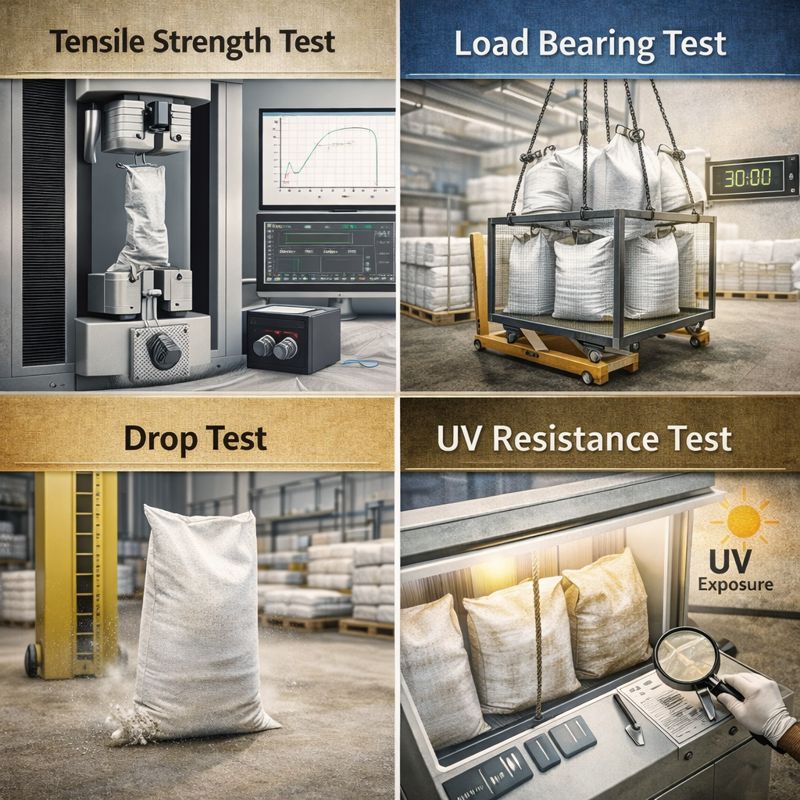
Strength and performance testing plays a crucial role in determining whether pp woven bags are suitable for export conditions. Compared to domestic handling, export shipments have multiple loading points, travel, and container stacking and different climatic exposure. Even bags that look good can malfunction even without proper testing.
Performance testing ensures that polypropylene woven bags can withstand real-world stress without tearing, bursting, or losing structural integrity. Such tests are normally done on randomly chosen samples as a quality assurance measure.
Tensile Strength Test
Tensile strength test is done to test the ability of the fabric to resist pulling forces both in the warp and the weft direction. This test confirms whether the pp woven fabric meets the required strength parameters specified by the buyer. The lack of tensile strength can easily cause the tearing of the fabric when lifted or stacked and thus this test is necessary to approve export.
Load Bearing Test
The load bearing test is done to determine the maximum weight that the bag can hold without collapsing. The targeted load is put in bags and held within a specific period of time. This test is critical for pp woven sacks and bulk packaging applications, as it directly impacts safety during handling and storage.
Drop Test
Bags are often dropped either in loading or unloading whilst doing export logistics. This is the case of drop test, which drops filled bags, at a given height. The test measures the strength of fabrics, their durability and stitching. Bags that do not pass this test are likely to be leaked or burst during transit.
UV Resistance Test
In the case of bags which are to be used as outdoor storage, UV resistance tests are necessary. Prolonged sunlight exposure can weaken woven polypropylene bags, reducing their usable life. This is a test that is carried out to confirm that UV-stabilized bags have strength during the course of their time, especially in agricultural and industrial exports.
Together, these performance tests validate that pp woven bags are not only compliant on paper but reliable in actual export conditions.
Packaging and Labeling Inspection Before Export
Even a good bag can be rejected because of poor packaging.
Inspection covers:
- Effective bundling and palletizing.
- During transportation moisture proofing.
Export compliant labeling to include:
- Product description
- Net weight
- Country of origin
- Buyer-specific markings
Proper packaging helps in avoiding damages to the bags and easy clearance of customs.
Brand Quality Assurance: How Oberon Polypack Ensures Export-Ready PP Woven Bags
Quality at Oberon Polypack has been adopted at all stages of manufacture. As a reliable pp woven bags manufacturer, the brand follows a structured, multi-layer inspection system designed for export compliance.
Documented testing and traceability aid in checking raw materials, in-process monitoring, and finished goods inspection. Third-party inspection is optional, which gives extra power to buyers. Whether supplying woven polypropylene bags, pp woven fabric bags, or customized export solutions, Oberon Polypack focuses on consistency, reliability, and long-term buyer trust.
What Documents Are Required for PP Woven Bags Export Inspection?
Export inspection cannot be complete without the adequate documentation.
Ordinarily needed documents are:
- Inspection report
- Test certificates
- Packing list
- Commercial invoice
- Certificate of origin
- Purchaser-based compliance reports.
Effective records reduce time wastage during customs and clearance risks.
Common Defects Found During PP Woven Bags Inspection
Rejection of shipments is avoided by early defects detection.
Some of the common problems in inspection are:
- Inconsistent GSM
- Weak lamination bonding
- Poor stitching strength
- Dimensional inaccuracies
- Printing defects
- Fabric contamination
These issues can be removed with the help of a structured inspection checklist before dispatching.
Third-Party Inspection vs In-House Inspection: Which Is Better?
Both inspection approaches serve different purposes.
| Inspection Type | Advantages | Limitations |
|---|---|---|
| In-house inspection | Continuous monitoring, lower cost | Limited buyer trust |
| Third-party inspection | Neutral verification, high credibility | Additional cost |
Most export buyers prefer third-party inspection for large shipments of pp woven bags to reduce commercial risk.
Final Pre-Shipment Inspection Checklist for PP Woven Bags
Shipment is ready to be shipped with a final inspection before the dispatch.
This includes:
- AQL-based random sampling
- Quantity verification
- Packaging and labeling confirmation
- Container inspection loading.
- Final shipment approval
A disciplined pp woven bags inspection checklist before export significantly reduces rejection risk and ensures smooth delivery.
Conclusion: Ensuring Export Success with a Reliable Inspection Process
Exporting pp woven bags successfully requires more than efficient production it demands a structured inspection process that ensures consistency, compliance, and reliability. Since raw material testing to checking of the strength to the last stage of pre-shipment, each inspection point is of great importance in ensuring that all specifications of the buyers and the international quality are fulfilled. A disciplined pp woven bags inspection checklist before export helps reduce defects, prevent shipment rejection, and protect long-term business relationships.
Exporters will gain credibility among international purchasers by adhering to a documented and transparent inspection system that will help them to improve their share in the market. Consistent quality in woven polypropylene bags, pp woven fabric bags, and pp woven big bag solutions leads to repeat orders and long-term partnerships. A dependable inspection procedure is not merely a defense in a competitive export market, it is a strategic position of sustainable progress.
Frequently Asked Questions (FAQs)
What is the most important test for PP woven bags before export?
Load bearing and tensile strength tests prove bags to be safe to carry desired loads.
How is GSM checked during PP woven bags inspection?
GSM is checked through weighing samples of fabric and comparing it against accepted tolerance.
What are acceptable quality limits (AQL) for PP woven bags?
The majority of customers apply AQL 2.5 -4.0 based on the degree of the defects.
Can recycled material be used in polypropylene woven bags for export?
Yes, provided that the buyer will approve it and that it will be in line with the destination regulations.
What is the number of samples that are tested in the process of pre-shipment inspection?
The size of sampling is based on the size of shipment and agreed AQL standards.
What is the reason why buyers would like third party inspection of woven bags?
Transparency, impartiality, and fewer risks are provided with third-party inspection.
What causes shipment rejection of PP woven bags?
Poor reasons include weak stitching, wrong dimensions, weak fabrics, and wrong labels.