Choosing a ground cover sounds simple until you are standing in a field, nursery, greenhouse or landscaped site trying to decide which fabric will actually survive the job. The right material needs to control unwanted weed growth without creating unnecessary problems with water, handling, installation or long-term outdoor exposure.
That is where PP Woven Fabric for Ground Covers becomes a practical option for agriculture, horticulture and landscaping applications. Woven polypropylene combines a structured construction with useful strength, flexibility and moisture resistance. But the material still needs to be selected according to the application. GSM, weave, width, roll format, UV stabilisation and installation conditions can all affect performance. Oberon Polypack also identifies ground covers among the agricultural and landscaping applications of woven polypropylene fabric.
What Is PP Woven Fabric for Ground Covers?
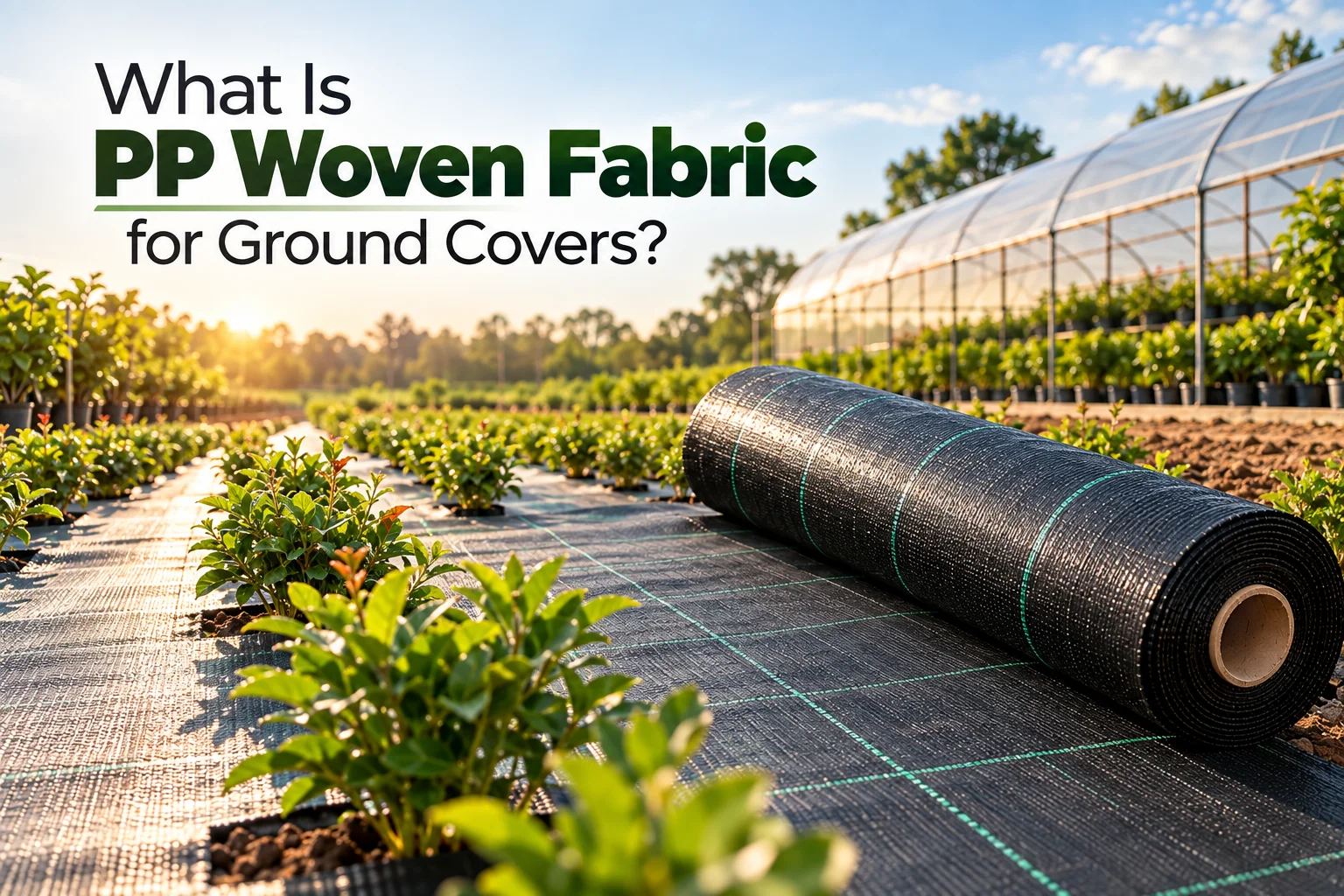
PP Woven Fabric for Ground Covers is a ground-covering material made by weaving polypropylene tapes together to form a stable fabric structure. The woven construction gives the material its combination of strength and flexibility, while the open structure can be designed to provide useful water and air movement depending on the product specification.
Unlike a loose plastic sheet, woven ground cover fabric is designed around the practical demands of outdoor use. It may be walked on, cut around plants, pinned to the soil, exposed to rain and sunlight, and handled repeatedly during installation or maintenance.
For growers and landscapers, the attraction is straightforward: a suitable woven fabric can create a physical barrier over the soil while still being easier to handle than many rigid or heavy covering materials. The precise performance, however, depends on how the fabric is manufactured and specified.
Why Use PP Woven Fabric for Ground Covers Outdoors?
Outdoor ground covers face a combination of conditions that indoor materials simply do not. Sunlight, rainfall, soil contact, temperature changes, foot traffic and repeated handling can all influence the useful life of a covering.
PP Woven Fabric for Ground Covers is useful because polypropylene woven construction offers a balance between strength and relatively low weight. The fabric can be supplied in rolls, making it practical to transport, cut and install across larger areas.
It can also be used in different environments. Agricultural operations may use woven ground covers around crops, nurseries may place them between growing areas, while landscaping contractors can use them around planted areas and pathways.
Oberon Polypack describes polypropylene woven fabric as suitable for agricultural ground covers and outdoor applications where strength and durability are important.
7 Things to Check Before Choosing Ground Cover Fabric
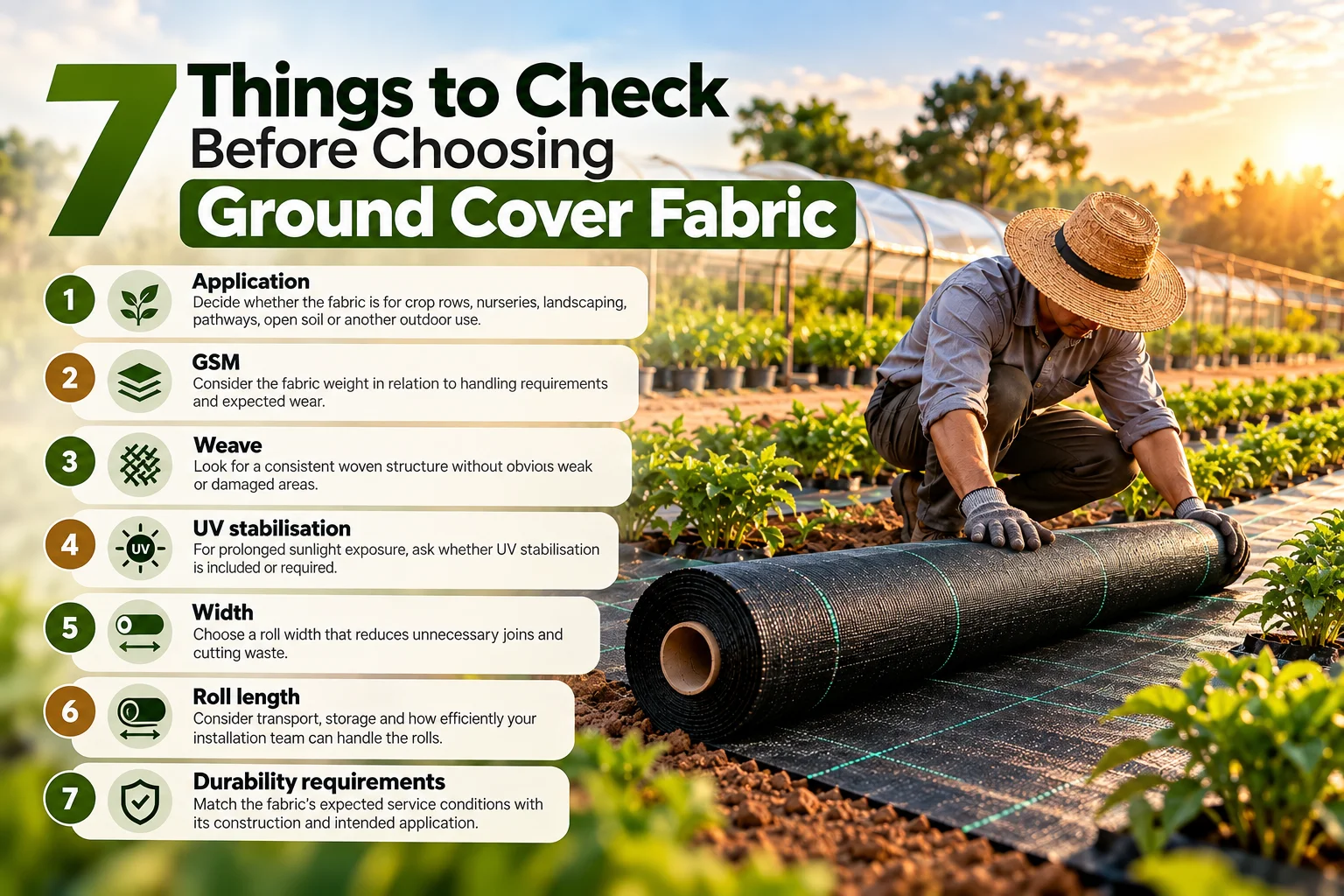
Before ordering PP Woven Fabric for Ground Covers, focus on the actual conditions where the material will be used rather than choosing a fabric simply because it is marketed as "heavy duty."
- Application: Decide whether the fabric is for crop rows, nurseries, landscaping, pathways, open soil or another outdoor use.
- GSM: Consider the fabric weight in relation to handling requirements and expected wear.
- Weave: Look for a consistent woven structure without obvious weak or damaged areas.
- UV stabilisation: For prolonged sunlight exposure, ask whether UV stabilisation is included or required.
- Width: Choose a roll width that reduces unnecessary joins and cutting waste.
- Roll length: Consider transport, storage and how efficiently your installation team can handle the rolls.
- Durability requirements: Match the fabric's expected service conditions with its construction and intended application.
There is no single specification that is automatically right for every project. A nursery walkway and a large agricultural growing area may need different material characteristics even though both are technically using ground cover fabric.
PP Woven Ground Cover Fabric vs Other Ground Cover Materials
The choice between PP Woven Fabric for Ground Covers, non-woven materials, plastic films and other ground-covering products depends on what the site needs.
Woven polypropylene has a visibly structured construction because polypropylene tapes are interlaced in warp and weft directions. This construction can provide useful tensile and tear resistance while remaining relatively easy to handle.
Plastic film, by comparison, creates a continuous sheet and may be appropriate where a different moisture or containment characteristic is required. Non-woven fabrics have a different structure because their fibres are bonded rather than interlaced.
The important point is not that one material is universally better. The right choice depends on exposure, expected traffic, water management, crop requirements, installation method and the required service life.
Ground Cover Material Comparison
| Material | Basic construction | Typical advantage | Important consideration | Suitable application examples |
|---|---|---|---|---|
| PP woven ground cover | Interwoven polypropylene tapes | Strength and practical handling | Specification should match outdoor exposure | Agriculture, nurseries, landscaping |
| Plastic film | Continuous polymer sheet | Useful barrier characteristics | Can require different drainage and handling considerations | Temporary coverings, specific agricultural uses |
| Non-woven fabric | Bonded fibres | Flexible and soft structure | Different mechanical properties from woven fabric | Horticultural and landscaping applications |
| Natural fibre cover | Plant-based fibres | Natural-material option | Service life can differ significantly outdoors | Selected landscaping and horticultural uses |
This comparison shows why choosing PP Woven Fabric for Ground Covers should start with the job requirements rather than the material name alone.
How GSM Affects PP Woven Fabric for Ground Covers
GSM means grams per square metre and is commonly used to describe the weight of woven fabric. It is one of the first specifications buyers should discuss when selecting PP Woven Fabric for Ground Covers.
A higher GSM generally means more material weight per square metre, but it should not be treated as a simple "higher is always better" measurement. A ground cover must still have appropriate construction, weave consistency and outdoor performance.
A very heavy fabric may offer additional robustness but could also be less convenient to transport, cut or install. A lighter construction may be easier to handle but may not be appropriate for an application involving substantial traffic or repeated handling.
The right GSM should therefore be selected according to the expected conditions. Oberon Polypack currently lists PP woven fabric in a range of GSM options and states that fabric can be customised according to application requirements.
Why UV Stabilised PP Woven Fabric Matters Outdoors
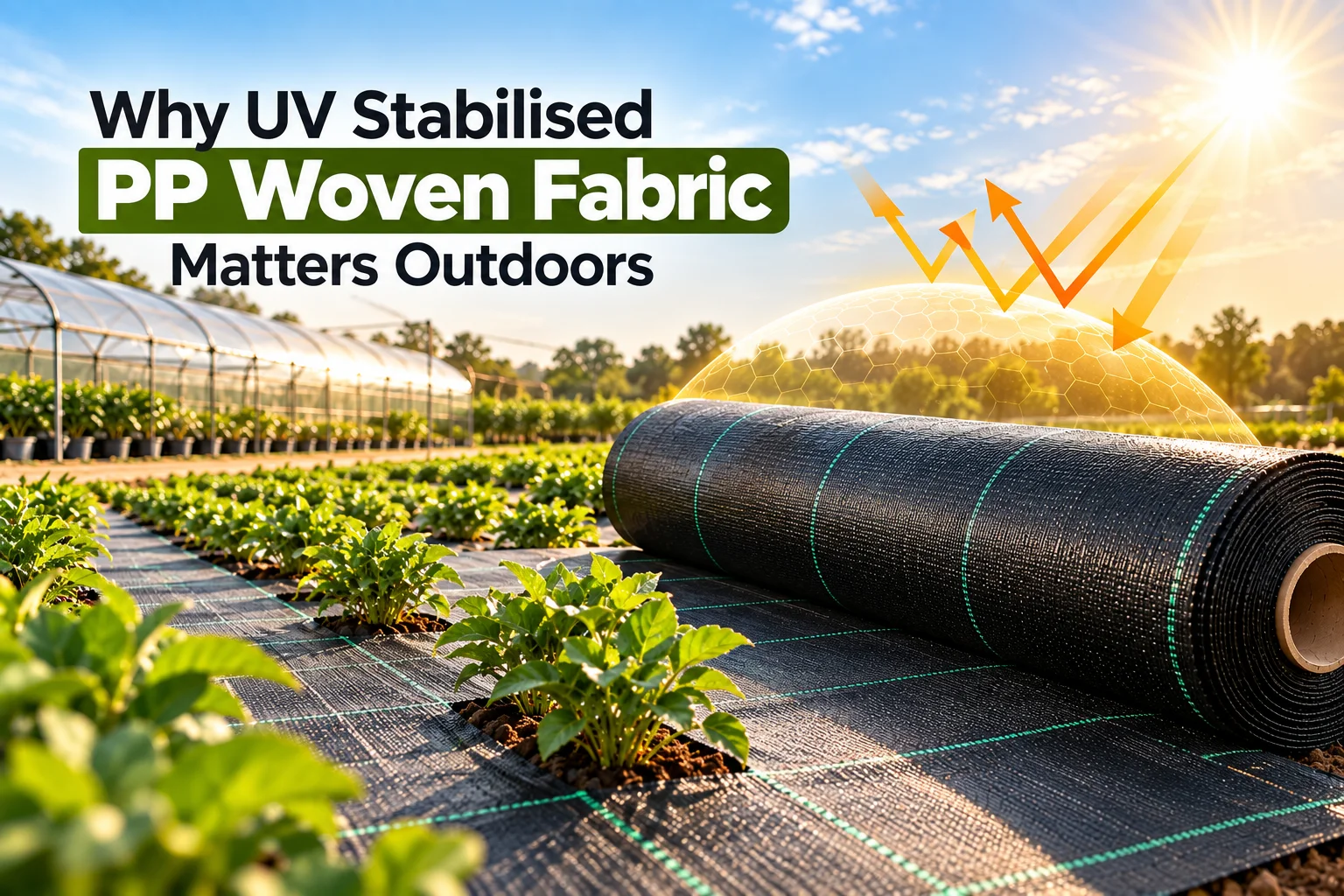
Sunlight is one of the biggest differences between indoor and outdoor material applications. A fabric that performs well in a warehouse may have very different exposure conditions when it remains outside for months.
For long-term PP Woven Fabric for Ground Covers applications, buyers should ask whether UV stabilisation is required. UV stabilisers can help improve resistance to degradation caused by prolonged ultraviolet exposure, although the actual service life depends on the formulation, exposure level, climate, installation and other conditions.
Do not treat "UV stabilised" as a guarantee of a specific number of years outdoors unless the supplier provides an appropriate, application-specific basis for that claim.
Oberon Polypack lists UV resistance as an optional property of its PP woven fabric range, which is particularly relevant when the fabric is intended for outdoor use.
Choosing the Right PP Woven Fabric Width and Roll Size
Width is easy to overlook when buyers focus on material quality. Yet the wrong width can create unnecessary cutting, joining and installation work.
When selecting PP Woven Fabric for Ground Covers, measure the areas you need to cover and consider how the rolls will be positioned. Wider rolls may reduce the number of joins, while narrower rolls can be easier for smaller teams to handle.
Roll length matters as well. A very long roll may improve installation efficiency across a large open area but can require more storage and handling space. Shorter rolls may be easier to move around tight landscaping projects.
Before ordering, discuss available widths and roll formats with the supplier rather than assuming a standard size will suit every project.
Water, Air and Soil Considerations
Ground cover materials should be selected with the site's water-management requirements in mind. The behaviour of the finished fabric depends on its construction, tape arrangement and any additional finishing or coating.
For agricultural and horticultural applications, the objective is often to cover unwanted vegetation between plants while maintaining practical soil-management conditions. The fabric should therefore be considered alongside irrigation, rainfall, drainage and the way the planting system is installed.
PP Woven Fabric for Ground Covers should not be treated as a universal replacement for every type of agricultural film or membrane. Instead, buyers should define what the fabric needs to accomplish and select its construction accordingly.
PP Woven Fabric for Agriculture and Landscaping
Agriculture and landscaping have different operating environments, even when both use ground covers.
In agriculture, the fabric may be installed across larger areas and exposed to machinery, soil, irrigation systems and repeated maintenance. Agricultural ground cover fabric therefore needs to balance coverage, handling efficiency and durability.
In landscaping, the material may be cut around trees, plants, paths and decorative features. Contractors may place greater importance on manageable roll dimensions and easy installation.
PP Woven Fabric for Ground Covers can serve both areas when the specification is matched to the intended use. Oberon Polypack's existing product information identifies agriculture and landscaping among the applications for woven polypropylene fabric.
What Makes a Durable PP Woven Ground Cover?
Durability is not created by GSM alone. PP Woven Fabric for Ground Covers needs a consistent woven structure and suitable raw-material and manufacturing controls.
Look at the quality of the polypropylene tapes, the consistency of the weave and the fabric's resistance to tearing under the conditions expected on site. Edges and cut sections should also be considered because installation often involves cutting the fabric around plants, posts or other obstacles.
If the fabric will be moved repeatedly between growing areas or reused, handling durability becomes particularly relevant. A material that performs well but is difficult to install may still create unnecessary labour costs.
How to Select a PP Woven Fabric Supplier
A reliable PP Woven Fabric for Ground Covers supplier should be able to discuss the technical requirements rather than offering only a generic product description.
Ask about available GSM, widths, roll formats, colours, finishes and UV options. Also ask how the fabric is manufactured and how quality is checked during production.
Oberon Polypack states that its PP woven fabric can be customised across parameters including GSM, width, colour and finish, with tubular and flat forms available.
For international buyers, it is also sensible to discuss packaging, export handling, production lead times and documentation before placing a large order.
PP Woven Fabric for Outdoor Applications: What Should You Specify?
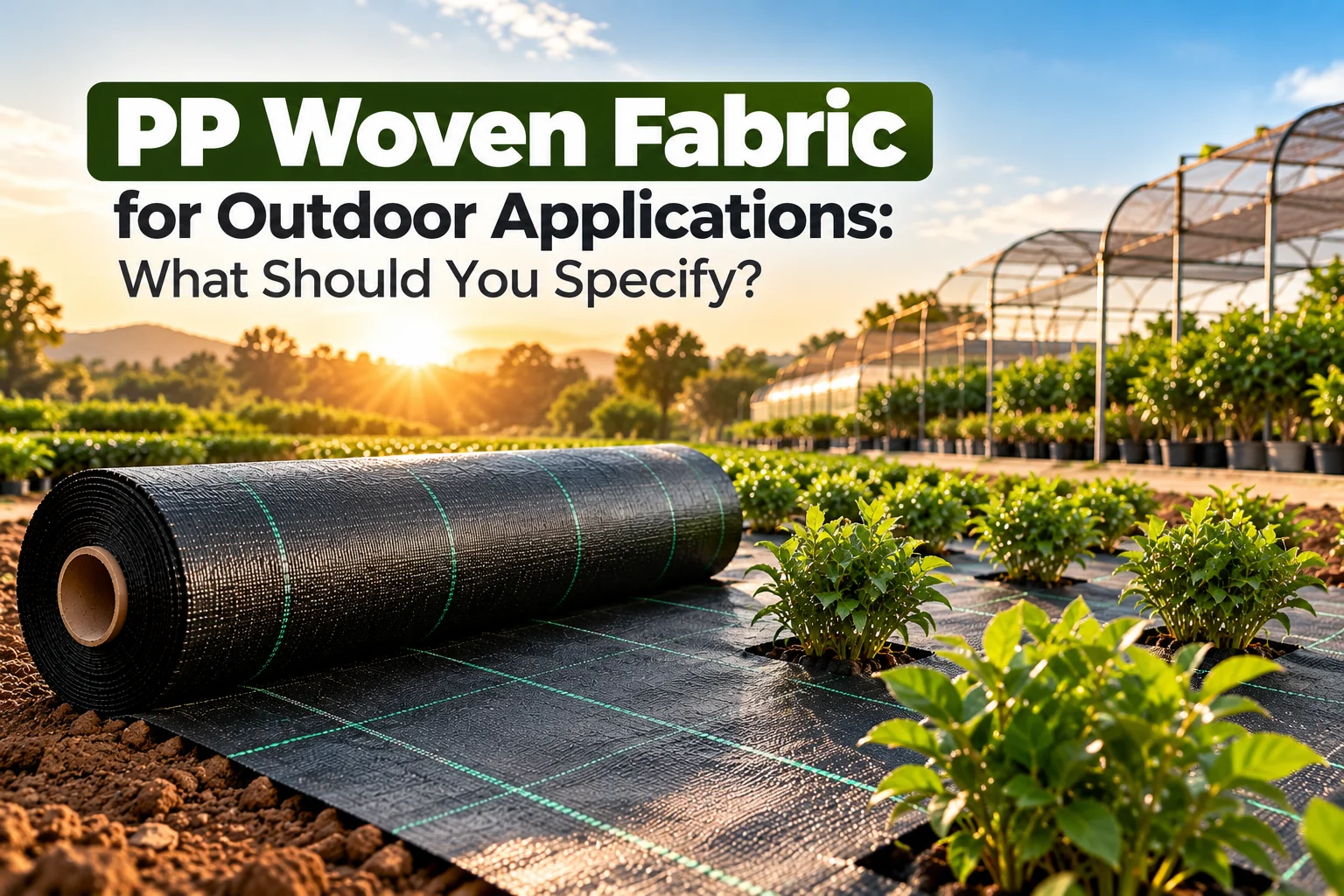
A clear specification helps prevent confusion between the buyer and supplier. Instead of asking for "strong outdoor fabric," define the requirements that actually matter.
For PP Woven Fabric for Ground Covers, the specification may include the intended application, GSM, width, roll length, colour, weave requirements, UV stabilisation, expected exposure and any special finishing.
If the material is being used in a demanding environment, explain the operating conditions. A supplier can make a more informed recommendation when it knows whether the fabric will experience direct sunlight, frequent foot traffic, machinery contact, repeated installation or long-term soil contact.
Common Mistakes When Buying Ground Cover Fabric
One common mistake is choosing fabric based solely on price per roll. The cheapest roll may not deliver the handling characteristics or durability required for the project.
Another is assuming that every polypropylene ground cover behaves identically. Manufacturing method, GSM, weave, stabilisation and finishing can all influence the final material.
Buyers also sometimes overlook the installation process. A technically suitable fabric can become difficult to work with if the roll width, length or weight is poorly matched to the available labour and equipment.
Finally, do not assume that UV stabilisation or any other feature automatically guarantees a particular service life. Outdoor performance depends on the complete application.
Is PP Woven Fabric Suitable for Your Outdoor Project?
The answer depends on what you expect the fabric to do. PP Woven Fabric for Ground Covers can be a practical choice for agriculture, horticulture and landscaping where a durable woven material is needed for outdoor ground coverage.
Start by identifying the site's conditions. Consider sunlight, rainfall, soil contact, traffic, installation method, required width and expected service duration. Then select the fabric construction and specifications around those requirements.
This approach is more reliable than starting with a product name and trying to make it fit the application afterwards.
Conclusion
Choosing PP Woven Fabric for Ground Covers starts with understanding the conditions rather than simply selecting the heaviest or cheapest material available. GSM, weave, width, roll format, UV stabilisation, durability and installation requirements all influence whether a fabric is suitable for agriculture, horticulture or landscaping. A clear specification makes it easier to compare products and helps ensure the selected fabric is appropriate for its intended outdoor environment.
If you are looking for PP Woven Fabric for Ground Covers for agricultural, landscaping or other outdoor applications, discuss your requirements with a manufacturer that can provide suitable specifications and customisation options. Explore Oberon Polypack's PP woven fabric range or contact the Oberon Polypack team to discuss fabric requirements for your application.
FAQs
1. What is PP woven ground cover fabric used for?
PP woven ground cover fabric is commonly used in agriculture, horticulture and landscaping to cover areas of soil and help manage unwanted vegetation. Its woven polypropylene construction provides a practical combination of strength and relatively low weight for outdoor handling.
2. Is PP woven fabric suitable for outdoor applications?
Yes, suitable PP Woven Fabric for Ground Covers can be used outdoors when its construction and specification match the expected conditions. For extended sunlight exposure, buyers should discuss UV stabilisation and other environmental requirements with the supplier.
3. What GSM should I choose for ground cover fabric?
There is no universal GSM that fits every application. The appropriate specification depends on expected traffic, handling, exposure, required durability and installation conditions. Buyers should discuss the intended use with the supplier before selecting GSM.
4. Does UV stabilisation matter for polypropylene ground cover fabric?
UV stabilisation can be important when polypropylene fabric remains exposed to sunlight for extended periods. It can improve resistance to UV-related degradation, but actual outdoor service life depends on the material formulation and environmental conditions.
5. What width should ground cover fabric rolls be?
The best width depends on the area being covered, installation method and available handling equipment. Wider rolls can reduce joins across large areas, while narrower rolls may be easier to position around plants and smaller landscaping features.
6. How do I choose a PP woven fabric supplier for ground covers?
Compare suppliers on more than price. Check their available specifications, customisation options, manufacturing controls, quality consistency, UV options, roll formats and ability to discuss your specific outdoor application. A supplier should be able to explain why a particular fabric construction fits your requirements.