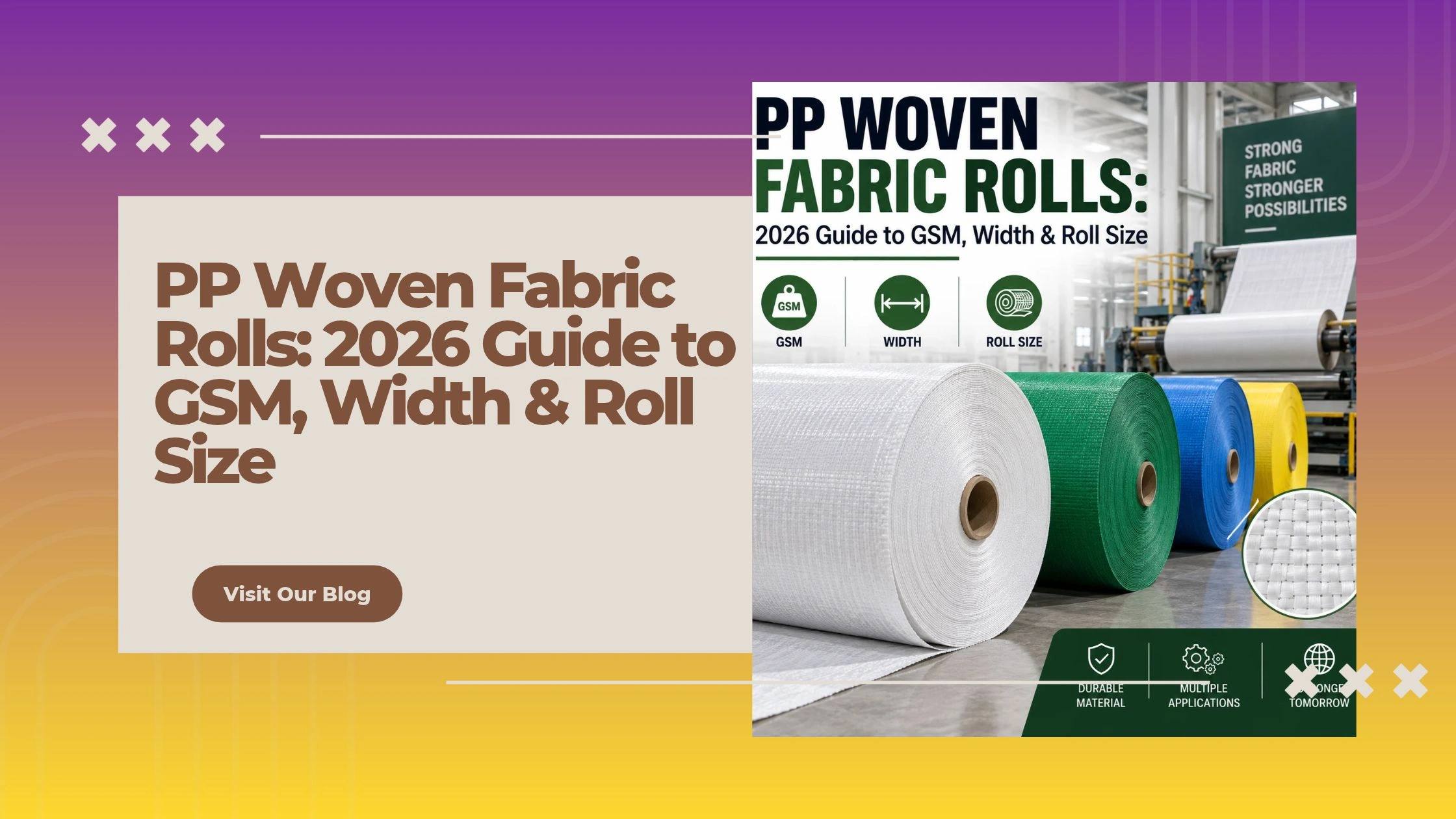
Introduction
A woven fabric roll can look deceptively simple. It is just a continuous sheet of material, right? Not quite. For manufacturers, packaging companies, agricultural businesses and industrial buyers, the wrong GSM, width or roll length can create production headaches before the material even reaches the cutting machine.
PP Woven Fabric Rolls offer a practical solution because manufacturers can convert the material into bags, sacks, sheets, covers and other products according to specific requirements. Polypropylene gives the fabric a useful combination of strength, flexibility and relatively low weight, making it suitable for demanding commercial applications.
Choosing the right specification starts with understanding the numbers. If you are comparing a PP woven fabric roll supplier, you need to know what GSM means, how fabric width affects production, why roll length matters and which specifications deserve attention before you place a bulk order. A little preparation here can save plenty of frustration later.
What Are PP Woven Fabric Rolls?
PP Woven Fabric Rolls are continuous lengths of woven polypropylene fabric supplied in roll form. Manufacturers produce the fabric by converting polypropylene into flat tapes and weaving those tapes together to create a strong, flexible structure.
Unlike finished bags, rolls allow downstream manufacturers to decide how they want to cut, stitch, laminate, print or convert the material. That flexibility makes polypropylene woven fabric rolls useful for packaging production and several industrial applications.
The finished fabric can vary considerably depending on tape construction, GSM, width, colour, weave, coating and other production requirements. Therefore, the phrase “PP woven fabric” describes a broad category rather than one universal specification.
Why GSM Matters in PP Woven Fabric Rolls
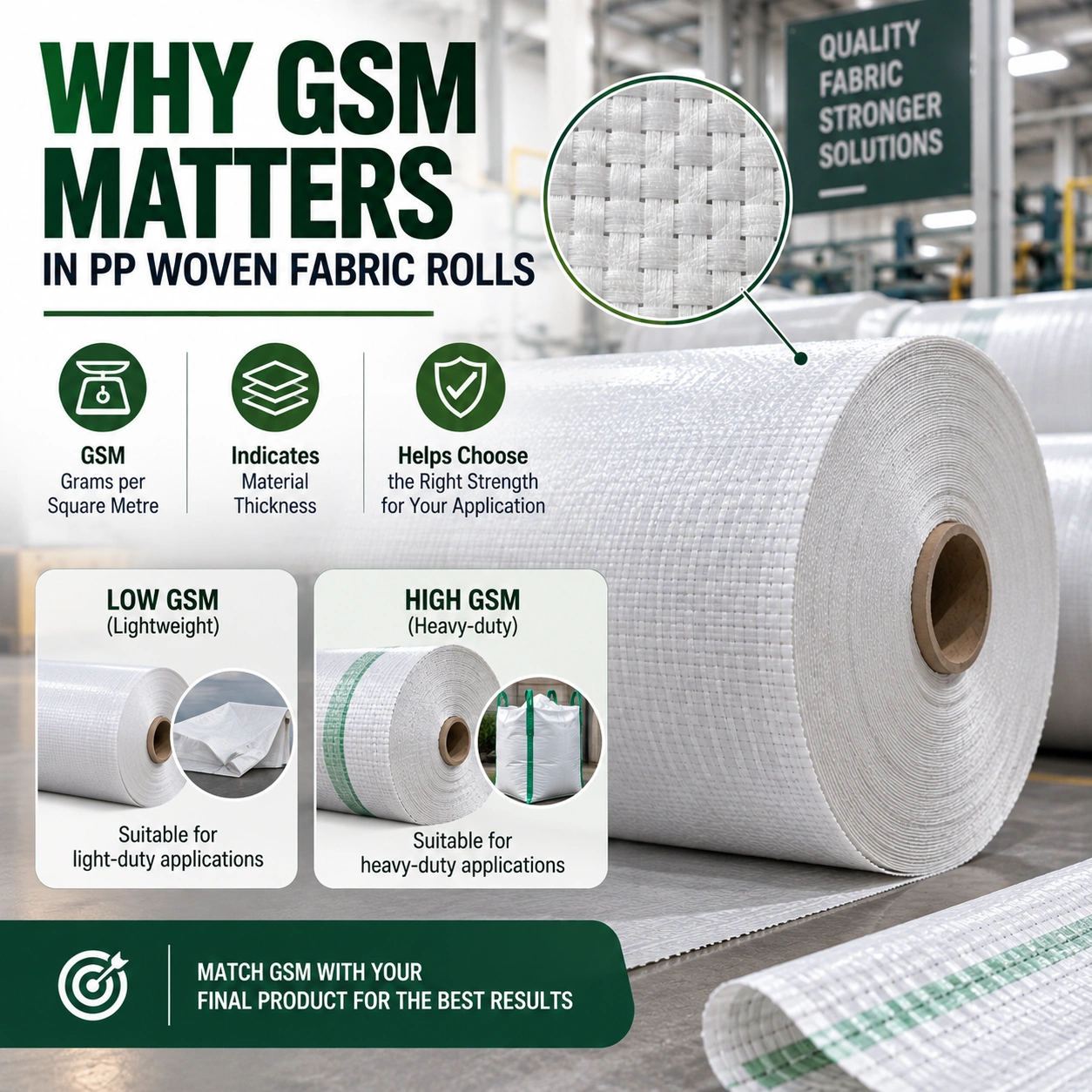
GSM means grams per square metre. It tells you how much one square metre of fabric weighs and gives you a useful starting point for understanding material construction.
Generally, a higher PP woven fabric GSM means more material per square metre. That can contribute to greater fabric robustness, although GSM alone does not determine overall performance. Tape characteristics, weaving quality and construction also matter.
For example, a manufacturer producing heavy-duty sacks may select a higher GSM fabric because the application demands greater resistance to handling stress. A producer making lightweight covers may prefer a lower GSM to reduce material consumption and overall weight.
The key is to match GSM with the finished product rather than automatically choosing the heaviest available option.
PP Woven Fabric Width: Getting the Measurement Right
PP woven fabric width directly affects how efficiently you can convert the roll into your final product. A mismatch between the available width and your cutting pattern can increase material waste, which ultimately raises production costs.
When discussing PP woven fabric specifications with a supplier, specify the required finished width clearly. Also clarify whether the quoted measurement refers to flat width, finished width or another measurement convention used by the manufacturer.
For businesses converting fabric into bags, liners or sheets, width can influence cutting layouts and production efficiency. A carefully selected width may allow you to achieve better material utilisation without changing the basic construction.
How PP Woven Fabric Roll Length Affects Purchasing
Roll length describes how much fabric you receive on one roll. The ideal length depends on your machinery, storage capacity, production schedule and handling requirements.
Longer PP woven fabric roll length can reduce the frequency of roll changes during continuous production. That may improve workflow for manufacturers with suitable equipment. However, extremely large rolls can create handling or storage challenges, especially where lifting equipment or warehouse space remains limited.
Therefore, the longest possible roll is not automatically the best choice. Your production environment should determine the practical roll length.
Understanding PP Woven Fabric Specifications
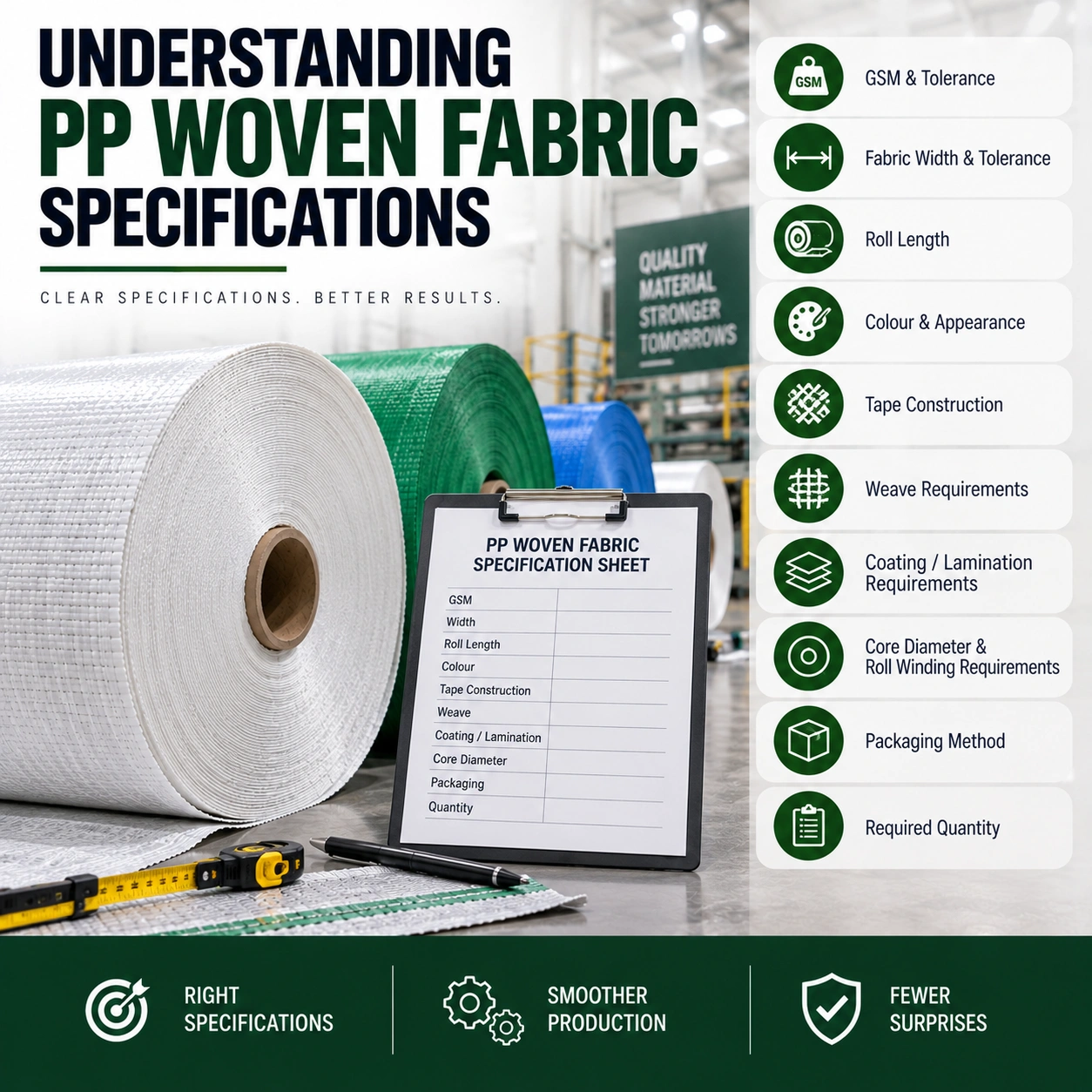
Before purchasing, build a clear specification sheet. It gives suppliers an exact target and makes quotations much easier to compare.
Important details commonly include:
- GSM and acceptable tolerance
- Fabric width and width tolerance
- Roll length
- Colour and appearance
- Tape construction
- Weave requirements
- Coating or lamination requirements
- Core diameter and roll winding requirements
- Packaging method
- Required quantity
A detailed specification helps prevent the classic purchasing problem: receiving a product that technically matches the order description but does not work well with your production equipment.
Standard vs Custom PP Woven Fabric Rolls
Standard PP Woven Fabric Rolls can make sense when your application fits commonly produced specifications. They may offer straightforward purchasing and potentially shorter lead times.
Custom fabric becomes more useful when you need a specific GSM, width, colour, coating, roll length or construction. Customisation can improve production efficiency because you can design the material around your finished product rather than forcing your manufacturing process to adapt to whatever stock happens to exist.
However, custom orders may involve minimum quantities and additional production planning. Discuss your expected annual or monthly consumption with the PP woven fabric manufacturer before requesting a custom specification.
PP Woven Fabric Rolls for Packaging Applications
Packaging remains one of the major applications for woven polypropylene fabric. Manufacturers can convert rolls into sacks and bags for products such as agricultural commodities, animal feed, fertiliser and various industrial materials.
The appropriate fabric depends on the product weight, filling process, stacking conditions, transportation distance and expected handling. A bag used for a light agricultural product does not necessarily require the same construction as one carrying a heavy industrial material.
For this reason, buyers should describe the end-use application to the supplier. A technically experienced manufacturer can then recommend a suitable fabric specification rather than simply quoting the lowest-cost material.
PP Woven Fabric Wholesale Buying: What Changes?
When you purchase PP woven fabric wholesale, quantity becomes an important commercial factor. Larger orders may allow manufacturers to schedule longer production runs, distribute setup costs more efficiently and plan raw-material purchasing more effectively.
However, wholesale purchasing does not mean you should order blindly. Storage costs, working capital and consumption rates still matter. If your warehouse cannot comfortably accommodate a large stock position, a slightly smaller order may provide better operational value.
A good purchasing strategy balances unit economics with inventory turnover. The cheapest roll is not necessarily the cheapest material once storage, waste and production interruptions enter the calculation.
Comparing Different Roll Specifications
| Specification | Lower specification | Higher specification | Main consideration |
|---|---|---|---|
| GSM | Less material per m² | More material per m² | Product requirements |
| Width | Narrower roll | Wider roll | Cutting efficiency |
| Roll length | Shorter run | Longer run | Machinery and storage |
| Coating | Uncoated | Coated/laminated | Functional requirements |
| Customisation | Standard | Bespoke | Production needs |
This comparison demonstrates why buyers should avoid comparing PP Woven Fabric Rolls based only on price per kilogram or price per roll. Two rolls can carry very different amounts of usable material.
How to Calculate Material Requirements
Suppose your production process requires a specific finished width and a defined amount of fabric per product. You can estimate your material requirement by considering fabric width, roll length, GSM and expected cutting waste.
For example, if your cutting pattern leaves large unused sections between components, simply buying more rolls will not solve the underlying issue. Adjusting the cutting layout or selecting a more suitable fabric width may improve yield.
Manufacturers should therefore evaluate fabric utilisation alongside the purchase price. A slightly more expensive roll that produces less waste may deliver a lower effective material cost.
Why Weave Quality Matters
GSM provides useful information, but it does not tell the entire story. Weaving consistency affects fabric appearance, strength and suitability for conversion.
Uneven weaving can create visual inconsistencies or affect downstream processing. For printed or laminated products, surface uniformity can become particularly important because imperfections may become more noticeable after finishing.
When evaluating a PP woven fabric roll supplier, ask about quality-control procedures and production consistency. If the material will run through automated equipment, sample testing can also reveal whether the fabric behaves consistently under actual production conditions.
Coated and Laminated PP Woven Fabric Rolls
Some applications require an additional coating or laminated layer. This can change the surface characteristics of the fabric and may support requirements involving moisture resistance, printing or product protection.
The additional processing naturally influences manufacturing cost. However, it may reduce the need for separate materials or improve the performance of the finished product.
You should therefore compare the complete product requirement rather than treating lamination simply as an optional premium. If your finished packaging needs a particular barrier or print surface, the additional processing may offer genuine production value.
Colour and Printing Considerations
Colour can matter for both branding and product identification. While standard colours may provide a straightforward solution, custom colours can require additional production planning depending on the quantity and manufacturing process.
If you intend to print on the fabric later, discuss print requirements with the supplier before finalising the fabric. Surface characteristics, colour and coating can all influence the final visual result.
For high-volume packaging, maintaining consistent colour between production batches can also matter from a branding perspective. Ask about colour matching and production tolerances if appearance plays an important role in your finished product.
Choosing a PP Woven Fabric Roll Supplier
Supplier selection should involve more than checking a catalogue and requesting the lowest quotation. Look for a manufacturer or supplier that understands your application and can communicate technical specifications clearly.
A reliable supplier should explain GSM, width tolerance, roll length, construction and packaging requirements without making the conversation feel like an engineering exam. They should also provide samples or technical information when appropriate.
Production capacity matters as well. If you require PP woven fabric bulk supply throughout the year, confirm whether the supplier can maintain consistent quality and delivery schedules at your expected volume.
Questions to Ask Before Ordering
Before approving a purchase, ask the supplier several practical questions about the material and production process. This is one of the few moments where being annoyingly specific can actually save you money.
Ask whether the stated GSM includes any coating, how the width is measured, what roll-length tolerance applies and how the rolls are packaged. Also confirm whether the quotation includes transport, loading, packaging or other charges.
If you have a strict production requirement, request a sample and test it using your actual conversion process. Laboratory specifications are useful, but real production conditions can reveal issues that a specification sheet cannot.
Storage and Handling of Fabric Rolls
Proper storage helps maintain material quality before conversion. Keep rolls protected from unnecessary contamination, moisture and physical damage, and follow the manufacturer's storage recommendations.
Rolls should also remain stable during handling. Poor warehouse practices can damage edges or deform the roll, creating unnecessary problems when the material reaches production.
Your storage area should provide enough room for safe movement and practical stock rotation. Good inventory management also helps you identify older rolls before they become forgotten behind newer deliveries.
PP Woven Fabric Bulk Supply for Growing Businesses
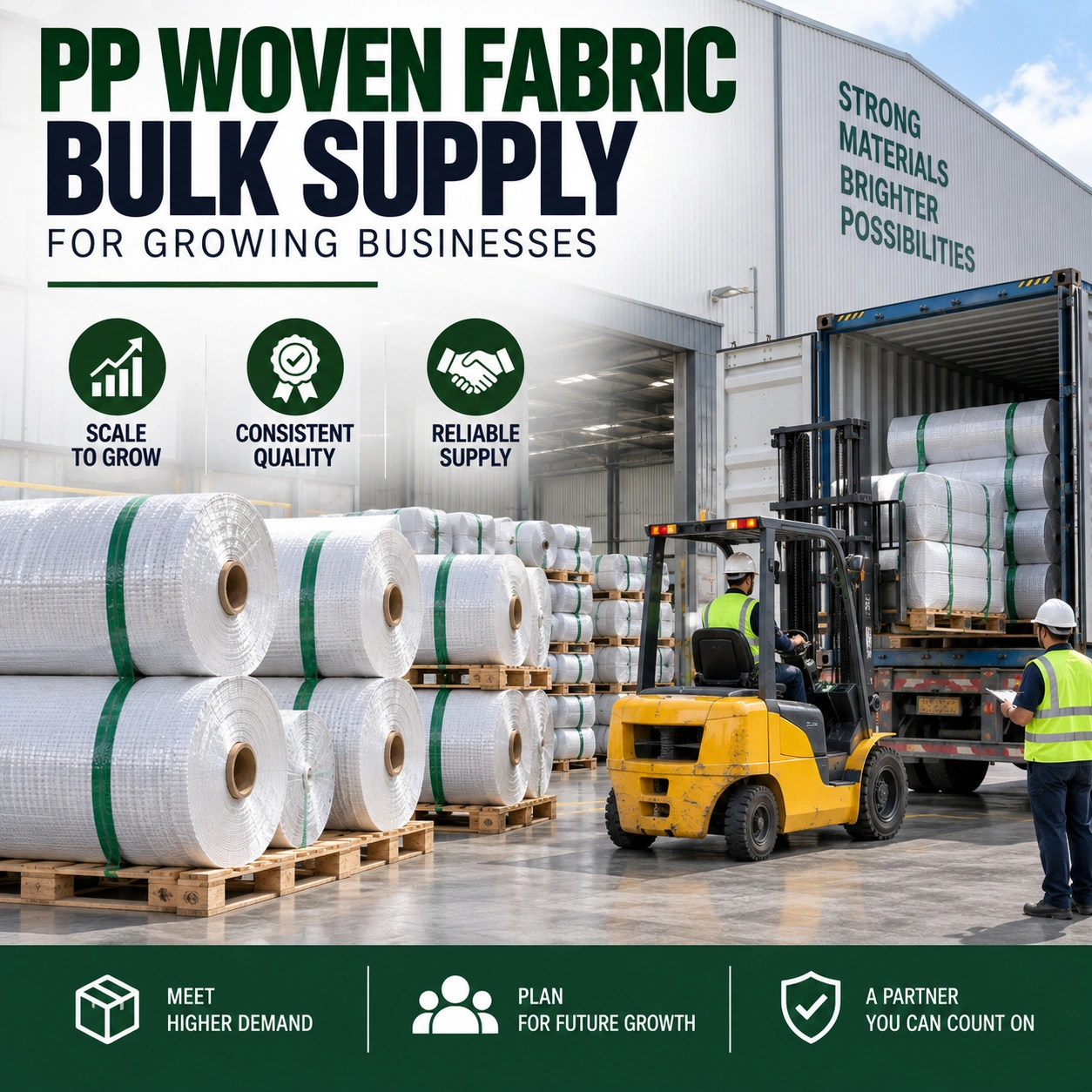
Growing manufacturers often need a supplier that can scale with them. A small trial order may work perfectly, but the real test comes when monthly demand increases significantly.
For long-term PP woven fabric bulk supply, discuss expected growth with your supplier. Sharing realistic forecasts can help manufacturers plan production and help you negotiate supply arrangements that suit your operation.
Consistency becomes increasingly important as volume grows. Changing GSM, width or fabric construction between batches can force production teams to adjust machinery, cutting layouts or finished-product specifications.
Common Buying Mistakes to Avoid
The most common mistake involves focusing exclusively on the lowest quotation. Buyers sometimes overlook GSM tolerance, width accuracy, roll length or conversion performance because the headline price looks attractive.
Another mistake involves failing to define the end application. Without knowing what the fabric will become, a supplier cannot properly evaluate the performance requirements.
Finally, avoid ordering large quantities before validating the material. A sample or small production trial can reveal whether the fabric works with your machinery, cutting system, printing process or lamination equipment.
How Oberon Polypack Can Fit Into Your Sourcing Process
For businesses comparing manufacturers, Oberon Polypack can be considered when you need polypropylene woven material for packaging or industrial conversion. The most useful starting point remains your specification: define the required GSM, width, roll length, construction and expected volume before requesting a quotation.
That approach makes the conversation clearer for both sides. Instead of asking, “What is your price for woven fabric?”, you can ask for pricing against a defined specification and compare suppliers on genuinely similar products.
Conclusion
The right PP Woven Fabric Rolls specification depends on much more than choosing a roll that looks suitable. GSM influences material weight, width affects cutting efficiency, roll length influences production handling, while weave quality, coating, colour and construction can affect the finished product. When you evaluate these factors together, you can choose material that fits both your technical requirements and commercial goals.
If you are planning a new packaging project, scaling production or looking for a dependable PP woven fabric bulk supply partner, start with a clear specification and expected quantity. Share your requirements with Oberon Polypack, compare the available options carefully and request a quotation based on the exact GSM, width, roll length and construction your application needs.
FAQs
1. What are PP Woven Fabric Rolls used for?
PP Woven Fabric Rolls are commonly converted into bags, sacks, sheets, covers and other products. They can serve agricultural, industrial, packaging and commercial applications where woven polypropylene suits the required strength and handling characteristics.
2. What does PP woven fabric GSM mean?
GSM means grams per square metre. It indicates the weight of the fabric per square metre and provides a useful reference when comparing material constructions. The appropriate GSM depends on the finished product and its performance requirements.
3. How do I choose the right PP woven fabric width?
Choose the width based on your finished product dimensions, cutting layout and production equipment. A suitable width can reduce cutting waste and improve material utilisation, so you should evaluate it alongside the product design.
4. Is a longer roll always better?
No. Longer rolls can reduce roll changes during production, but they may require more storage space and handling capacity. The best roll length depends on your machinery, warehouse conditions and production volume.
5. What should I ask a PP woven fabric manufacturer before ordering?
Ask about GSM, width tolerance, roll length, fabric construction, colour, coating, packaging, minimum order quantity, quality controls and delivery terms. If the application is critical, request a sample and test the material before placing a large order.