Introduction
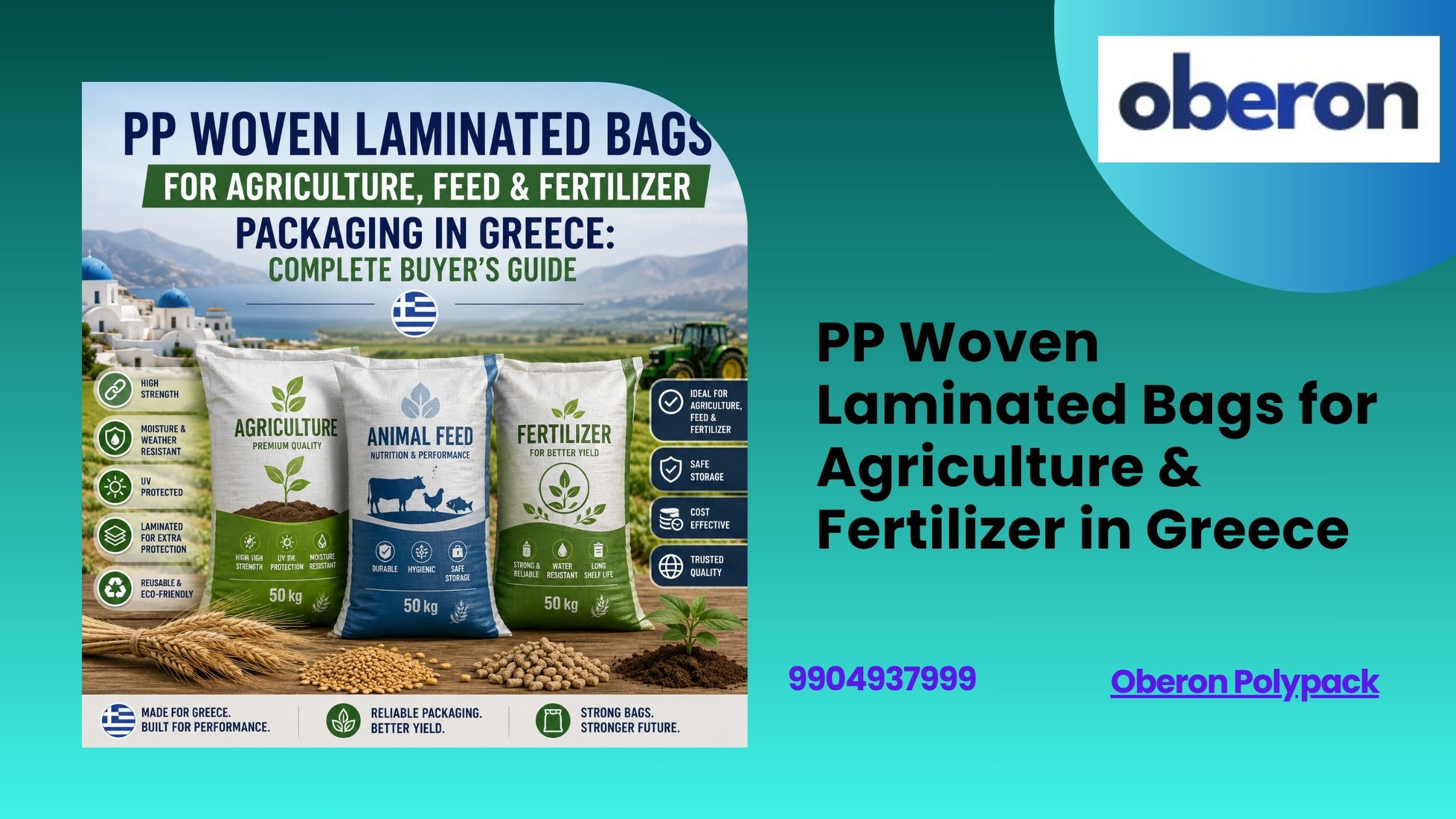
Greece has long been recognised for its strong agricultural heritage. From grain production and animal feed to fertilisers and agricultural inputs, the country's supply chains depend on reliable packaging that can protect products throughout storage, transportation, and export operations. As agricultural trade continues to expand across Europe and international markets, packaging performance has become more important than ever.
A damaged bag of fertiliser, a moisture-affected batch of animal feed, or leaking agricultural products can create significant operational and financial challenges. That's why businesses throughout Greece are increasingly focusing on packaging solutions that provide durability, moisture protection, and long-term reliability. Among the most trusted options available today are pp woven laminated bags.
At Oberon Polypack, we work with agricultural suppliers, feed manufacturers, fertiliser companies, and industrial packaging buyers looking for dependable packaging solutions. You can explore our PP woven packaging solutions through our products page to understand how different bag configurations support modern agricultural supply chains.
Based on our experience working with agricultural and industrial packaging customers, one of the most common concerns involves protecting products from moisture exposure and handling damage during transportation. This challenge becomes even more significant when products travel through multiple warehouses, distribution centres, and export channels. As a result, many businesses choose laminated packaging to improve product protection and reduce packaging-related losses.
What Are PP Woven Laminated Bags?
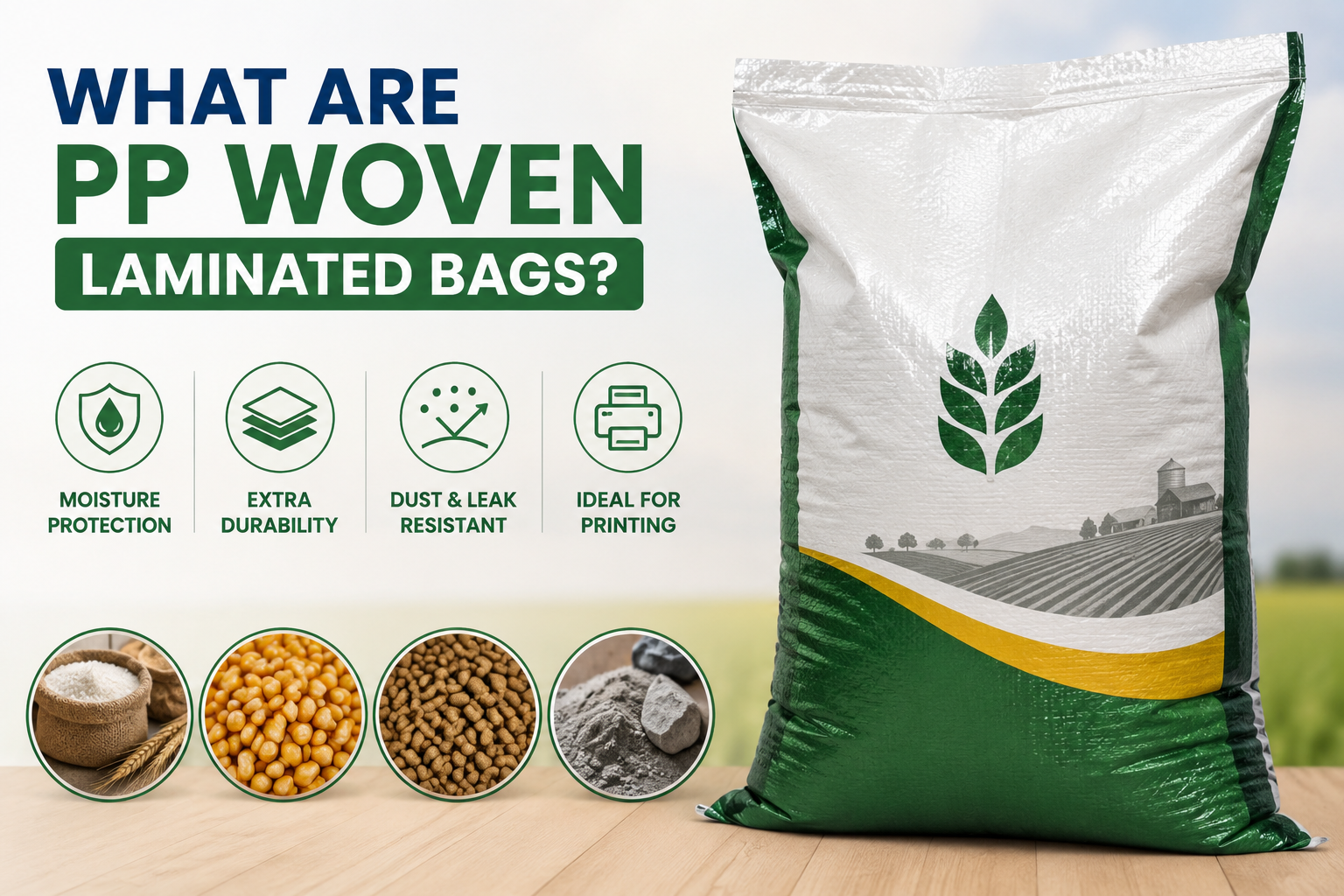
PP woven laminated bags are polypropylene woven bags that feature an additional laminated coating applied to the woven fabric. This coating creates a protective barrier that helps improve moisture resistance, reduce product leakage, and enhance overall packaging durability.
Unlike standard woven packaging, laminated pp woven bags offer an extra level of protection that can be particularly valuable for products exposed to humidity, dust, or extended storage conditions. The lamination process also improves surface characteristics, making the bags suitable for high-quality printing and branding applications.
Today, laminated polypropylene sacks are widely used for agricultural products, fertilisers, animal feed, chemicals, minerals, food ingredients, and industrial materials. Their combination of strength, flexibility, and moisture protection makes them one of the most popular packaging solutions in global agricultural markets.
Are PP Woven Laminated Bags Better for Agriculture and Fertilizer Packaging?
For most agricultural, feed, and fertiliser packaging applications, pp woven laminated bags provide better protection than non-laminated alternatives because they offer improved moisture resistance, reduced product leakage, enhanced durability, and stronger performance during transportation and storage. They are widely used for grains, animal feed, fertilisers, agricultural inputs, and moisture-sensitive products where packaging reliability directly impacts product quality.
For businesses handling large product volumes, the additional protection provided by laminated packaging often helps reduce losses, improve storage performance, and support long-term operational efficiency.
Why Are Laminated Bags Preferred for Agricultural Supply Chains?
Agricultural products rarely remain in a single location. They move from manufacturers to distributors, warehouses, retailers, farms, and export destinations. Throughout this journey, packaging must withstand stacking, loading, unloading, and changing environmental conditions.
Moisture resistant pp sacks help address many of these challenges by creating an additional barrier between the product and the surrounding environment. This extra protection becomes especially valuable when products are stored for extended periods or transported through humid regions.
For many Greek agricultural businesses, laminated packaging acts like an insurance policy. It helps protect product quality before problems occur rather than dealing with costly losses afterwards.
Why Packaging Performance Matters in Greece
Agriculture remains an important contributor to Greece's economy. The country produces and exports a wide range of agricultural products including grains, seeds, animal feed, fertilisers, olives, and food ingredients. Many of these products require dependable packaging capable of maintaining product quality throughout domestic and international distribution networks.
Imagine storing fertilizer during a humid season or transporting animal feed through multiple logistics hubs before delivery. Packaging that performs well in controlled conditions may not always perform equally well in real-world environments. This is why packaging durability and moisture resistance have become critical purchasing considerations for agricultural businesses.
For Greek distributors and exporters, packaging performance is no longer simply about containment. It is about protecting product value, supporting customer satisfaction, and maintaining operational efficiency.
How PP Woven Laminated Bags Support Agricultural Packaging
Agricultural products often face a unique combination of challenges including moisture exposure, heavy loads, long storage periods, and demanding transportation conditions.
PP woven laminated bags help address these challenges through several important performance benefits:
- Improved moisture resistance
- Better product containment
- Enhanced tear resistance
- Stronger storage durability
- Improved print quality
- Reduced product loss during handling
These benefits explain why agricultural packaging woven bags continue to be widely adopted across farming, feed manufacturing, and fertiliser distribution sectors.
Agriculture, Feed & Fertilizer Packaging Requirements
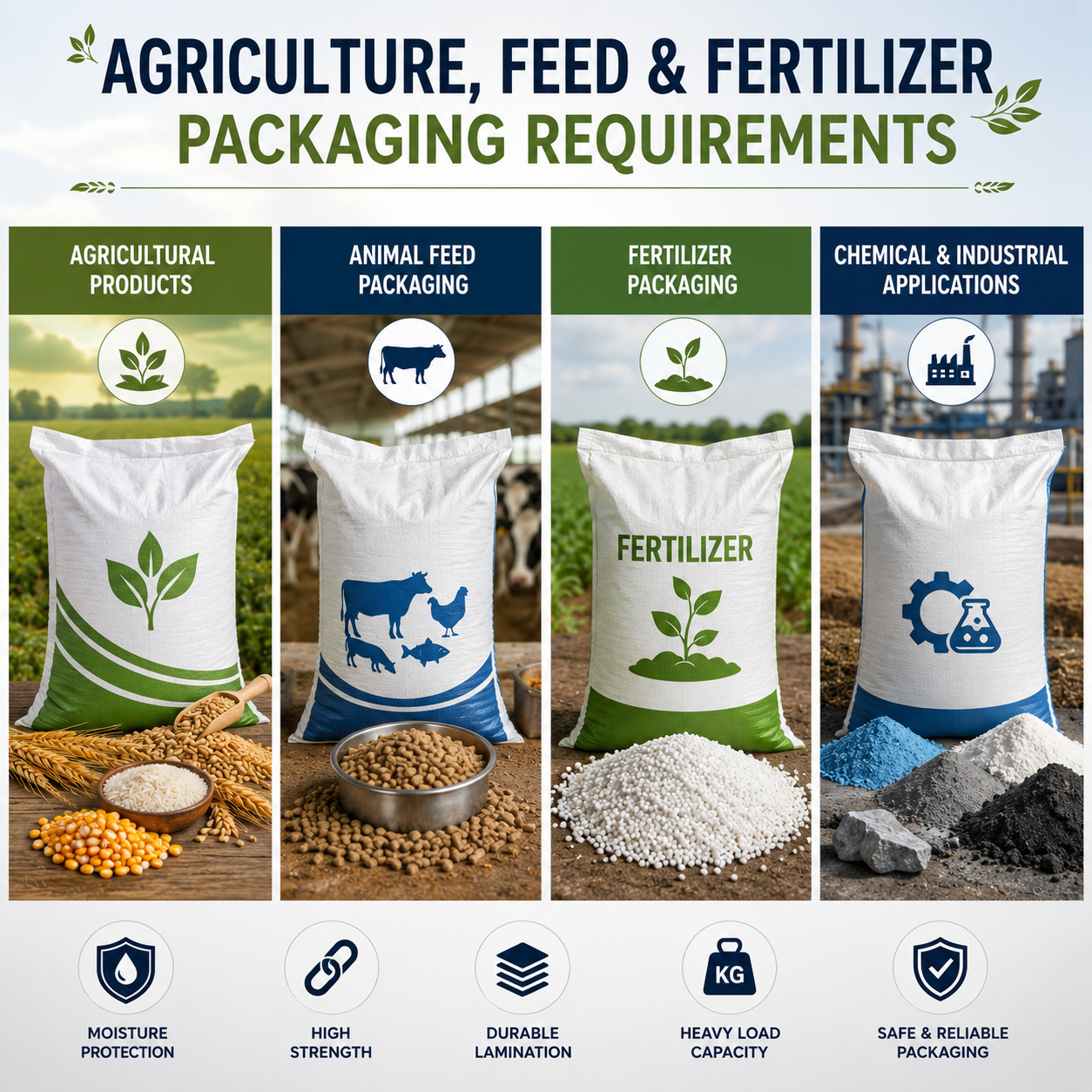
Not all agricultural products require the same packaging specifications. Product characteristics often determine the level of protection needed.
Agricultural Products
Products such as seeds, grains, rice, and crop nutrients require packaging capable of maintaining product quality while supporting transportation and storage efficiency. Many agricultural businesses prefer laminated bags for moisture-sensitive products because they help preserve product condition throughout the supply chain.
Animal Feed Packaging
Animal feed products often require durable packaging because bags may be stacked, transported, and stored for extended periods. Food grade laminated pp bags are frequently selected because they offer enhanced protection against environmental exposure while supporting product integrity.
Fertilizer Packaging
Fertiliser packaging presents unique challenges because many fertiliser products can be sensitive to moisture. Fertilizer packaging laminated bags help reduce moisture-related risks while providing the strength needed to handle heavy loads and demanding transportation conditions.
Chemical and Industrial Applications
Industrial laminated pp sacks are commonly used for powders, minerals, chemicals, and construction materials. Their durability and protective properties help support safe and efficient handling across industrial supply chains.
Why More Greek Buyers Are Choosing Laminated Packaging
Packaging decisions are becoming increasingly strategic. Businesses are looking beyond initial purchase price and focusing on overall performance.
Many buyers evaluating pp woven laminated bags Greece often prioritise:
- Product protection
- Moisture resistance
- Transportation durability
- Reduced product loss
- Branding opportunities
- Long-term return on investment
This shift reflects a growing understanding that packaging quality directly affects operational performance and customer satisfaction.
PP Woven Laminated Bags vs Standard Woven Bags
One of the most common questions buyers ask is whether lamination is truly necessary.
The answer depends on the product, storage conditions, and transportation requirements. For products exposed to humidity, long-term storage, or export conditions, laminated packaging often provides measurable advantages.
In simple terms, standard woven bags provide strength, while laminated woven bags combine strength with additional protection. That additional layer can make a significant difference when protecting valuable agricultural products.
What Should Buyers Consider Before Ordering?
Selecting the right packaging involves more than choosing a bag size. Buyers should evaluate several important factors before placing orders:
- Product type
- Product weight
- Moisture sensitivity
- Storage conditions
- Transportation requirements
- Printing needs
- Export destinations
The right packaging solution should align with both operational requirements and long-term business objectives.
Key Technical Specifications Buyers Should Evaluate
When sourcing pp woven laminated bags, many buyers focus primarily on pricing. While cost is important, technical performance often has a far greater impact on long-term packaging success. A slightly cheaper bag that fails during storage or transportation can quickly become far more expensive than a premium packaging solution.
One of the first specifications buyers should review is fabric GSM (grams per square metre). GSM influences the strength and durability of the bag. Depending on the application, export quality laminated woven bags are commonly produced using fabrics ranging from approximately 60 GSM to 140 GSM or higher.
Load capacity is equally important. Agricultural and fertiliser packaging may require bags capable of safely handling weights ranging from 5 kg to over 50 kg. Selecting the wrong specification can increase the risk of tearing, seam failure, and product loss.
Common Specifications for Agricultural Packaging
| Specification | Typical Range |
|---|---|
| Fabric Weight | 60–140 GSM |
| Load Capacity | 5–50+ kg |
| Lamination Type | Single or Double Side |
| Printing Options | Multi-Colour Printing |
| UV Protection | Optional UV Stabilisation |
| Bag Width | Customised as Required |
| Bag Length | Customised as Required |
While specifications vary depending on product requirements, understanding these fundamentals helps buyers make more informed purchasing decisions.
How Lamination Improves Packaging Performance
Lamination is not simply an additional layer added for appearance. It plays an important role in packaging functionality.
The laminated coating helps reduce moisture transmission, improves product containment, and enhances surface characteristics. For products such as fertilisers, animal feed, grains, and powdered agricultural inputs, this additional protection can significantly improve packaging performance.
In practical terms, laminated bags help reduce product leakage, support longer storage periods, and improve resistance to environmental conditions. This is one reason why many agricultural packaging woven bags used for export applications incorporate lamination technology.
Understanding Moisture Protection in Agricultural Packaging
Moisture is one of the most common threats to agricultural products.
A fertiliser product exposed to humidity may experience performance issues. Animal feed affected by moisture can face quality concerns. Grain products stored under poor conditions may suffer losses that could have been prevented through better packaging.
Laminated bags for moisture sensitive products help create a barrier that limits moisture penetration while supporting product stability throughout transportation and storage.
For many agricultural businesses, moisture control is not simply a packaging feature. It is a risk-management strategy.
How Packaging Impacts Export Success
Export packaging must perform under conditions that are often far more demanding than domestic distribution.
Products may travel through multiple warehouses, ports, shipping containers, and distribution facilities before reaching their final destination. During this journey, packaging is exposed to stacking pressure, handling equipment, temperature fluctuations, and environmental conditions.
Woven laminated bags for export are specifically designed to address these challenges by providing improved durability and product protection.
Many exporters view packaging as the first line of defence against product damage. Reliable packaging helps maintain product quality while reducing claims, returns, and customer complaints.
PP Woven Laminated Bags vs Alternative Packaging Solutions
While several packaging options exist, laminated woven packaging continues to gain popularity because it balances performance, cost efficiency, and versatility.
| Packaging Type | Moisture Protection | Durability | Print Quality | Export Suitability |
|---|---|---|---|---|
| PP Woven Laminated Bags | Excellent | Excellent | Excellent | Excellent |
| Standard PP Woven Bags | Moderate | Excellent | Good | Good |
| Paper Bags | Limited | Moderate | Good | Moderate |
| Plastic Film Bags | Good | Moderate | Good | Moderate |
For agricultural, feed, and fertiliser applications, laminated packaging often delivers the strongest balance between protection and operational efficiency.
What Makes a Reliable PP Woven Laminated Bags Manufacturer?
Not all manufacturers operate at the same quality level.
A reliable pp woven laminated bags manufacturer should provide consistent product specifications, documented quality procedures, and transparent manufacturing processes. Buyers should feel confident asking detailed questions regarding material quality, testing procedures, and production controls.
Experienced manufacturers understand that packaging quality begins long before the finished bag is produced. Raw material selection, weaving consistency, lamination quality, stitching performance, and final inspection all contribute to the finished product.
Businesses evaluating suppliers should also consider export experience, production capacity, customisation capabilities, and responsiveness during the procurement process.
Understanding Quality Standards and Packaging Performance
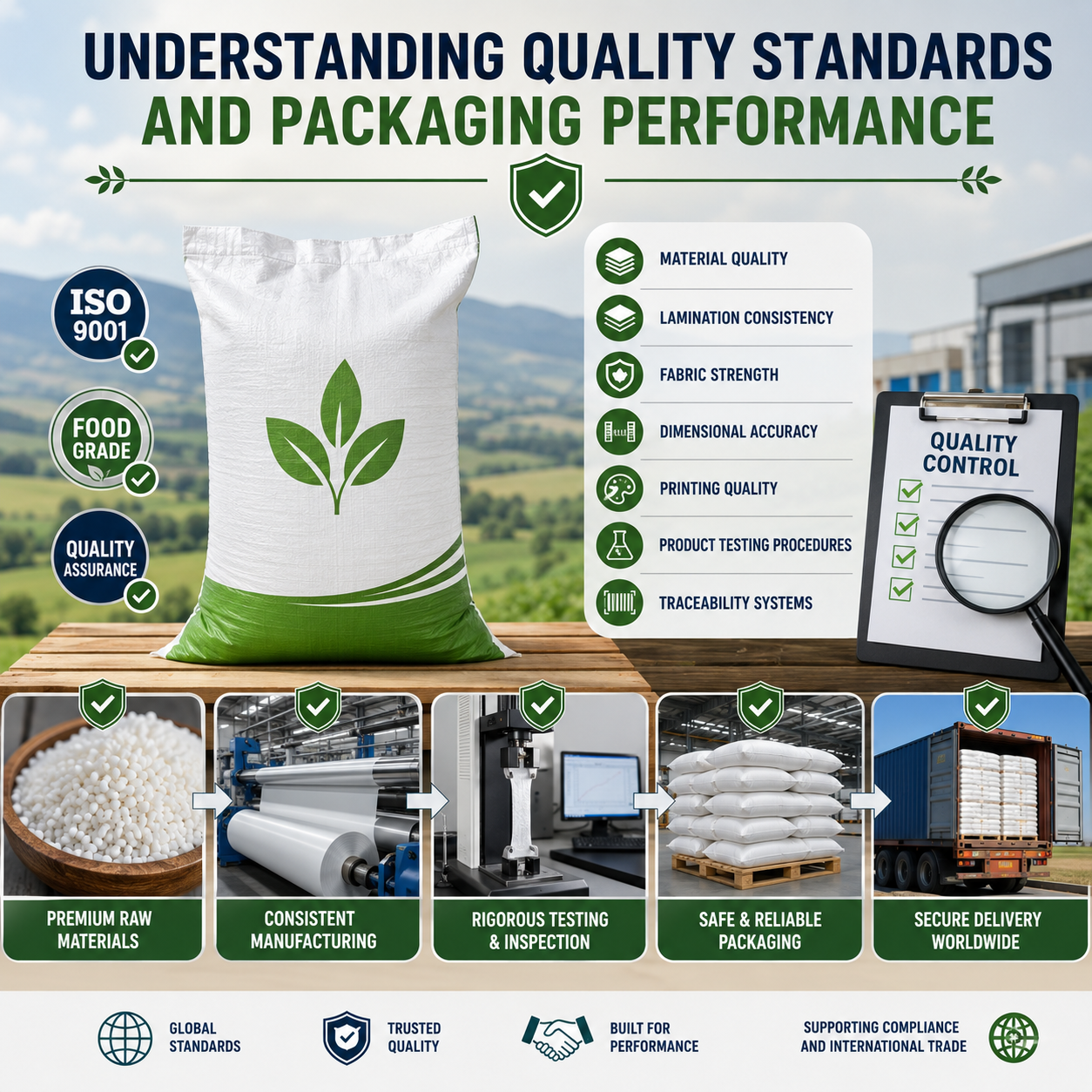
Packaging performance should always be supported by structured quality management systems.
Businesses sourcing pp woven laminated bags Greece often request technical specifications, testing documentation, and product samples before confirming large-volume orders. This helps reduce procurement risks while ensuring packaging solutions align with operational requirements.
Buyers should evaluate:
- Material quality
- Lamination consistency
- Fabric strength
- Dimensional accuracy
- Printing quality
- Product testing procedures
- Traceability systems
Buyers should also confirm whether manufacturers operate under recognised quality management systems such as ISO 9001 and maintain documented quality control procedures throughout production. These systems help support consistency, traceability, and continuous improvement across manufacturing operations. For food-grade applications, additional hygiene standards, material compliance requirements, and product safety protocols may apply depending on the destination market and end-use application.
Reliable manufacturers understand that packaging quality is not determined by a single feature. It results from consistent manufacturing processes and ongoing quality assurance practices.
In many export supply chains, buyers request product samples, performance reports, and pre-shipment evaluations before placing large-volume orders. Reviewing physical samples alongside technical specifications, quality documentation, and testing reports can help verify product consistency, assess packaging performance, and reduce procurement risks. This additional level of verification often provides buyers with greater confidence when selecting long-term packaging partners.
For guidance on packaging compliance and international trade requirements, businesses can review information available through the Australian Government export compliance resources.
Custom Printing and Branding Opportunities
Packaging is no longer just a container. It is also a branding tool.
Custom printed laminated woven bags allow businesses to display product information, handling instructions, company branding, safety warnings, and marketing messages directly on the packaging surface.
This is particularly valuable for agricultural distributors, fertiliser suppliers, and feed manufacturers operating in competitive markets. Clear and professional packaging helps improve product identification while strengthening brand recognition.
Many businesses choose custom printed laminated woven bags because they combine functional performance with strong visual presentation.
How Packaging Supports Supply Chain Efficiency
Supply chain efficiency is influenced by numerous factors, and packaging is often one of the most overlooked.
Consistent bag dimensions improve palletisation. Reliable packaging reduces handling issues. Stronger product protection minimises damage-related disruptions.
Think of packaging as the foundation of a logistics system. If the foundation is weak, everything built on top becomes more vulnerable.
Businesses that invest in high-quality packaging often benefit from smoother operations, lower product losses, and improved customer satisfaction throughout the supply chain.
Why Greece's Agricultural Sector Continues to Adopt Laminated Packaging
The Greek agricultural industry continues to evolve. As export requirements increase and supply chains become more complex, businesses are placing greater emphasis on packaging performance.
Products must remain protected for longer periods. Customers expect consistent quality. Export markets often impose stricter packaging expectations.
As a result, many agricultural businesses are transitioning from basic packaging solutions to laminated packaging systems that provide stronger protection and greater operational confidence.
For companies seeking long-term reliability, laminated packaging often represents a practical investment rather than simply an additional packaging cost.
How Oberon Polypack Supports Agricultural and Fertilizer Packaging Requirements
Quality packaging begins long before the finished bag reaches the customer.
At Oberon Polypack, quality considerations are integrated throughout the manufacturing process. From raw material selection and fabric weaving to lamination, printing, stitching, and final inspection, each stage contributes to overall packaging performance.
Depending on customer requirements and application specifications, pp woven laminated bags may undergo multiple quality checkpoints before dispatch. These evaluations can include fabric GSM verification, dimensional inspections, lamination adhesion testing, seam strength assessments, print quality reviews, and final visual inspections. This systematic approach helps ensure consistent packaging performance, supports customer specifications, and helps maintain packaging reliability across domestic and international supply chains.
In many export projects, customers may also request product samples, technical specifications, or performance documentation before confirming large-volume orders. This additional verification process helps ensure the selected packaging solution aligns with application requirements and transportation conditions.
Our focus is on delivering export quality laminated woven bags that support product protection, transportation reliability, and customer satisfaction across a wide range of industries.
Buyers can review our industrial packaging solutions to better understand the specifications, customisation options, and packaging configurations available for different applications. Whether the requirement involves food grade laminated pp bags, fertilizer packaging laminated bags, or industrial laminated pp sacks, selecting the appropriate packaging structure is essential for long-term performance.
Common Mistakes Buyers Make When Purchasing Agricultural Packaging
Packaging procurement can appear straightforward, but several common mistakes can significantly affect long-term results.
The first mistake is focusing exclusively on price. While cost matters, packaging failures often create expenses that far exceed any initial savings.
Another common issue involves selecting packaging without considering environmental conditions. Products stored in humid warehouses or transported through varying climates often require stronger moisture protection than buyers initially anticipate.
Some businesses also overlook product characteristics. Fine powders, fertilisers, feed ingredients, and moisture-sensitive materials may require different packaging specifications to ensure optimal performance.
Finally, many buyers fail to request technical documentation, product samples, or quality reports before placing large-volume orders. This can increase procurement risks and reduce confidence in supplier performance.
How to Choose the Right PP Woven Laminated Bags Supplier
Selecting the right supplier is just as important as selecting the right packaging specification.
A reliable pp woven laminated bags supplier should demonstrate manufacturing expertise, quality control capabilities, export experience, and responsiveness throughout the purchasing process.
Before placing an order, buyers should evaluate:
- Manufacturing capabilities
- Product consistency
- Quality assurance systems
- Technical support
- Customisation options
- Export experience
- Production capacity
The strongest supplier relationships are built on transparency, consistency, and long-term performance rather than price alone.
Future Trends in Agricultural Packaging
The packaging industry continues to evolve alongside changes in agriculture, logistics, and sustainability.
Buyers increasingly expect packaging solutions that combine product protection with operational efficiency. At the same time, sustainability considerations are becoming more important across global supply chains.
Advances in recyclable materials, improved manufacturing technologies, and enhanced packaging performance are helping shape the future of agricultural packaging. Businesses that stay informed about these developments will be better positioned to meet changing market requirements while maintaining product quality.
For many agricultural companies, packaging is no longer viewed as a simple commodity. It has become a strategic component of supply chain management and customer satisfaction.
Why PP Woven Laminated Bags Remain a Preferred Choice in Greece
For agricultural, feed, and fertiliser applications, packaging must perform consistently across a variety of conditions. Products may be stored for extended periods, transported through multiple logistics networks, and exposed to changing environmental conditions.
PP woven laminated bags continue to gain popularity because they combine durability, moisture protection, product containment, and cost efficiency. Their versatility allows them to support a wide range of agricultural and industrial applications while helping businesses reduce packaging-related risks.
For Greek agricultural businesses seeking reliable packaging solutions, laminated woven bags often provide the balance of protection and performance needed to support long-term operational success.
Conclusion
Choosing the right packaging solution is an important decision for agricultural producers, feed manufacturers, fertiliser suppliers, and industrial businesses operating in Greece. Product protection, moisture resistance, transportation durability, storage performance, and long-term ROI all play a role in determining packaging success. PP woven laminated bags continue to be one of the most trusted solutions because they help protect products while supporting operational efficiency across the supply chain.
If you are evaluating packaging options for agriculture, feed, fertiliser, or industrial applications, Oberon Polypack can help. Explore our complete range of PP woven packaging solutions and connect with our team to discuss your specific requirements. From custom printed laminated woven bags to export quality laminated woven bags designed for demanding supply chains, we provide packaging solutions tailored to your business needs and long-term growth objectives.
FAQs
1. What are PP woven laminated bags used for?
PP woven laminated bags are commonly used for packaging agricultural products, animal feed, fertilisers, food ingredients, chemicals, minerals, and industrial materials. The laminated coating helps improve moisture resistance, reduce product leakage, and enhance overall packaging durability.
2. Why are laminated bags preferred for fertilizer packaging?
Fertiliser products are often sensitive to moisture exposure. Fertilizer packaging laminated bags provide an additional protective barrier that helps reduce moisture-related risks while supporting safe storage and transportation.
3. Are PP woven laminated bags suitable for exports?
Yes. Woven laminated bags for export are widely used because they offer improved durability, product protection, and moisture resistance during long transportation routes and storage periods.
4. How do I select the right laminated woven bag specification?
The ideal specification depends on factors such as product type, product weight, moisture sensitivity, storage conditions, transportation requirements, and printing needs. Buyers should consult experienced manufacturers when selecting packaging specifications.
5. What should I look for in a PP woven laminated bags manufacturer?
Buyers should evaluate manufacturing experience, quality assurance procedures, product consistency, export capabilities, customisation options, technical support, and the ability to provide documentation such as specifications, testing reports, and quality records.