Introduction
Picture this. An Australian exporter ships a large batch of agricultural products overseas. The packaging looks fine when it leaves the warehouse, but after weeks of handling, stacking, and exposure to changing weather conditions, some bags arrive damaged. Suddenly, the cheapest packaging option becomes the most expensive mistake.
That is why packaging decisions should never be based solely on purchase price. Whether you are transporting food products, fertilisers, industrial materials, or chemicals, the true cost of packaging includes durability, product protection, transportation performance, and long-term reliability. For many businesses, the debate often comes down to pp woven sacks versus paper sacks.
At Oberon Polypack, we understand that selecting the right packaging solution can directly affect operational efficiency and profitability. Explore our PP woven sacks and packaging solutions to see how modern packaging systems support businesses across global markets.
At Oberon Polypack, we regularly work with customers evaluating both PP woven sacks and paper sacks for agricultural products, food ingredients, fertilisers, chemicals, and industrial materials.
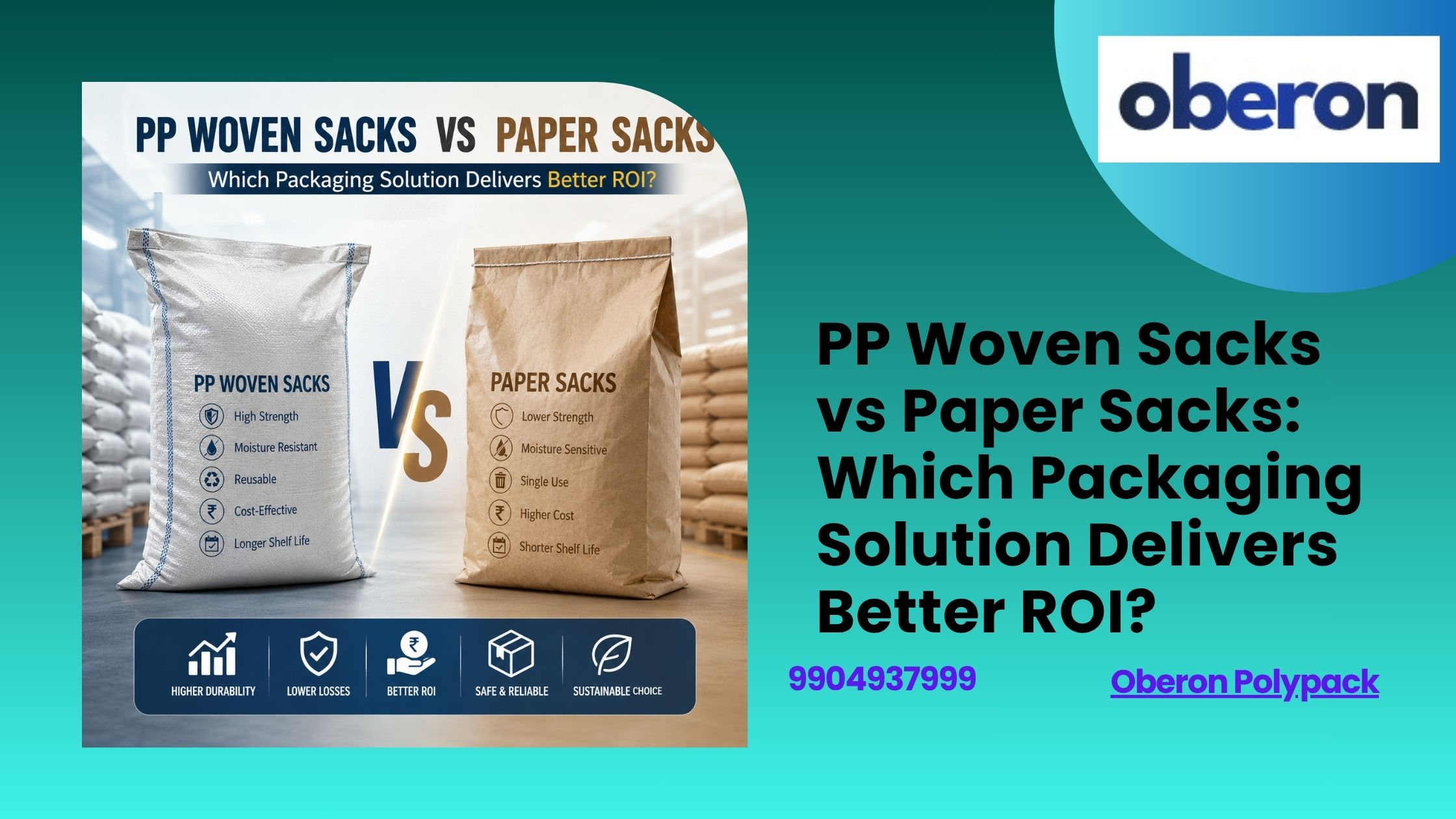
One of the most common questions we hear is simple: Which packaging option delivers better return on investment? While the answer depends on the application, factors such as durability, moisture resistance, handling conditions, and transportation performance often have a much greater impact on ROI than the initial purchase price.
PP Woven Sacks vs Paper Sacks: What's the Difference?
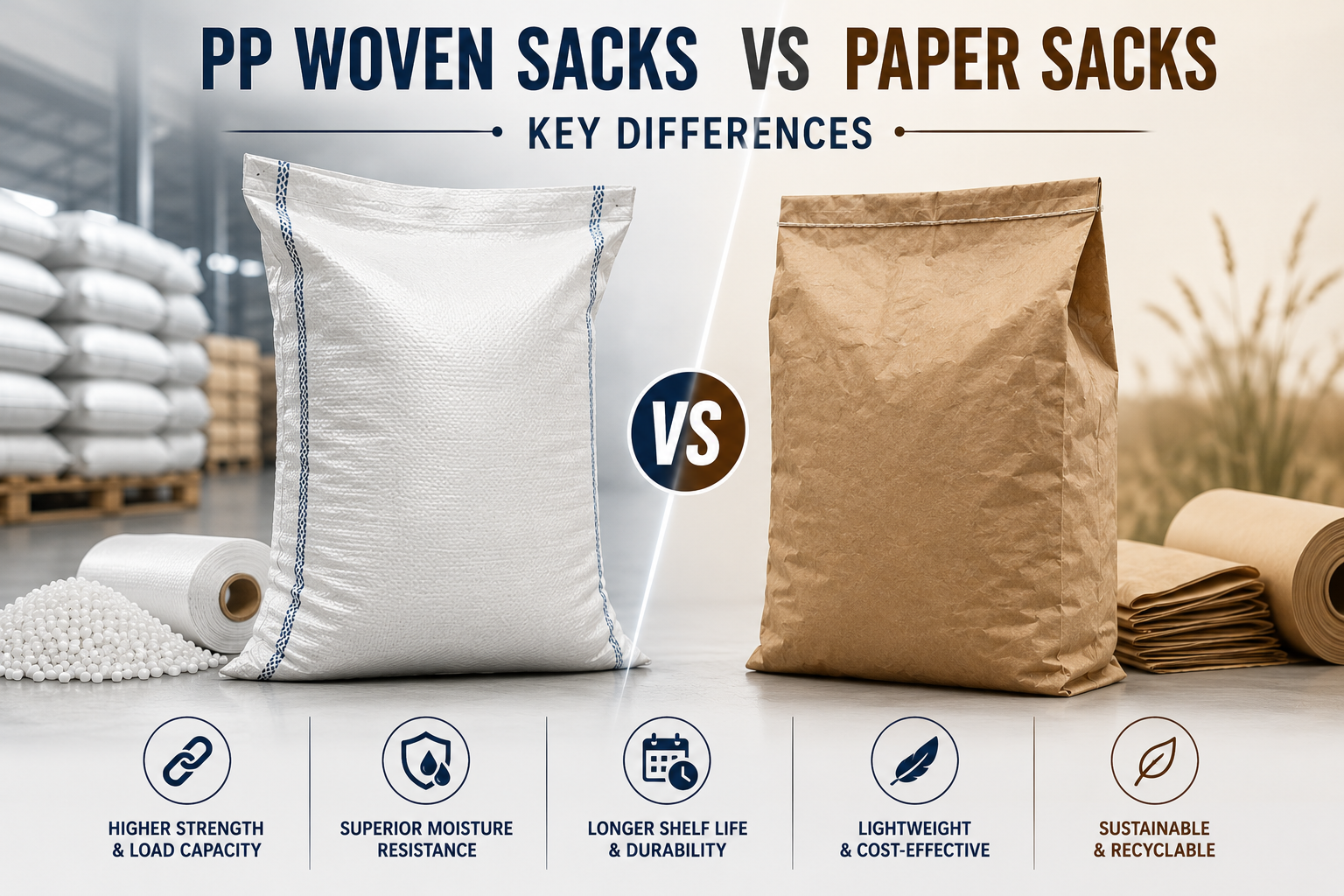
PP woven sacks are manufactured from woven polypropylene fabric, while paper sacks are typically produced using kraft paper layers. Both packaging solutions serve important roles in global supply chains, but they are designed for different performance requirements.
In general, pp woven sacks offer superior durability, moisture resistance, reusability, and load-bearing capacity. Paper sacks, on the other hand, are often preferred for lightweight applications where short-term use and traditional paper packaging aesthetics are prioritised. For businesses focused on long-distance transportation and bulk packaging, the differences can significantly affect overall return on investment.
Which Packaging Option Offers Better ROI?
For most industrial, agricultural, food processing, and export applications, pp woven sacks typically deliver better long-term return on investment because they provide greater durability, stronger moisture resistance, improved load-bearing capacity, and lower product loss rates during storage and transportation.
While paper sacks can be suitable for lightweight products and controlled environments, polypropylene woven sacks generally offer superior performance in demanding supply chain conditions. For businesses focused on reducing packaging failures, improving product protection, and minimising replacement costs, pp woven sacks often represent the more cost-effective solution over time.
Why Do PP Woven Sacks Often Deliver Higher ROI?
The true cost of packaging extends beyond the purchase price. Factors such as product protection, transportation durability, storage performance, moisture resistance, and packaging lifespan all contribute to overall value. Because pp woven sacks are designed to withstand demanding handling and environmental conditions, they can help reduce product damage, minimise operational disruptions, and improve supply chain efficiency, resulting in stronger long-term ROI for many businesses.
Why ROI Matters When Choosing Industrial Packaging
When buyers compare packaging solutions, they often focus on unit cost. That approach is understandable, but it only tells part of the story. Real ROI includes product protection, replacement costs, transportation losses, customer satisfaction, and supply chain efficiency.
Think of packaging like footwear. Buying the cheapest shoes might save money today, but if they fall apart after a few weeks, the long-term cost is higher. Packaging works the same way. A sack that protects products consistently across multiple handling stages often generates far greater value than one that simply costs less upfront.
For businesses handling bulk packaging sacks, the ability to reduce damage claims, product losses, and operational disruptions can have a measurable impact on profitability.
PP Woven Sacks vs Paper Sacks: Key Differences
Before comparing ROI, it is important to understand how these packaging solutions differ in practical applications.
Material Composition
Paper sacks are manufactured using multiple layers of kraft paper. Depending on the application, additional coatings or liners may be added for improved performance.
Polypropylene woven sacks are manufactured by weaving polypropylene tapes into a durable fabric structure. This woven construction provides exceptional strength while maintaining a lightweight design.
The manufacturing process itself creates one of the biggest advantages of polypropylene woven sacks: superior resistance to tearing and mechanical stress.
Strength and Load Capacity
Strength is often the deciding factor for industrial buyers.
Heavy duty woven sacks are specifically designed to handle substantial loads without tearing or splitting. This makes them particularly useful for agricultural products, fertilisers, minerals, chemicals, and industrial materials.
Paper sacks perform well in lighter-duty applications but may be more susceptible to damage when exposed to rough handling or excessive weight.
Moisture Resistance
One of the most important differences between the two packaging types is moisture protection.
Moisture resistant pp sacks provide significantly better protection against humidity, water exposure, and environmental conditions. This becomes especially important when products are transported internationally or stored for extended periods.
Paper sacks can absorb moisture, which may weaken the material structure and compromise packaging performance over time.
PP Woven Sacks vs Paper Sacks Comparison Table
The differences become even clearer when viewed side by side.
| Factor | PP Woven Sacks | Paper Sacks |
|---|---|---|
| Strength | Excellent | Moderate |
| Moisture Resistance | Excellent | Limited |
| Reusability | High | Low |
| Export Performance | Excellent | Moderate |
| Storage Durability | High | Moderate |
| Tear Resistance | Excellent | Moderate |
| Custom Printing | Excellent | Good |
| Long-Term ROI | Higher | Lower in demanding applications |
For businesses operating in demanding supply chains, these differences often translate directly into operational savings and reduced product losses.
Transportation Performance and Export Reliability
Global transportation is rarely gentle. Products may pass through multiple warehouses, ports, containers, and distribution centres before reaching their final destination.
Export quality pp woven sacks are engineered to handle these conditions. Their strength and flexibility help reduce the likelihood of tearing, punctures, and structural failures during transportation.
By comparison, paper sacks can perform effectively in controlled environments but may face limitations when exposed to repeated handling or challenging storage conditions.
This is one reason why many businesses using woven sacks for international shipping prioritise durability over initial cost savings.
Storage Performance and Product Protection
Storage conditions can have a significant impact on packaging performance.
Imagine a warehouse where temperature and humidity fluctuate throughout the year. Packaging materials must withstand these changes while protecting the product inside.
Laminated pp woven sacks provide an additional layer of protection against environmental exposure. This helps preserve product quality and reduces the risk of contamination or spoilage.
For industries such as agriculture, food processing, and chemicals, product protection often becomes one of the most valuable contributors to long-term ROI.
Sustainability Considerations
Sustainability has become an increasingly important purchasing factor across global industries.
Many buyers automatically assume paper sacks are the more environmentally friendly option. While paper is widely recognised as a renewable material, the sustainability discussion is more complex than it first appears.
Reusability, product lifespan, transportation efficiency, and waste reduction all contribute to environmental impact. Recyclable woven polypropylene sacks can often be reused multiple times, helping reduce overall packaging consumption.
For guidance on export compliance and international trade requirements, businesses can review information available through the Australian Government export compliance resources.
Sustainability should be evaluated based on the entire lifecycle of the packaging solution rather than a single material characteristic.
Custom Printing and Branding Opportunities
Packaging does more than protect products. It also represents your brand.
Custom printed pp woven sacks provide businesses with opportunities to display logos, handling instructions, product information, safety warnings, and marketing messages directly on the packaging surface.
Branded pp woven sacks can improve product visibility throughout the supply chain while creating a more professional appearance in competitive markets.
Paper sacks can also be printed, but woven polypropylene materials often offer greater durability for long-term handling and storage conditions.
Which Industries Prefer PP Woven Sacks?
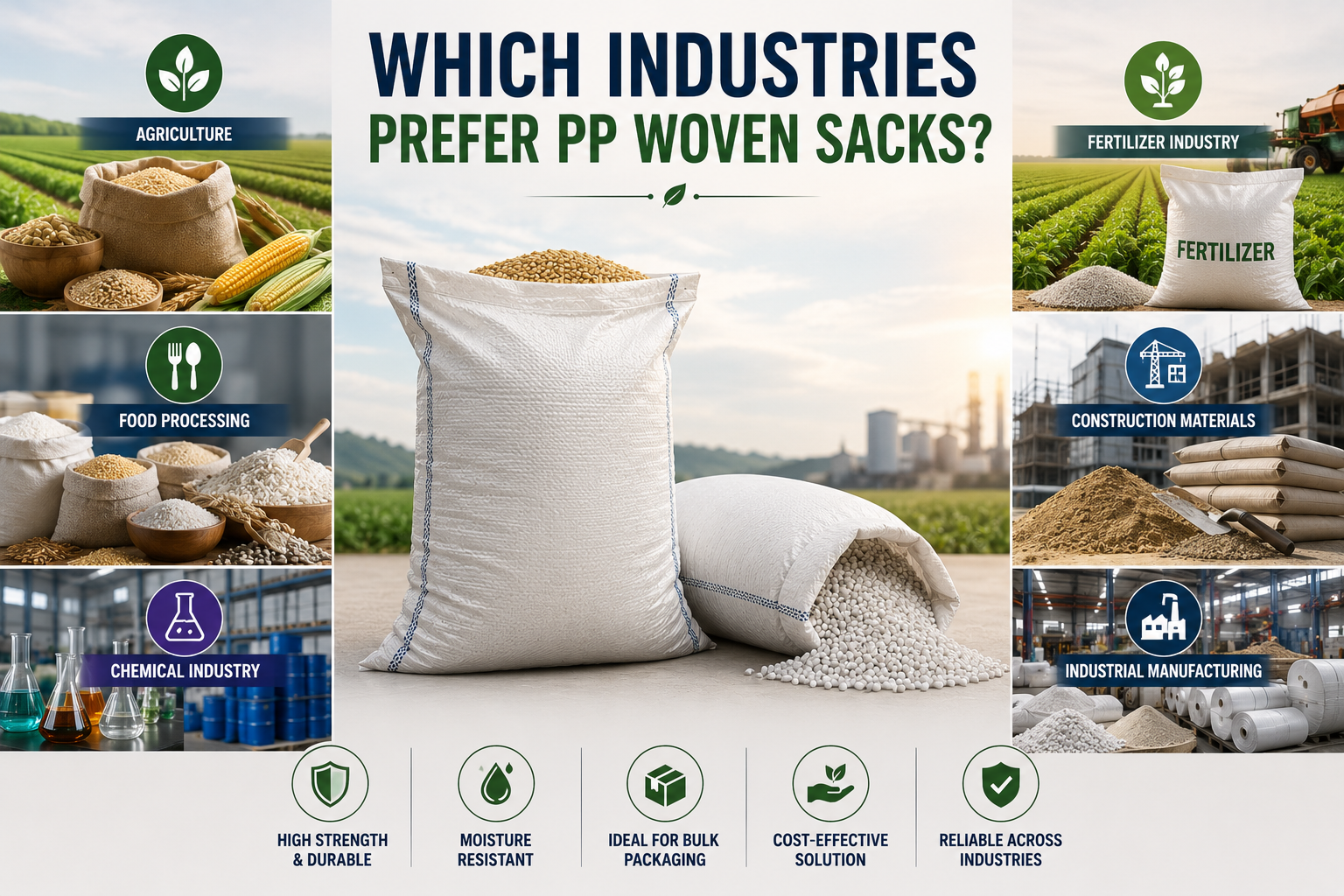
The agricultural sector remains one of the largest users of pp woven sacks for agriculture. Products such as grains, seeds, animal feed, rice, flour, and fertilisers often require packaging capable of handling significant weight while protecting contents from environmental conditions.
Food manufacturers also rely heavily on food packaging woven sacks because product quality depends on consistent protection throughout transportation and storage. Packaging failures can result in contamination risks, product loss, and customer dissatisfaction.
The chemical industry presents another demanding environment. Chemical packaging woven sacks are frequently selected because of their durability and ability to withstand challenging handling conditions. Similarly, fertilizer packaging sacks must often support heavy loads while maintaining structural integrity across long distribution networks.
Construction material suppliers and industrial manufacturers also benefit from high strength polypropylene sacks when packaging raw materials, minerals, powders, cement-based products, and other bulk goods. In these applications, reliability often outweighs small differences in initial packaging costs.
Across agriculture, food processing, fertiliser manufacturing, chemical packaging, construction materials, and industrial production, businesses frequently prioritise durability, moisture resistance, and transportation performance. These requirements are among the key reasons why industrial pp woven sacks continue to be widely used throughout global supply chains.
When Are Paper Sacks the Better Option?
While pp woven sacks deliver excellent performance across many industries, paper sacks are not without advantages.
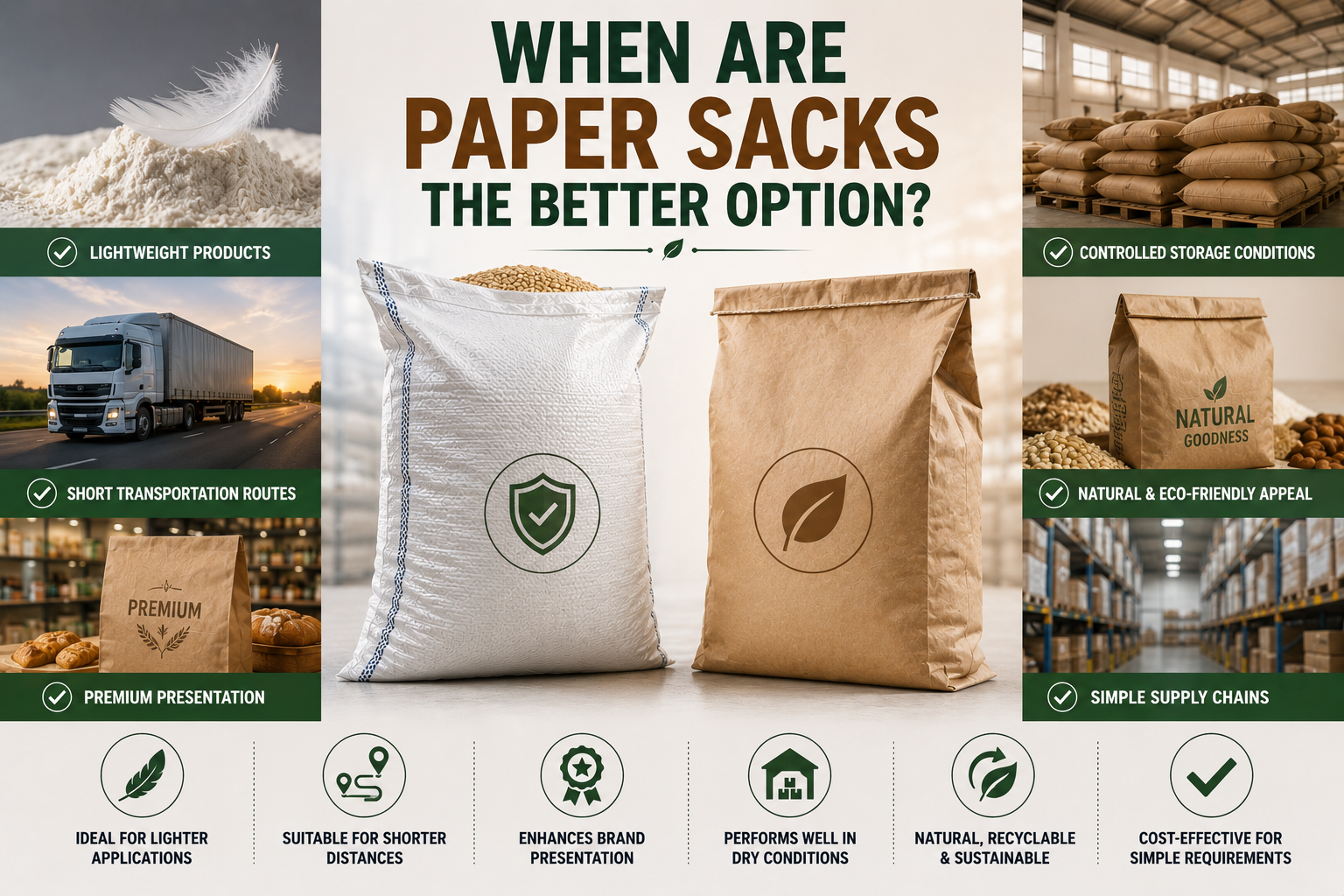
For lightweight products, short transportation routes, and applications where premium paper presentation is important, paper sacks may be a practical solution. Certain consumer-facing products also benefit from the natural appearance associated with kraft paper packaging.
Paper sacks can perform effectively when products are stored in controlled environments and exposure to moisture is limited. Businesses with relatively simple supply chains may find that paper packaging adequately meets their requirements.
The key point is that there is no universal winner. The best choice depends on the product, storage conditions, transportation requirements, and performance expectations.
Cost vs Long-Term Value: Looking Beyond Purchase Price
One of the biggest mistakes buyers make is comparing packaging solely on unit cost.
A paper sack may cost less initially, but if it results in damaged goods, product losses, customer complaints, or replacement shipments, the overall cost can quickly increase. In contrast, pp woven sacks often deliver value through durability, reduced product loss, and improved operational efficiency.
In our experience, businesses that focus only on packaging price often underestimate the costs associated with damaged goods, replacement shipments, customer complaints, and operational disruptions.
Packaging performance can have a direct impact on profitability, particularly when products move through complex domestic and international supply chains. While the initial cost difference between packaging options may appear significant, the long-term financial impact of packaging failures is often much greater than expected.
When evaluating ROI, buyers should consider:
- Product protection costs
- Transportation risks
- Storage performance
- Packaging lifespan
- Reusability potential
- Customer satisfaction
- Replacement and claim expenses
These factors provide a more realistic picture of packaging value than purchase price alone.
Understanding Quality Standards and Packaging Performance
Regardless of material choice, quality standards play an important role in packaging performance.
When sourcing packaging products, buyers should evaluate manufacturing quality systems, testing procedures, and supplier capabilities. Reputable manufacturers often implement documented quality control measures to help ensure consistency across production batches.
At Oberon Polypack, we regularly see buyers requesting performance specifications, sample evaluations, and testing documentation before placing large-volume orders. This approach helps businesses verify that the selected packaging solution meets application requirements before making a long-term commitment.
Beyond certifications, quality assurance procedures such as raw material inspections, production monitoring, dimensional verification, and product testing help improve packaging reliability and reduce procurement risks.
How Oberon Polypack Supports Global Packaging Requirements
Quality packaging begins long before a product reaches the customer. It starts with manufacturing expertise, material selection, and consistent production standards.
At Oberon Polypack, quality considerations are integrated throughout the manufacturing process. From raw material sourcing and weaving to lamination, printing, stitching, and final inspection, every stage contributes to overall packaging performance.
Depending on customer specifications and application requirements, export-grade pp woven sacks may undergo multiple quality checkpoints. These evaluations can include fabric GSM verification, dimensional inspections, seam strength assessments, lamination quality checks, printing inspections, and visual quality reviews before dispatch.
Our focus remains on delivering export quality pp woven sacks that meet customer expectations while supporting reliable performance across diverse industries. Whether customers require bulk storage packaging bags, heavy duty woven sacks, or customized woven sack packaging solutions, maintaining consistent quality standards remains a core priority.
Buyers can review our industrial packaging solutions to better understand the quality specifications, customisation options, and performance features available for different applications. From food packaging woven sacks and fertilizer packaging sacks to heavy-duty industrial packaging, selecting the right solution helps ensure reliable performance throughout storage, handling, and international transportation.
Common Mistakes Buyers Make When Comparing Packaging Options
Packaging selection often appears straightforward, but several common mistakes can affect long-term ROI.
The first mistake is focusing exclusively on upfront cost. While purchase price is important, it rarely reflects the total cost of ownership.
Another mistake involves ignoring transportation conditions. Packaging that performs well in a controlled warehouse may not perform equally well during international shipping or outdoor storage.
Some buyers also overlook moisture exposure, handling frequency, and product weight. These factors can significantly influence packaging performance and durability.
Finally, many businesses fail to request product samples or performance documentation before ordering. Verifying specifications before purchasing helps reduce uncertainty and supports more informed procurement decisions.
PP Woven Sacks vs Paper Sacks: Which Packaging Solution Delivers Better ROI?
For most industrial, agricultural, food processing, and export applications, pp woven sacks typically deliver stronger long-term ROI. Their durability, moisture resistance, reusability, and transportation performance help reduce product losses and improve supply chain efficiency.
Paper sacks continue to serve an important role in specific applications, particularly where lightweight packaging and presentation are priorities. However, when products face demanding transportation, storage, and handling conditions, the advantages of polypropylene woven sacks often outweigh the difference in initial purchase cost.
The best packaging solution is the one that protects products consistently while supporting operational goals and customer expectations. In many industries, that combination leads buyers toward PP woven packaging.
Conclusion
Choosing between pp woven sacks and paper sacks involves much more than comparing material costs. Factors such as durability, moisture resistance, storage performance, transportation reliability, reusability, and product protection all contribute to overall return on investment. While paper sacks remain suitable for certain applications, pp woven sacks often provide stronger long-term value for businesses operating in demanding supply chains.
If you're evaluating packaging options for agriculture, food processing, fertilisers, chemicals, or industrial applications, Oberon Polypack can help. Explore our complete range of PP woven sack products and speak with our team about finding the right packaging solution for your requirements. With a focus on quality, performance, and customer-specific solutions, we help businesses make packaging decisions that support both product protection and long-term profitability.
FAQs
1. Why are pp woven sacks more durable than paper sacks?
PP woven sacks are manufactured from woven polypropylene fabric, which provides superior tensile strength, tear resistance, and flexibility. This construction allows them to withstand demanding handling, transportation, and storage conditions more effectively than most paper-based alternatives.
2. Are paper sacks more environmentally friendly than pp woven sacks?
The answer depends on how sustainability is measured. Paper sacks are produced from renewable resources, while recyclable woven polypropylene sacks can often be reused multiple times. Evaluating lifecycle impact, durability, reuse potential, and waste reduction provides a more complete picture of environmental performance.
3. Which packaging solution is better for export shipments?
For most export applications, pp woven sacks offer stronger performance because they provide improved moisture resistance, durability, and protection during transportation. These characteristics help reduce packaging failures and product losses throughout international supply chains.
4. Can pp woven sacks be customised with branding?
Yes. Custom printed pp woven sacks can include logos, product details, handling instructions, safety information, and branding elements. This helps improve product identification while enhancing brand visibility across distribution networks.
5. How do businesses calculate packaging ROI?
Packaging ROI is calculated by considering factors such as product protection, transportation performance, storage durability, replacement costs, customer satisfaction, and overall supply chain efficiency. Looking beyond initial purchase price provides a more accurate understanding of long-term packaging value.