Introduction
In 2026, sustainability is driving major changes in the packaging industry. Businesses are moving away from single-use plastics and adopting smarter alternatives that reduce environmental impact.
Recyclable PP Woven Fabric is emerging as a strong solution due to its durability, reusability, and recyclability. It supports the growing demand for eco-friendly woven fabric packaging while maintaining performance and cost efficiency.
This shift reflects a new approach where packaging is both practical and environmentally responsible.
What is a Recyclable PP Woven Fabric?
Recyclable PP Woven Fabric is a strong and lightweight material made from polypropylene (PP), a widely used thermoplastic polymer. It is created by weaving flat polypropylene tapes together, forming a fabric-like structure that offers high durability and flexibility.
This recyclable polypropylene fabric is known for its excellent resistance to moisture, chemicals, and wear, making it suitable for heavy-duty packaging. Unlike single-use plastic, it is designed for multiple uses and can be recycled at the end of its lifecycle.
Because of its strength and versatility, it is widely used across industries such as agriculture, construction, and retail packaging.
Why Sustainability Matters in Packaging
Sustainability has become a critical factor in packaging decisions as environmental concerns continue to grow. Traditional packaging, especially single-use plastics, contributes heavily to pollution and landfill waste.
Businesses are now under pressure from regulations and consumers to adopt eco-conscious solutions. This shift is driving the demand for eco-friendly woven fabric packaging that minimizes environmental impact while maintaining efficiency.
Materials like Recyclable PP Woven Fabric support this transition by offering durability, reusability, and reduced waste. Adopting such solutions not only helps the environment but also strengthens brand reputation and long-term business sustainability.
Benefits of Recyclable PP Woven Fabric
1. Durability and Reusability
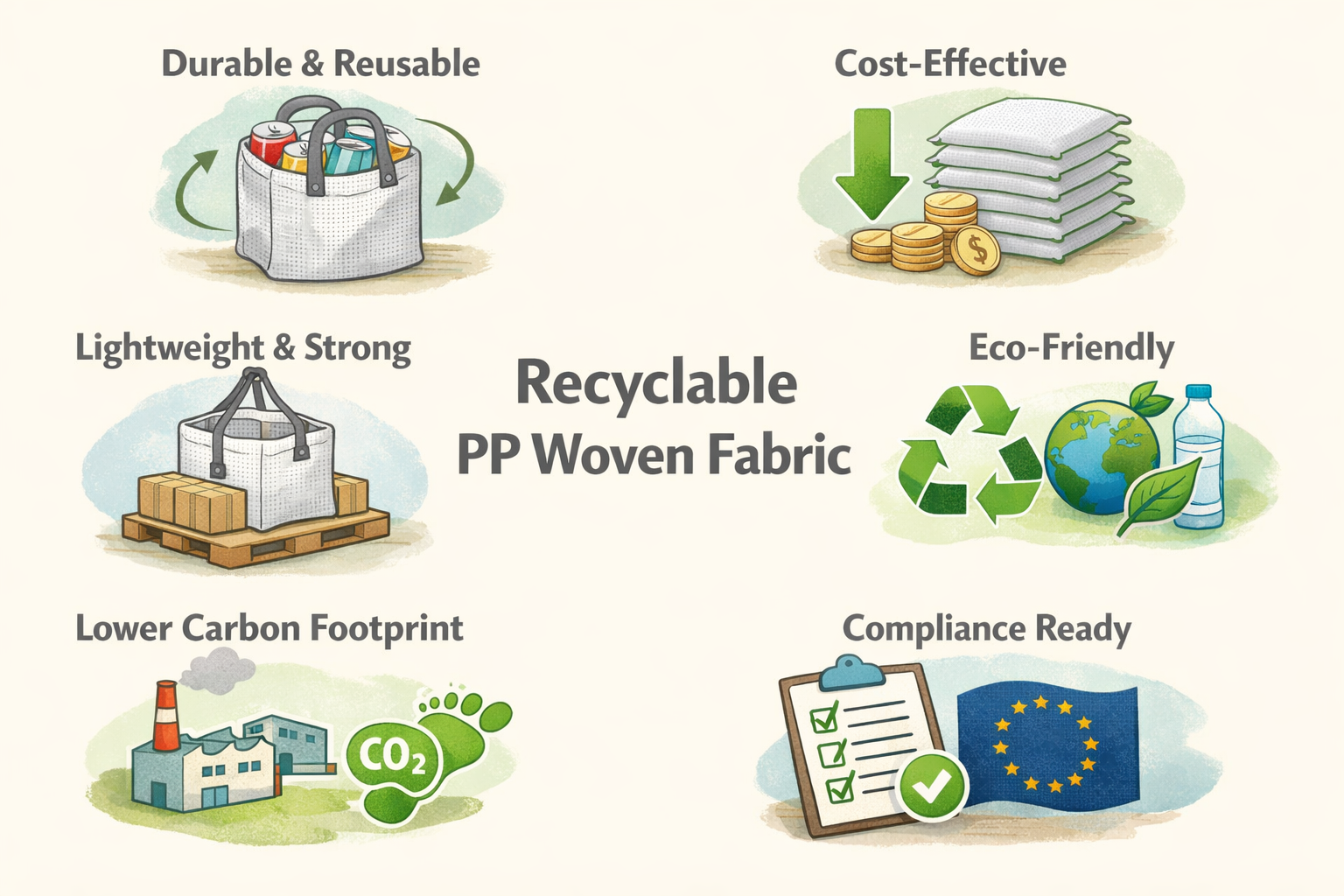
One of the biggest advantages of Recyclable PP Woven Fabric is its high strength. It can handle heavy loads without tearing and can be reused multiple times, making it a reliable reusable PP woven material for various industries.
2. Cost-Effectiveness
Due to its long lifespan, this material reduces the need for frequent replacements. Businesses benefit from lower packaging costs over time, making it a smart and economical choice.
3. Lightweight Yet Strong
Despite being lightweight, it offers excellent tensile strength. This balance improves handling, storage, and transportation efficiency without compromising performance.
4. Reduced Environmental Impact
As a sustainable woven plastic fabric, it supports recycling and reuse, helping reduce plastic waste. Its ability to be reprocessed makes it a better alternative to single-use packaging materials.
5. Lower Carbon Footprint
Compared to alternatives like paper (which requires deforestation and water-intensive production), PP woven fabric has a lower per-unit carbon footprint — especially when reuse cycles are factored in.
6. Compliance-Ready
Recyclable mono-material PP fabrics are designed to comply with evolving global packaging regulations, including the EU Packaging and Packaging Waste Regulation (PPWR), which mandates recyclable packaging for all categories by 2030.
PP Woven Fabric Sustainability Explained
1. Lifecycle of PP Fabric
The lifecycle of Recyclable PP Woven Fabric begins with polypropylene production, followed by weaving into durable fabric for packaging use. Unlike single-use materials, it can be reused multiple times before entering the recycling stage, where it is processed into new products. This extended lifecycle reduces overall waste and resource consumption.
2. Comparison with Single-Use Plastics
Single-use plastics are typically discarded after one use, leading to high environmental pollution. In contrast, PP woven fabric sustainability focuses on reuse and recyclability. Its longer lifespan and ability to be recycled make it a more responsible alternative to traditional plastic packaging.
3. Role in Circular Economy
Sustainable woven plastic fabric plays a key role in the circular economy by keeping materials in use for as long as possible. Through reuse and the polypropylene woven fabric recycling process, it helps reduce dependency on virgin plastic and supports a closed-loop system that minimizes environmental impact.
Polypropylene Woven Fabric Recycling Process
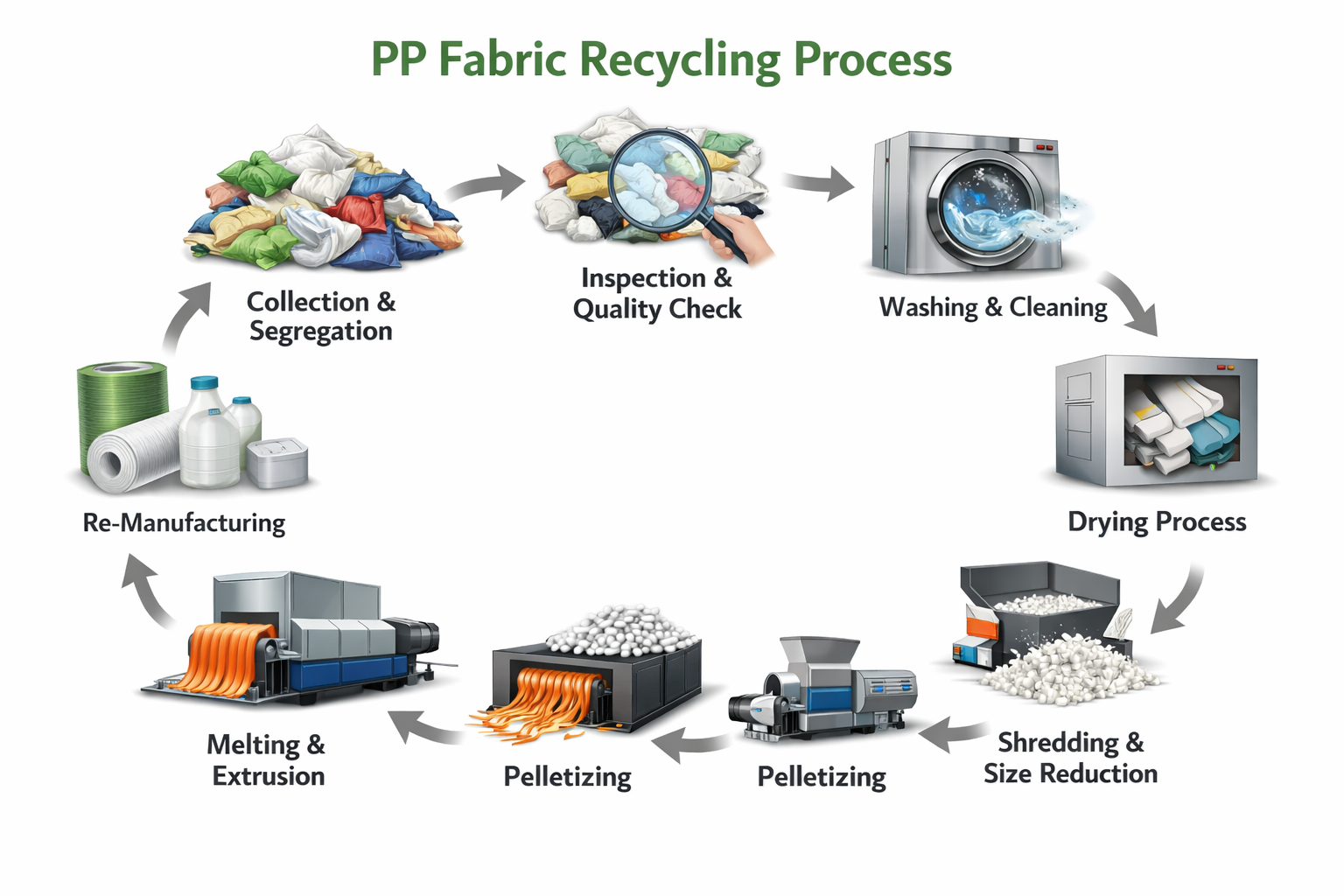
The PP fabric recycling process is a structured and multi-stage system that transforms used materials into reusable resources. This process is essential for maximizing the value of Recyclable PP Woven Fabric while minimizing environmental impact.
1. Collection and Segregation
The process begins with collecting used woven fabric from industries like agriculture, construction, and logistics. Proper segregation is critical at this stage.
Materials must be separated based on type, color, and level of contamination. Mixing PP with other plastics can reduce the quality of recycled output, making this step crucial for effective polypropylene woven fabric recycling.
2. Inspection and Quality Check
Before processing, the collected material undergoes inspection. Damaged, heavily contaminated, or non-recyclable items are removed.
This step ensures that only suitable recyclable polypropylene fabric moves forward, improving the efficiency and quality of the final recycled product.
3. Washing and Cleaning
The sorted material is washed using industrial cleaning systems. This removes dirt, oil, chemicals, and residues that may have accumulated during use.
Proper cleaning is essential because contaminants can affect melting quality and weaken the recycled material.
4. Drying Process
After washing, the material is dried to remove moisture. Excess water can interfere with the melting stage and lead to defects in the recycled granules.
Drying ensures consistency and prepares the material for further processing.
5. Shredding and Size Reduction
The clean and dry fabric is then shredded into small flakes or strips. This size reduction makes it easier to handle and process during melting.
Uniform shredding improves efficiency and ensures even melting during the next stage of the PP fabric recycling process.
6. Melting and Extrusion
The shredded polypropylene is heated at controlled temperatures until it melts. The molten material is then passed through an extrusion system to form continuous strands.
This stage converts waste into a reusable form, forming the base for new sustainable woven plastic fabric.
7. Pelletizing (Granule Formation)
The extruded strands are cooled and cut into small pellets or granules. These granules act as raw material for manufacturing new products.
High-quality pellets ensure that the recycled output maintains strength and durability similar to virgin plastic.
8. Re-Manufacturing
The recycled granules are reused to produce new recyclable polypropylene fabric, packaging materials, or other plastic products.
This completes the recycling loop and highlights how reusable PP woven material contributes to reducing waste and conserving resources.
Why This Process Matters
The detailed polypropylene woven fabric recycling system supports sustainability by:
- Reducing landfill waste
- Lowering dependence on virgin plastic
- Saving energy and resources
- Supporting a circular economy
By following this process, industries can fully utilize the potential of Recyclable PP Woven Fabric and move toward more responsible packaging practices.
Applications of Eco-Friendly Woven Fabric Packaging
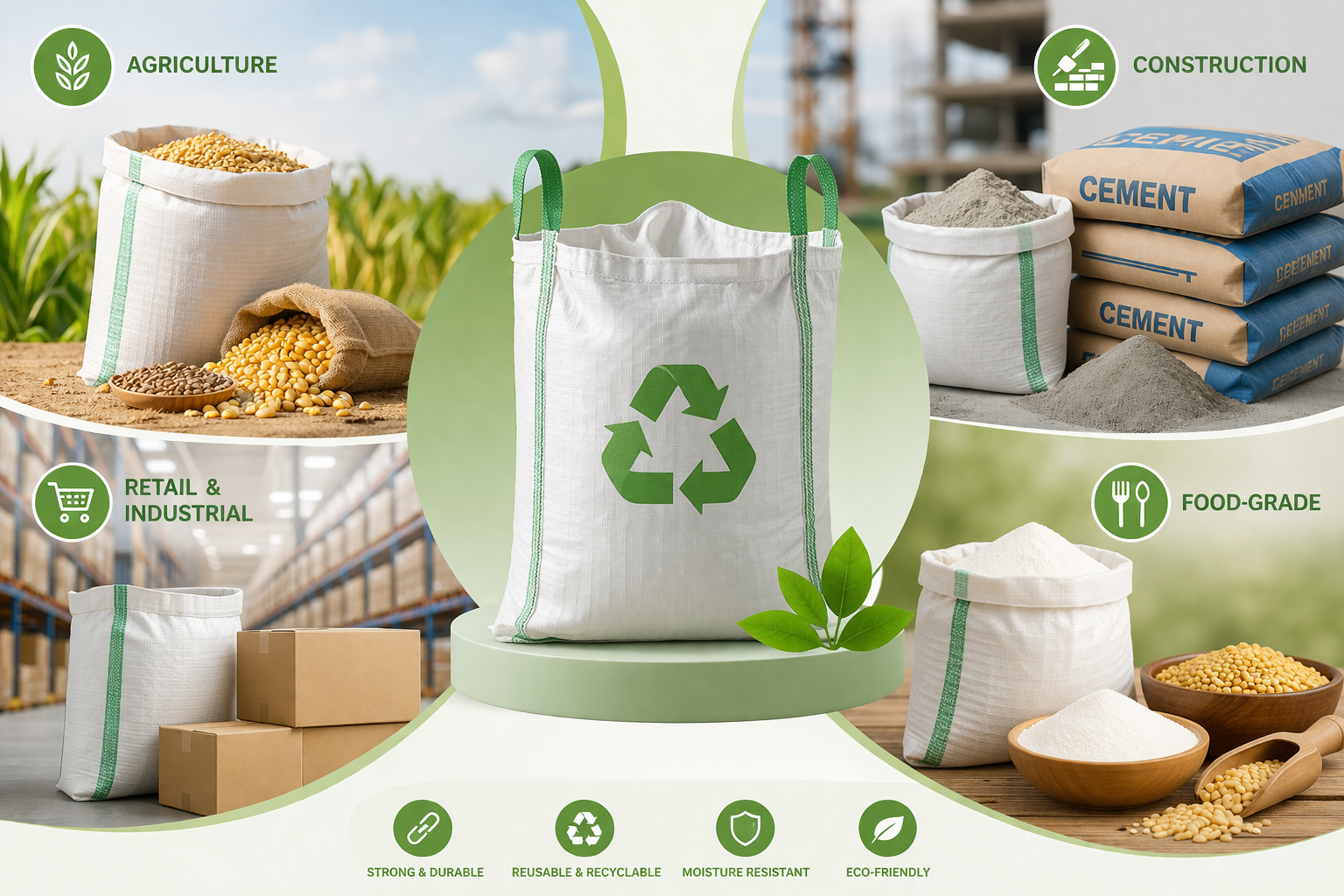
The versatility of eco-friendly woven fabric packaging makes it a preferred solution across multiple industries. Thanks to its strength, flexibility, and recyclability, Recyclable PP Woven Fabric is widely used for both heavy-duty and everyday packaging needs.
1. Agriculture (Grains, Fertilizers)
In the agricultural sector, packaging must handle bulk quantities while protecting contents from moisture and damage.
Recyclable PP Woven Fabric is commonly used for:
- Packing grains like rice, wheat, and corn
- Storing seeds and animal feed
- Transporting fertilizers and agrochemicals
Its breathable structure helps prevent moisture buildup, reducing the risk of spoilage. At the same time, its durability ensures safe handling during storage and transportation. This makes it an ideal reusable PP woven material for farmers and distributors.
2. Construction (Cement Bags)
The construction industry requires packaging that can withstand heavy loads and rough handling.
Sustainable woven plastic fabric is extensively used for:
- Cement and sand bags
- Chemical powders
- Construction materials
These bags offer high tensile strength and tear resistance, ensuring that materials remain secure even in demanding conditions. Additionally, their resistance to moisture helps maintain product quality, especially in humid environments.
3. Retail and Industrial Packaging
Retailers and manufacturers need packaging solutions that are both cost-effective and reliable.
Eco friendly woven fabric packaging is widely used for:
- Bulk product packaging
- Storage and transportation of goods
- Warehouse and logistics operations
Its lightweight nature reduces transportation costs, while its durability allows multiple reuse cycles. This improves efficiency across supply chains and supports PP woven fabric sustainability in industrial applications.
4. Food-Grade Packaging
With proper lamination and coating, recyclable polypropylene fabric can be safely used for food packaging.
Common uses include:
- Sugar and flour bags
- Pulses and dry food storage
- Packaged agricultural produce
These bags are designed to meet hygiene and safety standards, ensuring that food products remain uncontaminated. Their strength and reusability make them a practical and sustainable alternative to traditional packaging.
Why These Applications Matter
The wide adoption of Recyclable PP Woven Fabric across industries highlights its ability to combine performance with sustainability. Whether used in agriculture, construction, or retail, it delivers long-term value while reducing environmental impact.
This adaptability is what makes it a key component of modern sustainable woven plastic fabric solutions in 2026 and beyond.
Reusable PP Woven Material vs Alternatives
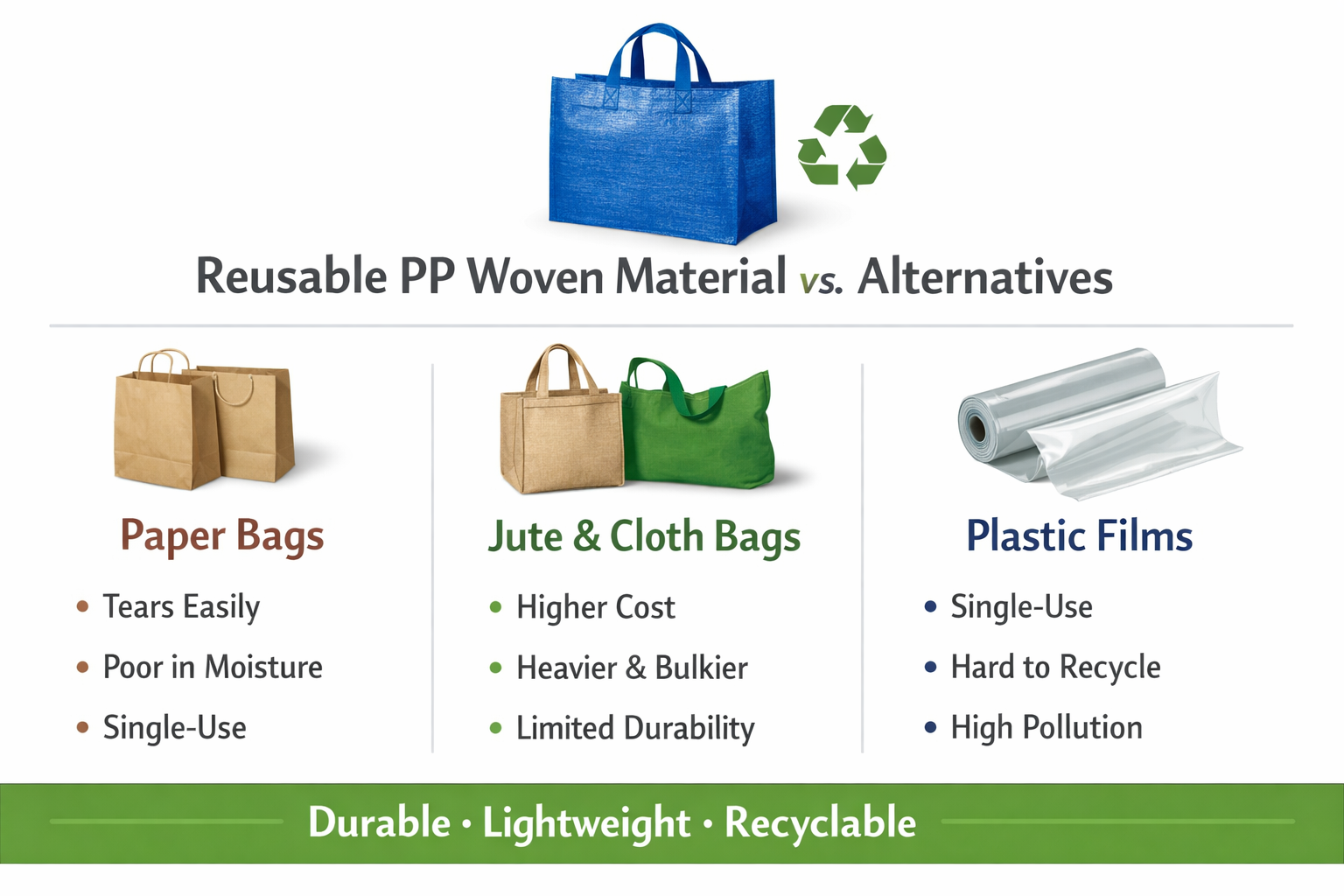
Choosing the right packaging material is essential for balancing cost, durability, and sustainability. Recyclable PP Woven Fabric stands out when compared to traditional alternatives due to its performance and long-term usability.
1. Comparison with Paper Bags
Paper bags are often considered eco-friendly because they are biodegradable. However, they have several limitations.
- Lower strength and tear resistance
- Poor performance in moist or humid conditions
- Short lifespan (mostly single-use)
In contrast, reusable PP woven material offers superior durability and can be reused multiple times. While paper decomposes faster, PP woven fabric sustainability focuses on reducing waste through reuse and recycling rather than single-use disposal.
2. Comparison with Jute and Cloth Bags
Jute and cloth bags are natural and biodegradable, making them environmentally appealing. However, they come with certain drawbacks.
- Higher production and material costs
- Heavier weight, increasing transportation costs
- Limited resistance to moisture and chemicals
Sustainable woven plastic fabric, on the other hand, is lightweight, cost-effective, and more durable in demanding conditions. It provides a practical solution for industries that require strong and reliable packaging at scale.
3. Comparison with Plastic Films
Plastic films are widely used due to their low cost and flexibility, but they are typically single-use and contribute heavily to pollution.
- Not designed for reuse
- Difficult to recycle in many cases
- High environmental impact
Recyclable PP Woven Fabric offers a better alternative by combining strength with recyclability. Its ability to be reused and processed through the PP fabric recycling process makes it a more responsible choice for modern packaging needs.
Conclusion of Comparison
While each material has its advantages, recyclable PP woven fabric provides the best balance between durability, cost, and sustainability. Its adaptability across industries and support for recycling make it a preferred option in today’s shift toward eco-conscious packaging solutions.
Future Trends in Sustainable Woven Plastic Fabric
As industries move toward greener operations, the future of sustainable woven plastic fabric is being shaped by innovation, regulation, and global sustainability goals. Recyclable PP Woven Fabric is at the center of this transformation, evolving to meet both environmental and performance expectations.
1. Innovations in Recycling Technology
Advancements in recycling are making the PP fabric recycling process more efficient and scalable.
New technologies are focusing on:
- Automated sorting systems using AI to improve material separation
- Advanced washing techniques to remove contaminants more effectively
- Chemical recycling methods that break down polypropylene into its base components for higher-quality reuse
These innovations are improving the quality of recycled output, making polypropylene woven fabric recycling more reliable and economically viable. As a result, industries can confidently reuse materials without compromising performance.
2. Development of Biodegradable Coatings
One of the key challenges with woven plastic materials is enhancing their environmental performance without losing durability.
To address this, manufacturers are developing:
- Biodegradable and compostable coatings
- Water-based laminations instead of traditional plastic layers
- Eco-friendly additives that accelerate degradation under specific conditions
These improvements allow recyclable polypropylene fabric to maintain its strength while becoming more environmentally responsible at the end of its lifecycle. This innovation bridges the gap between durability and biodegradability.
3. Government Policies and ESG Goals
Governments worldwide are introducing stricter regulations to reduce plastic waste and promote sustainable alternatives.
Key developments include:
- Bans or restrictions on single-use plastics
- Incentives for using recyclable and reusable materials
- Mandatory recycling targets for industries
At the same time, companies are aligning with ESG (Environmental, Social, and Governance) goals. Adopting eco friendly woven fabric packaging helps businesses:
- Reduce carbon footprint
- Improve sustainability reporting
- Strengthen brand reputation
This regulatory push is accelerating the adoption of Recyclable PP Woven Fabric across industries.
What This Means for the Future
The future of PP woven fabric sustainability lies in continuous innovation and responsible usage. With better recycling systems, eco-friendly enhancements, and strong policy support, this material is set to become a cornerstone of sustainable packaging.
As businesses and governments work together, reusable PP woven material will play a critical role in building a circular economy and reducing global plastic waste.
Conclusion
As sustainability becomes a top priority in 2026, businesses are actively shifting toward smarter packaging solutions. Recyclable PP Woven Fabric has emerged as a reliable option that combines strength, cost-efficiency, and environmental responsibility.
Its ability to be reused and processed through the PP fabric recycling process makes it a key contributor to reducing waste and supporting a circular economy. Compared to traditional materials, it offers a better balance between performance and sustainability.
With continuous innovation and growing adoption across industries, recyclable PP woven fabric is set to play a major role in the future of packaging. For businesses aiming to stay competitive while reducing their environmental impact, this material is not just an alternative it’s a necessity.
Frequently Asked Questions (People Also Ask)
1. Is PP woven fabric recyclable?
Yes, Recyclable PP Woven Fabric is fully recyclable. It can be processed through the PP fabric recycling process, where it is converted into granules and reused to manufacture new products.
2. How many times can PP woven fabric be reused?
A reusable PP woven material can be used multiple times depending on handling and load conditions. Its high durability makes it suitable for repeated use before recycling.
3. Is polypropylene eco-friendly?
Polypropylene is considered eco-friendly when used responsibly. Through polypropylene woven fabric recycling, it reduces waste and supports a circular economy compared to single-use plastics.
4. What industries use eco-friendly woven fabric packaging?
Eco-friendly woven fabric packaging is widely used in agriculture, construction, food packaging, retail, and industrial sectors due to its strength and versatility.
5. What makes PP woven fabric sustainable?
PP woven fabric sustainability comes from its long lifespan, reusability, and ability to be recycled. It helps reduce dependence on single-use plastics and lowers environmental impact.