 Woven Fabric.jpg)
Introduction
Polypropylene woven fabric is a strong and lightweight material widely used in packaging and industrial applications. It is made by weaving thin strips of polypropylene plastic to create a durable fabric structure. Because of its high strength and resistance to moisture and chemicals, PP woven fabric is commonly used for making sacks, bags, and packaging materials.
If you are wondering what is PP woven fabric, it is a versatile material that is used across industries such as agriculture, construction, and logistics. Products made from woven polypropylene fabric can carry heavy loads while remaining lightweight and cost-effective.
Due to its durability and flexibility, polypropylene woven fabric has become one of the most widely used materials for packaging solutions, especially for storing and transporting grains, fertilizers, cement, and other bulk goods.
What is Polypropylene (PP) Woven Fabric?
Polypropylene woven fabric is a durable material made from polypropylene plastic fibers that are woven together to form a strong fabric structure. To understand the polypropylene woven fabric meaning, it helps to know that the fabric is created by weaving thin polypropylene tapes in two directions, which increases its strength and load-bearing capacity.
If you are wondering what is PP woven fabric, it is essentially a plastic-based textile designed for heavy-duty packaging and industrial use. The weaving pattern gives the material high durability, flexibility, and resistance to tearing, making it suitable for carrying and storing bulk products.
This type of woven polypropylene fabric is commonly used as pp woven bags material for products like grains, fertilizers, cement, sugar, and animal feed. Because of its lightweight structure and strong fibers, it can handle heavy loads while remaining easy to transport and store.
Another reason why PP woven fabric is widely used is its resistance to moisture, chemicals, and wear. These qualities make polypropylene woven fabric a reliable choice for industries that require durable and cost-effective packaging solutions.
PP Woven Fabric Manufacturing Process
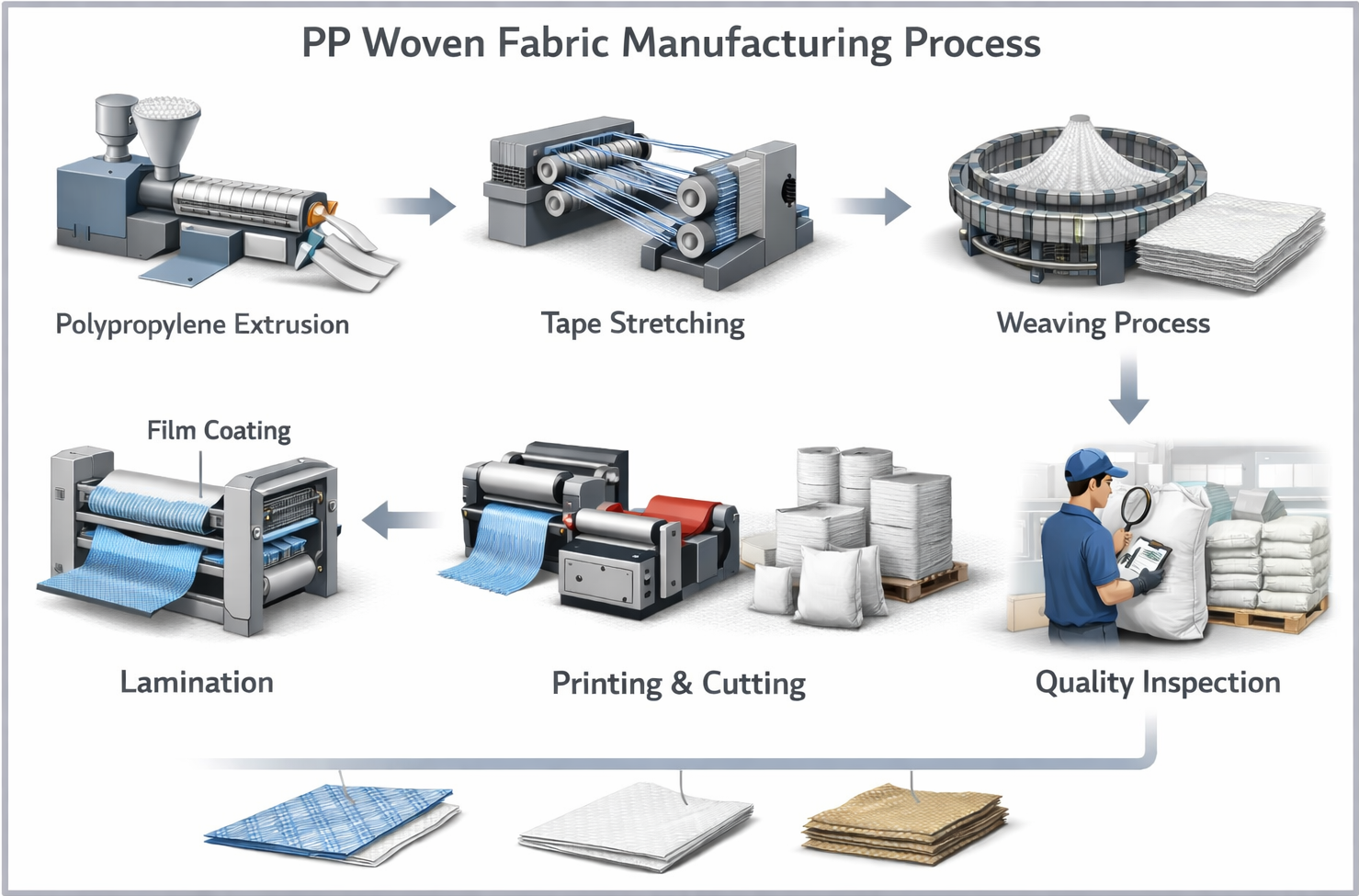
The PP woven fabric manufacturing process involves several steps that transform polypropylene resin into strong and durable fabric used in packaging and industrial products. Each stage plays an important role in creating high-quality polypropylene woven fabric that can withstand heavy loads and harsh environmental conditions.
1. Polypropylene Extrusion
The process begins with polypropylene granules, which are the raw material used to produce pp woven fabric. These plastic granules are melted at high temperatures inside an extrusion machine. The molten polypropylene is then pushed through a flat die to form thin plastic films.
Once the film is produced, it is cooled and cut into narrow strips called tapes. These tapes act as the basic fibers that will later be woven together to form woven polypropylene fabric.
2. Tape Stretching and Orientation
After extrusion, the polypropylene tapes go through a stretching process. In this stage, the tapes are heated and stretched to increase their strength and durability. This process aligns the polymer molecules in one direction, improving the tensile strength of the material.
Stretching is a critical step in the pp woven fabric manufacturing process because it ensures that the fabric can carry heavy loads without tearing. The stronger the tapes, the stronger the final pp woven sack fabric becomes.
3. Weaving Process
Once the tapes are prepared, they are transferred to circular or flat weaving looms. In this stage, the polypropylene tapes are interlaced in two directions warp and weft to form a fabric structure.
This weaving method is what gives polypropylene woven fabric its unique strength and flexibility. The tightly woven structure helps distribute weight evenly across the fabric, making it suitable for heavy-duty packaging and storage.
The woven material produced at this stage is commonly used as pp woven bags material for sacks, bulk bags, and packaging products.
4. Lamination or Coating
In some applications, the woven fabric is laminated with a thin layer of polypropylene film. Lamination improves moisture resistance and adds extra strength to the fabric.
This step is especially important for packaging products that need protection from water or dust. Laminated pp woven fabric is widely used in industries such as food packaging, agriculture, and chemical storage.
5. Printing and Finishing
After lamination, the fabric may go through printing and finishing processes. Manufacturers often print logos, product details, or branding information directly on the surface of the fabric.
The fabric is then cut, stitched, or converted into finished products like sacks, shopping bags, and bulk packaging materials. These finished products made from woven polypropylene fabric are widely used for transporting and storing grains, fertilizers, cement, and other industrial materials.
6. Quality Inspection
The final stage of the pp woven fabric manufacturing process involves quality inspection. Manufacturers test the fabric for strength, durability, weight capacity, and uniform weaving.
Ensuring consistent quality is important because polypropylene woven fabric is often used for heavy-duty applications where reliability and durability are essential.
Through this structured manufacturing process, PP woven fabric becomes a strong, flexible, and cost-effective material widely used in modern packaging and industrial sectors.
Key Properties of PP Woven Fabric
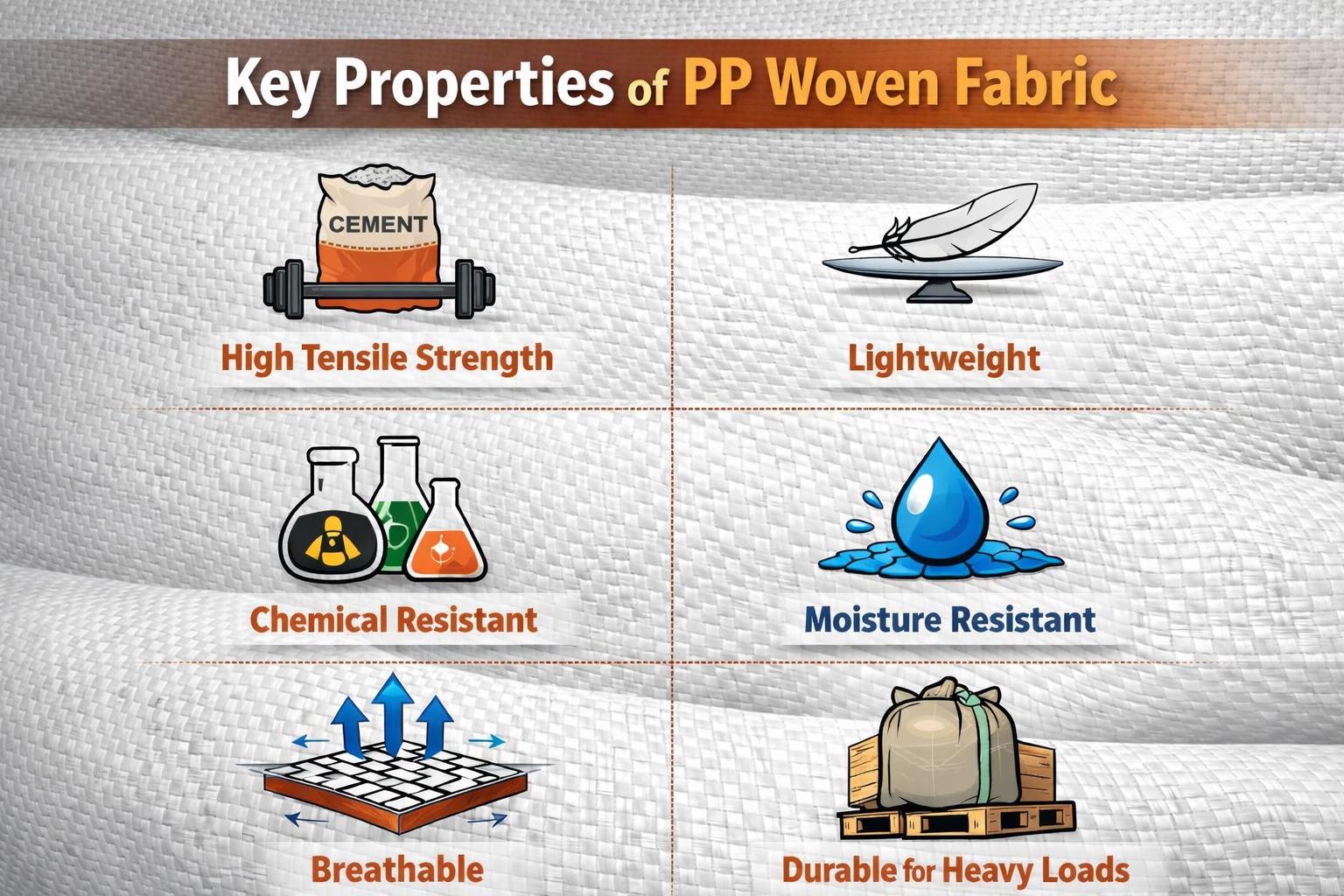
PP woven fabric is widely used in packaging and industrial sectors because of its strong and reliable performance. The unique structure of polypropylene woven fabric provides several properties that make it suitable for carrying and storing heavy materials.
High Tensile Strength
One of the most important pp woven fabric properties is its high tensile strength. The woven structure allows the fabric to handle heavy loads without tearing easily, making it ideal for packaging products like cement, grains, and fertilizers.
Lightweight
Despite its strength, polypropylene woven fabric is very lightweight. This makes transportation, handling, and storage easier while still providing strong support for bulk materials.
Chemical Resistance
PP woven fabric is resistant to many chemicals, acids, and alkalis. Because of this, it is commonly used for packaging fertilizers, industrial materials, and chemical products.
Moisture Resistance
Another key property is its resistance to moisture. Woven polypropylene fabric does not easily absorb water, which helps protect stored goods from humidity and environmental damage.
Breathability
The woven structure allows air circulation, making the material breathable. This feature is especially useful when storing agricultural products like grains and seeds.
Durability for Heavy Loads
Due to its strong fibers and woven construction, polypropylene woven fabric offers excellent durability. It can withstand rough handling and heavy weight, which is why it is commonly used as pp woven bags material and pp woven sack fabric in many industries.
What is PP Woven Fabric Used For?
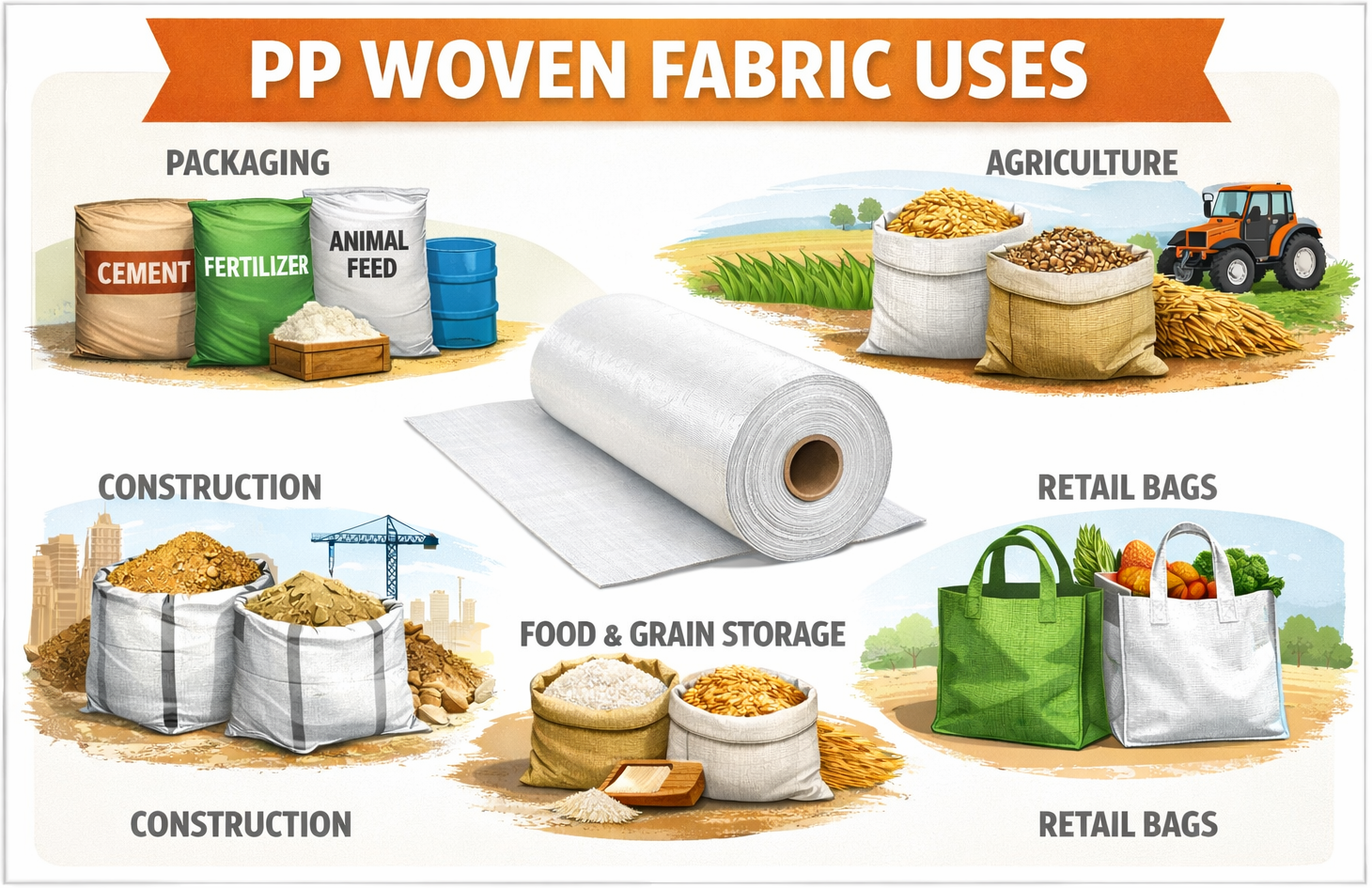
PP woven fabric is widely used across different industries because of its strength, flexibility, and cost efficiency. Many businesses choose polypropylene woven fabric for packaging and storage since it can safely carry heavy materials while remaining lightweight.
If you are wondering what is PP woven fabric used for, the material has a wide range of applications in industries such as packaging, agriculture, construction, and retail.
Packaging Industry
One of the most common pp woven fabric uses is in the packaging industry. Woven polypropylene fabric is used to manufacture strong sacks and bags for products like cement, fertilizers, chemicals, and animal feed. These bags are durable and help protect products during transportation and storage.
Agriculture
In agriculture, polypropylene woven fabric is widely used for packaging grains, seeds, fertilizers, and crops. Farmers and suppliers prefer pp woven bags material because it can handle heavy loads and provides good airflow for agricultural products.
Construction
The construction industry also uses PP woven fabric for packaging materials like sand, cement, and building chemicals. The fabric’s durability and resistance to wear make it suitable for handling heavy construction materials.
Food and Grain Storage
Another important application of pp woven fabric is in food and grain storage. The breathable structure of woven polypropylene fabric allows air circulation, which helps maintain the quality of stored grains such as rice, wheat, and pulses.
Retail Packaging
Many retailers use PP woven fabric to manufacture reusable shopping bags and bulk packaging bags. These bags are strong, reusable, and capable of carrying large amounts of products without tearing.
Because of these versatile pp woven fabric uses, polypropylene woven fabric has become one of the most widely used materials for packaging and industrial applications worldwide.
Common PP Woven Fabric Products
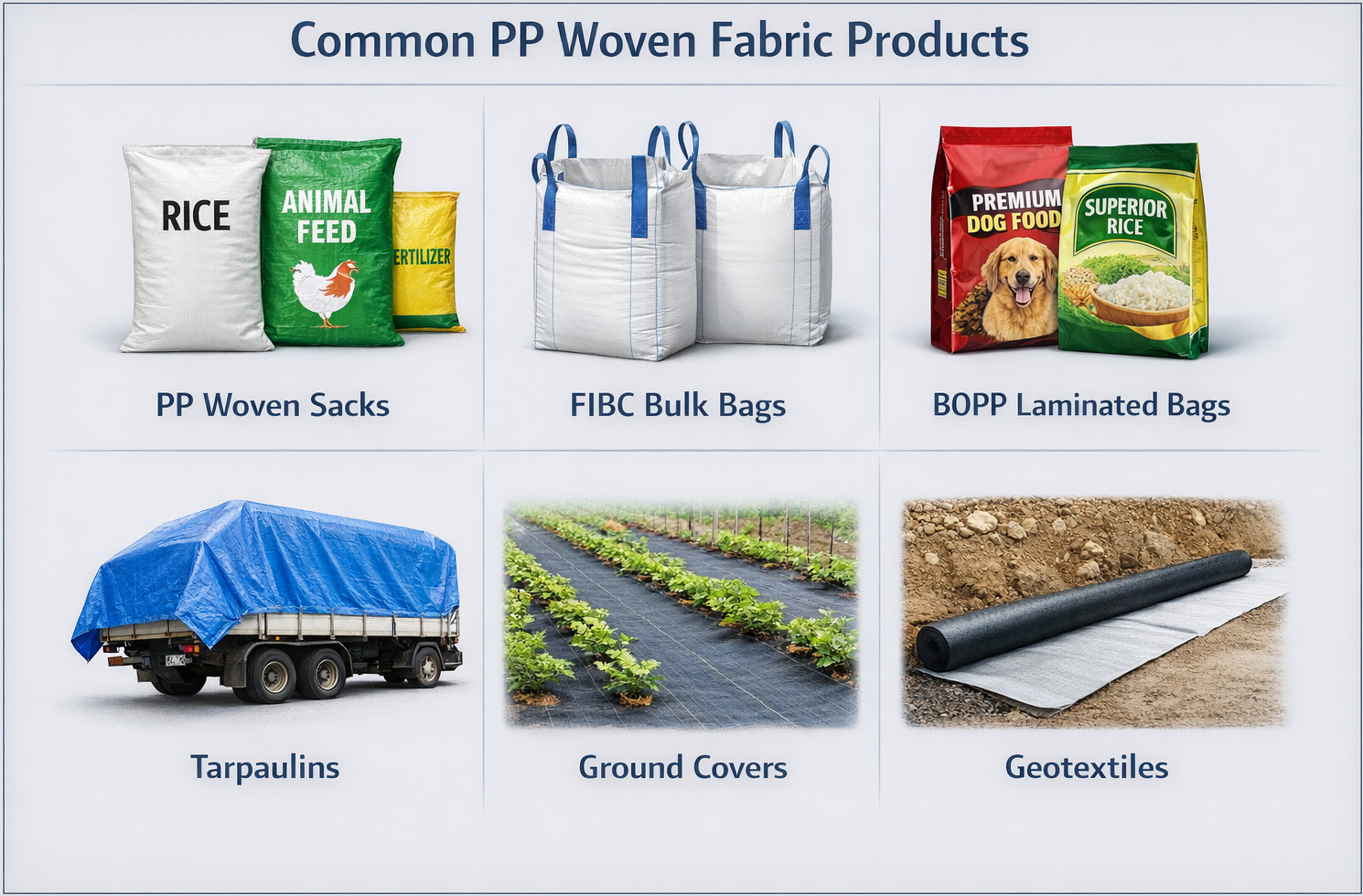
Because of its strength and durability, pp woven sack fabric is used to manufacture a wide range of packaging and industrial products. The woven structure of polypropylene tapes creates a material that can carry heavy loads while remaining lightweight and flexible.
Many industries depend on products made from pp woven bags material because it provides reliable protection for goods during storage, transportation, and handling. Below are some of the most common products manufactured using PP woven fabric.
1. PP Woven Sacks
PP woven sacks are one of the most widely used products made from pp woven sack fabric. These sacks are designed to carry bulk materials safely and efficiently.
They are commonly used for packaging:
- Rice and grains
- Sugar and flour
- Animal feed
- Fertilizers
- Cement and construction materials
Because pp woven bags material offers high tensile strength and tear resistance, these sacks can handle heavy loads without easily breaking.
2. FIBC Bulk Bags
Flexible Intermediate Bulk Containers (FIBC), also known as jumbo bags or bulk bags, are large containers made from strong pp woven sack fabric.
These bags are designed for transporting and storing large quantities of materials, typically ranging from 500 kg to 2000 kg. Industries such as agriculture, chemicals, food processing, and construction frequently use FIBC bags.
The durability of pp woven bags material ensures that these bulk containers can safely handle heavy industrial loads while maintaining structural integrity.
3. BOPP Laminated Bags
BOPP laminated bags are another popular product made from pp woven sack fabric. These bags combine woven polypropylene fabric with a BOPP (Biaxially Oriented Polypropylene) film layer.
This lamination provides several benefits, including:
- Enhanced strength
- Moisture protection
- Attractive printing and branding
- Better product protection
Because of these advantages, bags made from pp woven bags material are commonly used for packaging consumer products such as rice, pet food, flour, and seeds.
4. Tarpaulins
Tarpaulins made from pp woven sack fabric are widely used for covering and protecting goods from environmental conditions. These durable sheets are designed to withstand exposure to rain, sunlight, and dust.
They are commonly used for:
- Truck covers
- Agricultural crop protection
- Temporary shelters
- Warehouse storage covers
The strong structure of pp woven bags material ensures that tarpaulins remain durable even in demanding outdoor conditions.
5. Ground Covers
Ground covers made from woven polypropylene fabric are frequently used in agriculture and landscaping. These covers help control weeds while allowing water and air to pass through the soil.
Farmers use ground covers to improve crop growth conditions and reduce maintenance. The durability of pp woven sack fabric allows these covers to last through multiple growing seasons.
Because pp woven bags material is resistant to moisture and environmental stress, it is ideal for long-term outdoor use.
6. Geotextiles
Geotextiles are specialized materials made from pp woven sack fabric that are used in civil engineering and infrastructure projects. These fabrics help stabilize soil and improve drainage in construction environments.
Common applications include:
- Road construction
- Soil reinforcement
- Erosion control
- Drainage systems
- Railway track stabilization
The strength and permeability of pp woven bags material make it highly effective for geotechnical applications where durability and structural support are required.
Advantages of Polypropylene Woven Fabric
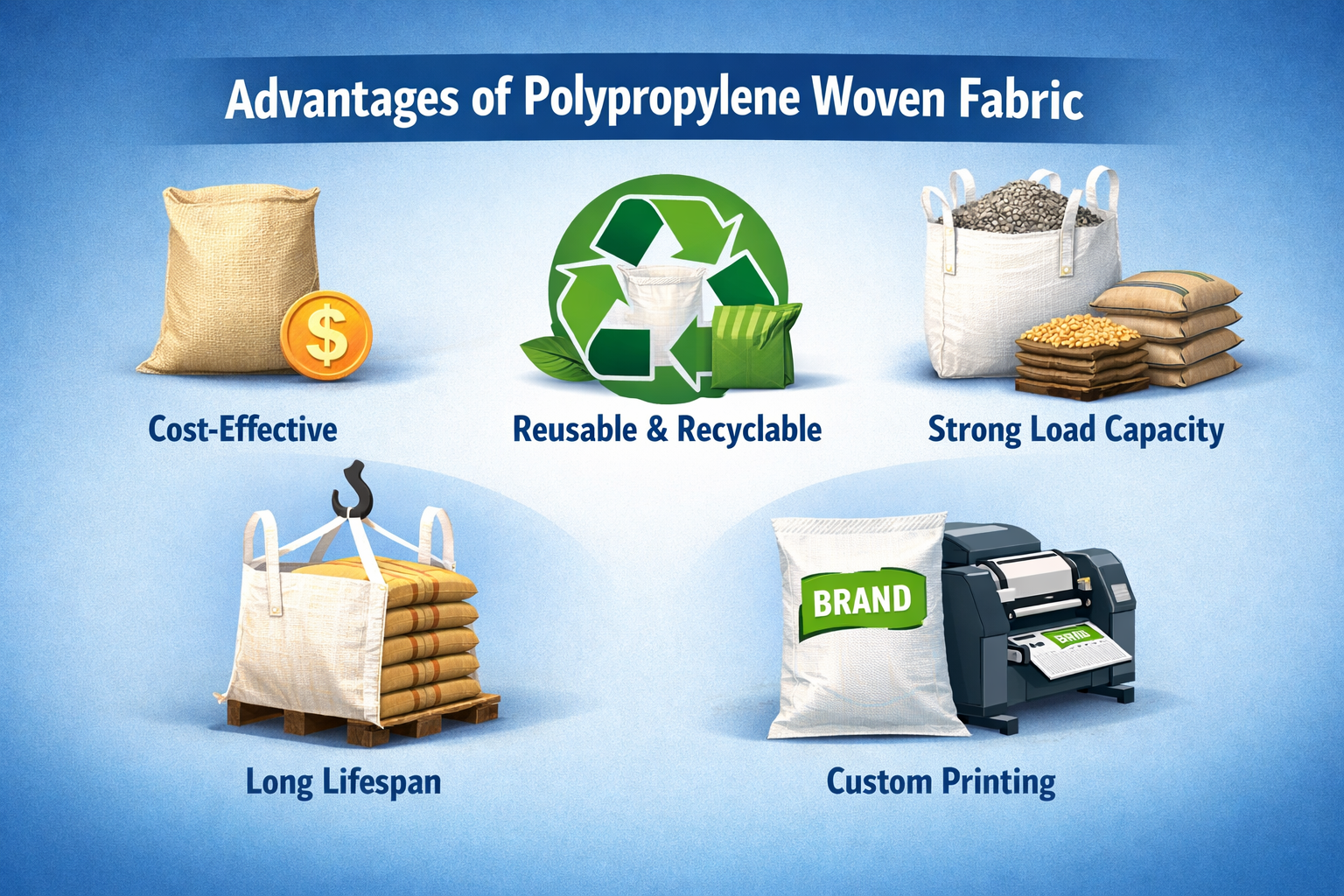
Polypropylene woven fabric is widely preferred across industries because it offers several practical advantages. Its strength, flexibility, and affordability make PP woven fabric a reliable material for packaging and industrial applications.
Cost-Effective
One of the biggest advantages of polypropylene woven fabric is its cost-effectiveness. The material is relatively inexpensive to produce, which makes it a popular choice for large-scale packaging solutions.
Reusable and Recyclable
PP woven fabric is reusable and can also be recycled, making it a more sustainable option compared to many single-use packaging materials. Many industries prefer it because it supports environmentally responsible packaging practices.
Strong Load Capacity
Another key benefit is its ability to carry heavy loads. The woven structure gives woven polypropylene fabric excellent tensile strength, allowing it to safely store and transport bulk materials such as grains, cement, and fertilizers.
Long Lifespan
Polypropylene woven fabric is highly durable and resistant to wear and tear. It can withstand rough handling, which helps increase the lifespan of products like sacks, bags, and industrial packaging materials.
Customizable Printing Options
Manufacturers can easily print logos, product information, and branding on PP woven fabric. This makes it ideal for businesses that want to use pp woven bags material for both packaging and brand promotion.
Limitations of PP Woven Fabric
Although PP woven fabric offers many advantages, it also has some limitations that should be considered depending on the application. Understanding these factors helps industries choose the right material for specific packaging and storage needs.
UV Degradation Without Treatment
One limitation of polypropylene woven fabric is that it can degrade when exposed to direct sunlight for long periods. Without UV stabilizers or special treatment, the fabric may lose strength and durability over time.
Limited Heat Resistance
Woven polypropylene fabric has limited resistance to high temperatures. Since it is made from plastic polymers, excessive heat can cause the material to soften or deform. For this reason, it is not suitable for applications that involve very high temperatures.
Requires Lamination for Waterproofing
While PP woven fabric is moisture resistant, it is not completely waterproof. In applications where full protection from water is required, manufacturers often apply lamination or coating to the fabric to improve its water resistance.
Environmental Considerations
Another concern is environmental impact. Although polypropylene woven fabric can be recycled and reused, improper disposal may contribute to plastic waste. This is why many industries are now focusing on recycling and responsible waste management when using pp woven fabric products.
How to Choose the Right PP Woven Fabric
Choosing the right PP woven fabric is important to ensure durability, safety, and proper performance for your specific application. Since polypropylene woven fabric is used in many industries, several factors should be considered before selecting the right type.
GSM Thickness
One of the first things to consider is the GSM (grams per square meter) of the fabric. GSM determines the thickness and strength of woven polypropylene fabric. Higher GSM fabrics are stronger and suitable for carrying heavier materials, while lower GSM fabrics are used for lighter packaging.
Lamination Requirement
Some applications require additional protection from moisture and dust. In such cases, laminated polypropylene woven fabric is a better choice because the lamination layer improves water resistance and durability.
Load Capacity
The weight of the product being stored or transported is another important factor. PP woven fabric with higher strength and stronger weaving is required for heavy materials like cement, fertilizers, or construction products.
Printing Options
Many businesses use pp woven bags material for branded packaging. Choosing fabric that supports clear and durable printing allows companies to add logos, product details, and branding information on the bags.
Application Industry
Finally, the industry where the fabric will be used also influences the choice. Different sectors such as agriculture, construction, food storage, and retail packaging may require specific types of pp woven sack fabric with different strengths, coatings, and finishes.
Future Trends in Polypropylene Woven Fabric Industry
The demand for polypropylene woven fabric is expected to grow as industries look for stronger, cost-effective, and sustainable packaging solutions. Continuous improvements in materials and manufacturing technologies are shaping the future of the PP woven fabric industry.
Sustainable Packaging Solutions
Many companies are focusing on eco-friendly packaging. Polypropylene woven fabric is reusable and recyclable, making it a better option for sustainable packaging compared to many single-use materials.
Recyclable Woven Plastics
The development of recyclable woven polypropylene fabric is becoming more important as industries aim to reduce plastic waste. Manufacturers are increasingly promoting recycling programs and reusable pp woven bags material.
Growth in Agriculture and Logistics
The agriculture and logistics sectors continue to drive demand for PP woven fabric. Products like grain bags, fertilizer sacks, and bulk storage bags rely on pp woven sack fabric because of its strength and durability.
Advanced Weaving Technology
Modern weaving machines and improved manufacturing methods are helping produce stronger and more consistent polypropylene woven fabric. These advancements improve fabric quality, increase production efficiency, and expand its applications in different industries.
Conclusion
Polypropylene woven fabric is a strong, lightweight, and versatile material widely used in packaging and industrial applications. From agriculture and construction to food storage and retail packaging, PP woven fabric provides reliable solutions for carrying and protecting bulk products.
Because of its durability, cost-effectiveness, and reusable nature, woven polypropylene fabric has become an essential material in modern packaging. As industries move toward more efficient and sustainable solutions, the demand for polypropylene woven fabric is expected to continue growing in the future.
Frequently Asked Questions (FAQs)
1. What is PP woven fabric used for?
PP woven fabric is used for packaging products such as grains, fertilizers, cement, and animal feed. It is widely used in agriculture, construction, and industrial packaging.
2. What is polypropylene woven fabric made of?
Polypropylene woven fabric is made from polypropylene plastic. The material is melted into thin tapes and woven together to create a strong woven polypropylene fabric.
3. Is PP woven fabric waterproof?
PP woven fabric is moisture resistant but not fully waterproof. Lamination or coating is often added to make polypropylene woven fabric water-resistant.
4. What is the difference between PP woven and non woven fabric?
PP woven fabric is made by weaving polypropylene tapes, making it strong and durable. Non woven fabric is made by bonding fibers together, making it softer but less strong.
5. Are PP woven bags recyclable?
Yes, PP woven bags material is recyclable and reusable because it is made from polypropylene plastic.
6. What are the properties of PP woven fabric?
Key pp woven fabric properties include high strength, lightweight structure, moisture resistance, chemical resistance, and durability.